
Last updated November 14, 2026
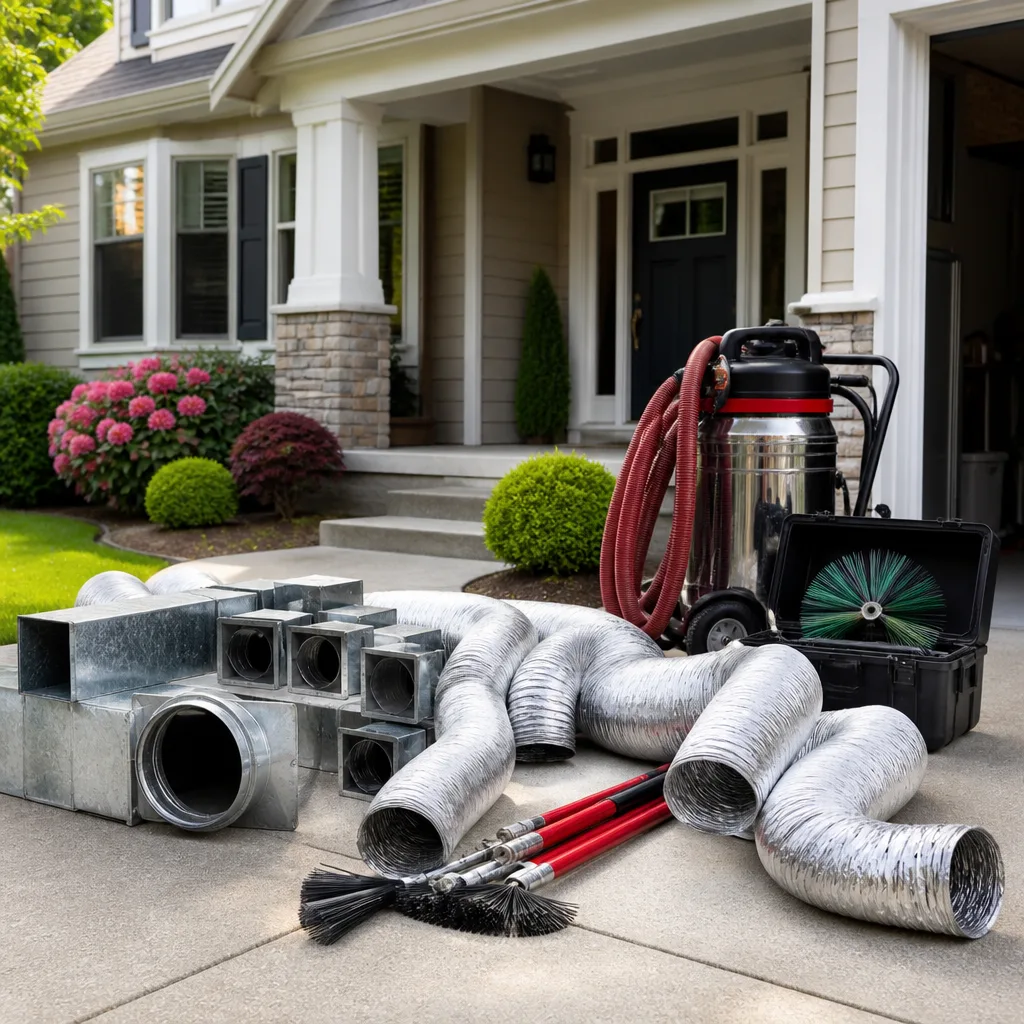 Whole-home duct cleaning
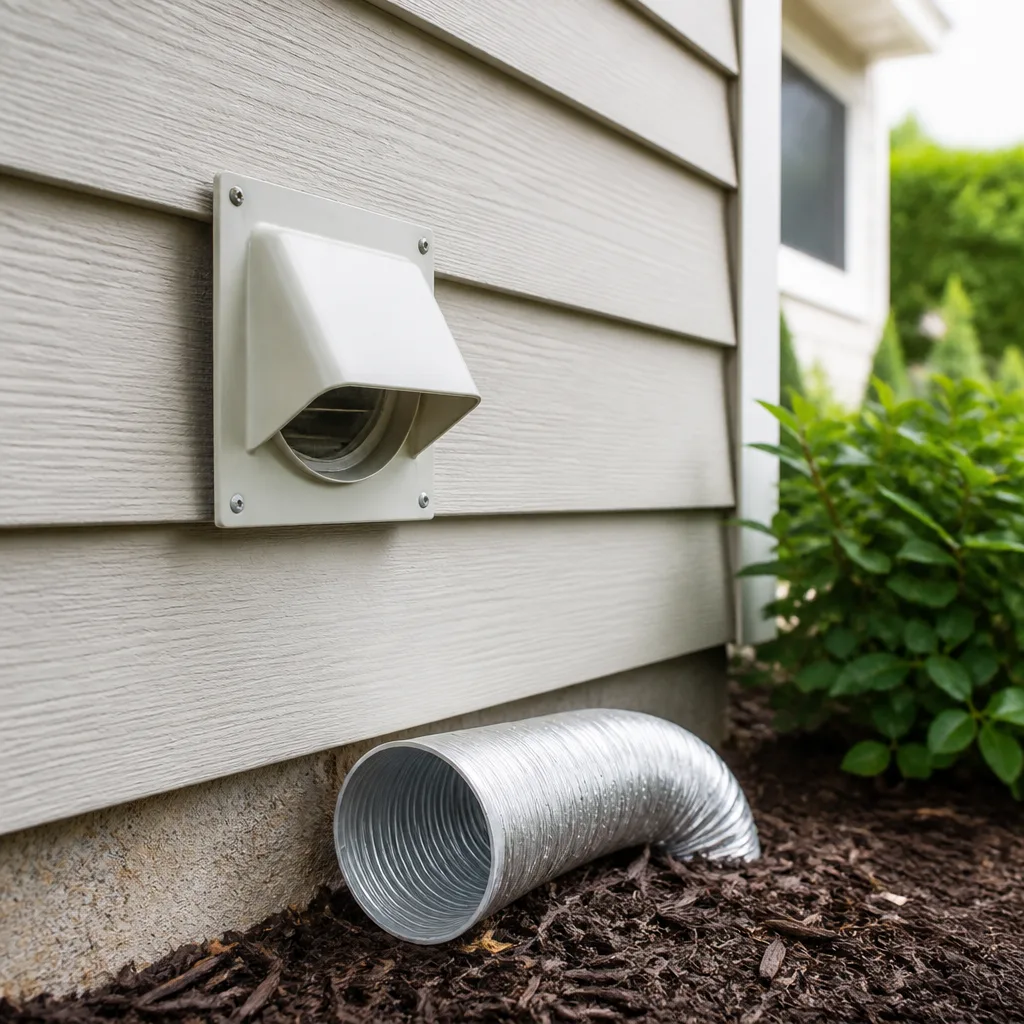 Dryer vent cleaning
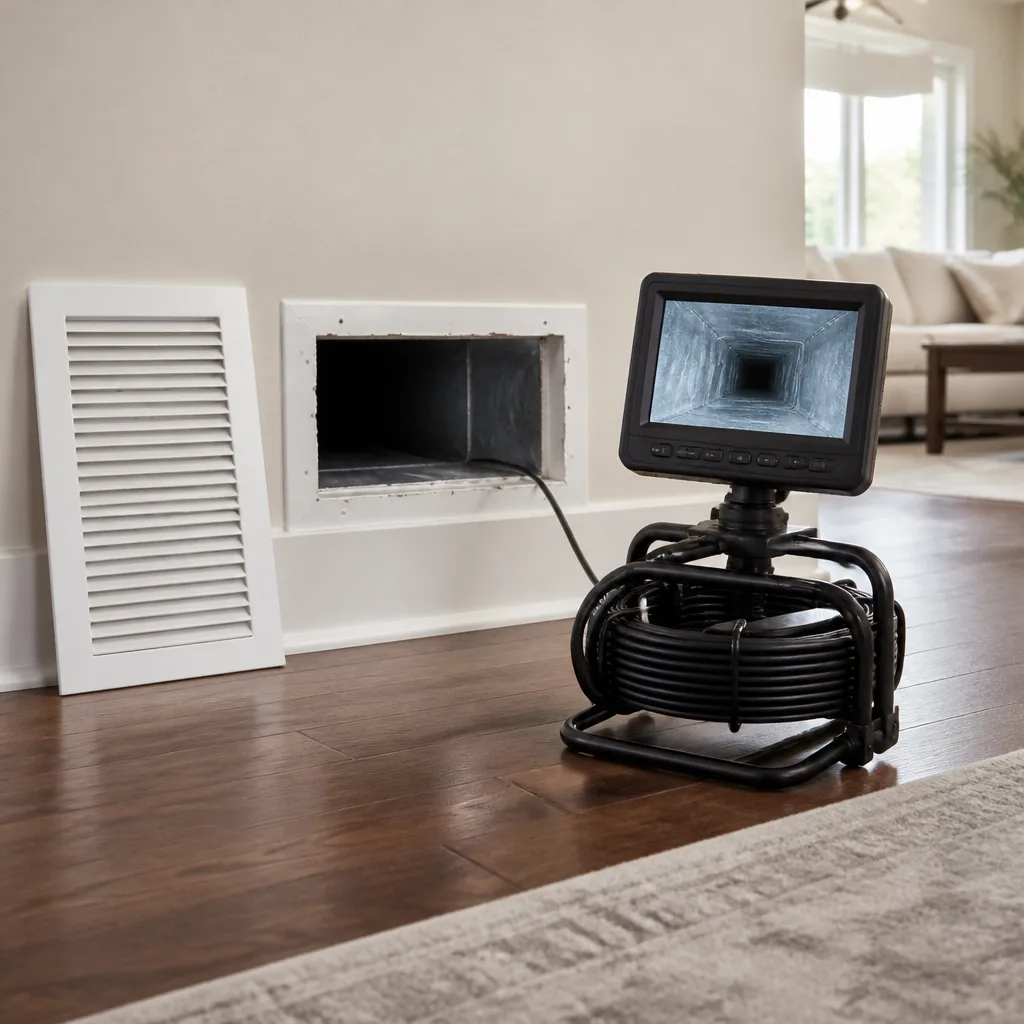 Camera inspection
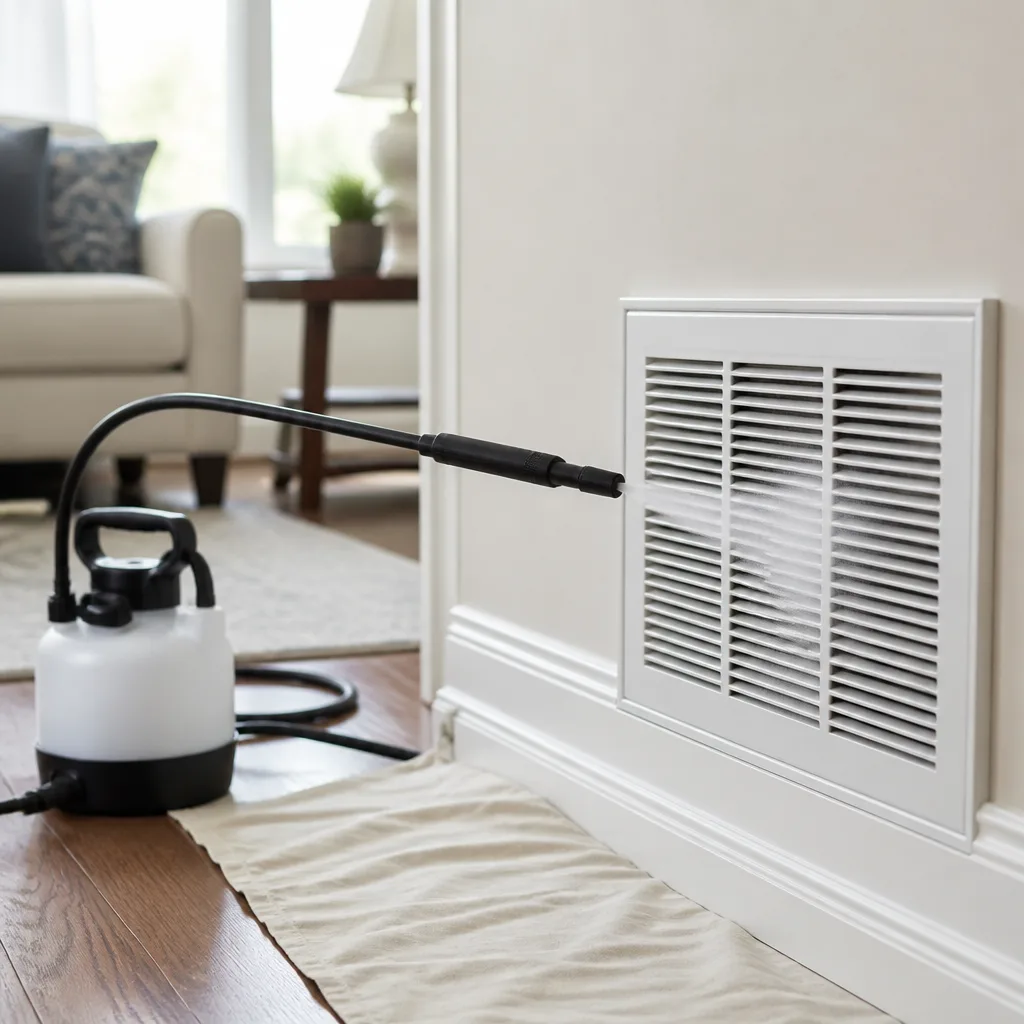 Sanitizing & deodorizing
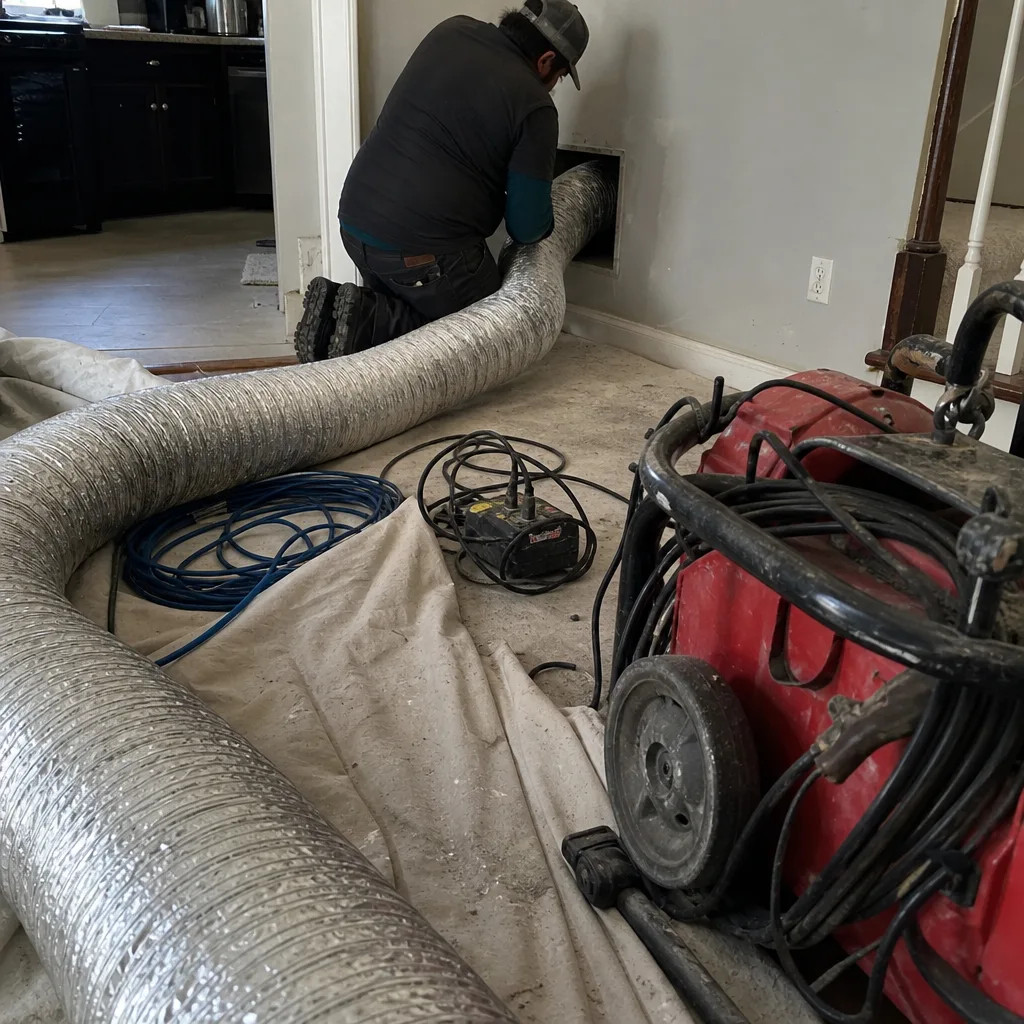
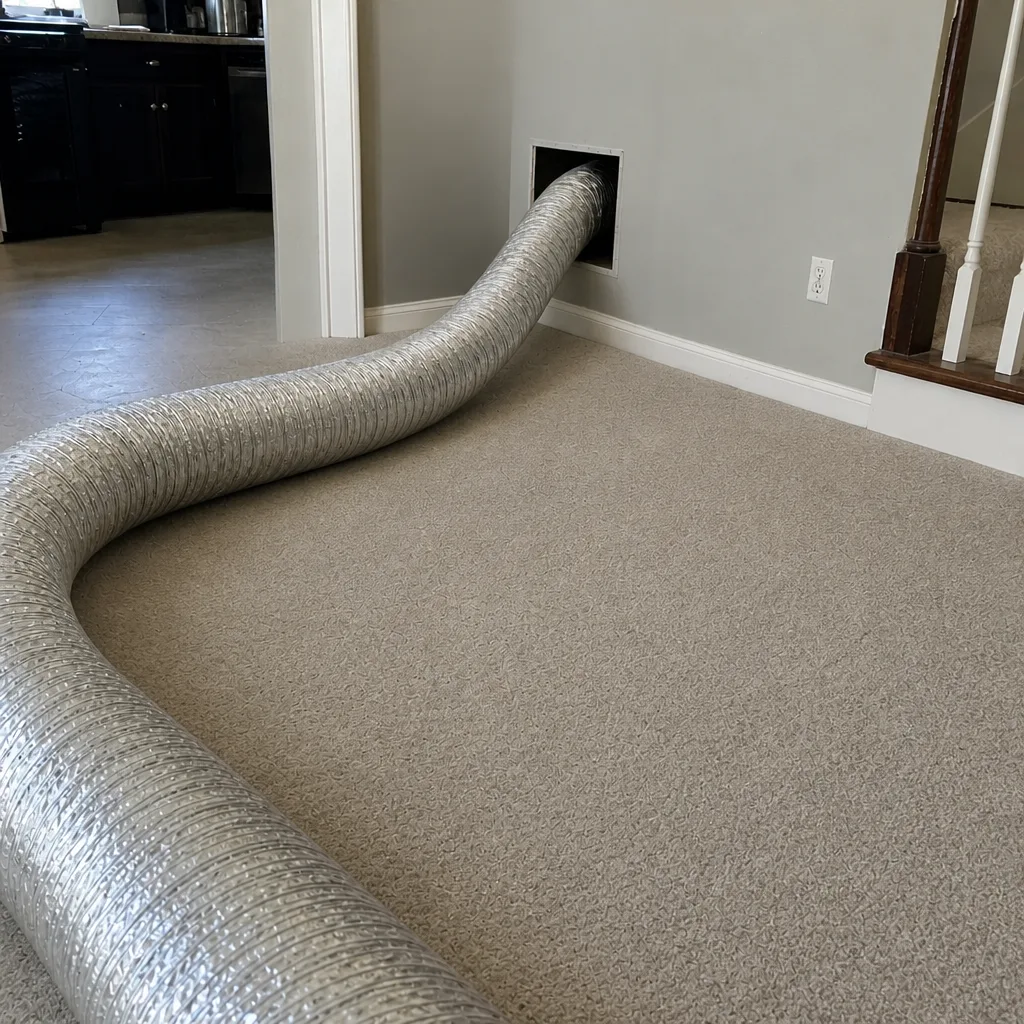
Whole-system duct and dryer vent check with before-and-after photos - you see exactly what came out of your vents
That "$99 whole-house special" is a bait ad - the real number appears once they are in your hallway, or the "clean" is a shop-vac at the register. We photograph the inside of your ducts before and after instead.
How to Hire an Air Duct Cleaning Contractor in Newark: A Step-by-Step Guide
New Jersey doesn’t issue a license specific to duct cleaning. That single fact explains most of what goes wrong when Newark homeowners hire the wrong crew. The contractor arriving with a portable unit that fits in the trunk of a car and the one running a truck-mounted negative-pressure system are bidding off the same job boards, with nothing on paper to separate them. Price becomes the only visible difference, so price becomes the deciding factor, and that is exactly backwards. In this guide we’ll walk through a vetting framework built on what a contractor can prove, not what they claim. You’ll learn the five equipment questions worth asking before you book, how to read a quote line by line, what NADCA membership actually tells you and where it stops, and the red flags that show up again and again in the Newark market. Mention Newark once more and we’re done with the setup. Let’s get into it.
Quick Answer
To hire an air duct cleaning contractor in Newark, verify five things in this order: what equipment they run and its CFM output, whether they perform a camera inspection before cleaning, whether their quote itemizes supply and return systems separately, whether they handle duct repair and dryer vent work themselves rather than subcontracting, and whether they follow the NADCA ACR standard rather than a marketing claim of it. Get those answers in writing before anyone books a slot. A contractor who can’t answer them clearly is telling you something useful.
Styles & brands we work with
- Whole-home duct cleaning
- Dryer vent cleaning
- Camera inspection
- Sanitizing & deodorizing
Table of Contents
- Why New Jersey Has No Duct Cleaning License, and What Replaces It
- The Five Equipment Questions to Ask Before You Book
- How to Read a Duct Cleaning Quote Line by Line
- NADCA Membership and the ACR Standard: What to Ask Beyond the Logo
- Red Flags Specific to the Newark Market
- Verifying In-House Repair and Dryer Vent Work
- What a Proper Pre-Cleaning Inspection Looks Like
- The Hiring Checklist: 10 Questions to Ask on the Phone
Why New Jersey Has No Duct Cleaning License, and What Replaces It
New Jersey regulates plenty of trades. Duct cleaning isn’t one of them. There’s no state-issued credential to check, no license number to look up, no database to search. That means the burden of verification lands entirely on you, the homeowner or property manager, and it has to be done with questions rather than paperwork.
What replaces a license is a set of voluntary standards. The one that matters most is the NADCA ACR standard (Assessment, Cleaning, and Restoration), published by the National Air Duct Cleaners Association. It lays out how a system should be assessed before cleaning, how the cleaning should be performed, and how the work should be verified afterward. A contractor who follows it can describe the process step by step. A contractor who doesn’t will talk about the equipment in vague terms and change the subject when you ask about verification.
There are also practical credentials worth asking about even though they’re not state-issued:
- General liability insurance – ask for a certificate of insurance before work begins. A crew working inside your home without it is a risk you’re absorbing.
- Written scope of work – a contractor who can’t put the scope in writing before arrival is unlikely to honor it after.
- Source-capture equipment – the physical evidence that they intend to contain what they loosen. More on that below.
- A physical address and a real phone number – not a lead-generation form that routes to whoever bids highest.
In Newark, this matters more than in some markets because the housing stock varies so widely. A pre-war multifamily building in the Ironbound has different duct dynamics than a newer townhouse near the waterfront, and a contractor who doesn’t ask about building age before quoting is quoting blind. If they can’t tell you what they expect to find based on the building type, they’re pricing a template rather than your system.
The Five Equipment Questions to Ask Before You Book
Equipment separates specialists from generalists faster than any other single question. Ask these five on the phone, before anyone comes out. A qualified contractor will answer all of them without hesitation.
- What’s the CFM output of your machine? CFM means cubic feet per minute of air movement. Ask for the number. A contractor who can’t name it is running equipment they don’t understand, which usually means a portable unit with nowhere near the airflow required to move debris through a full duct run. Truck-mounted negative-pressure systems move substantially more air, and that difference is the whole point.
- What brush heads do you carry, and how do you match them to my duct type? Flexible duct, sheet metal, and fiberglass duct board each require different tooling. A crew with one brush head applies it to everything, which can damage soft-sided flex duct. A crew that carries matched heads can tell you which one they’ll use and why.
- Is your filtration HEPA-rated? HEPA filtration captures fine particulate at the machine. Without it, a “cleaning” can redistribute dust back into the living space. Ask specifically whether the vacuum exhaust passes through HEPA filtration, not just whether the machine has a filter.
- Can you run negative pressure through the system? Negative pressure means the duct system is under vacuum during cleaning, so loosened debris travels toward the machine rather than into your rooms. This is a core requirement of the ACR standard and a hard dividing line between professional and amateur work.
- Do you do camera inspection, and will I see the footage? A camera run through the ducts before and after cleaning shows condition, contamination level, and any damage. If the contractor can show you before-and-after images of your own system, you have verification. If not, you have a claim.
In our experience, the answers to these five questions sort the market quickly. Contractors running Rotobrush and Nikro systems answer them with specifics because they’ve invested in matched equipment for different duct types and contamination levels. A crew running a single portable unit typically deflects to price. That deflection is the answer.
How to Read a Duct Cleaning Quote Line by Line
A legitimate quote itemizes. A quote designed to expand after arrival stays vague. Learning to tell them apart is the single most valuable skill in this process, because the industry’s worst reputation problem is the low teaser price that becomes a much larger invoice once the technician is inside.
Here’s what a professional quote includes:
- Supply and return systems listed separately. These are different systems with different cleaning requirements and different labor. A quote that treats them as one undifferentiated line is hiding scope, either to underbid or to upsell later.
- Number of registers and returns covered. Not as a per-vent price, but as a stated count that defines what’s included.
- The cleaning method and equipment named. Which system, which brush heads, what containment.
- Whether inspection is included or extra. Camera inspection should be part of the assessment, not a surprise line item.
- Separately priced add-on work (dryer vent, repair) with its own scope and its own price.
- A statement that the written estimate sets the final price. One flat price per system, agreed before work starts.
What to be wary of: a single flat number with no itemization, a price quoted before anyone has seen the system, and language like “starting at” or “from.” Those phrases exist to leave room for the number to move. The honest version is one flat price per system, agreed before work starts, and before-and-after photos of your own ducts at the end so you can see what changed.
If a quote seems dramatically lower than others you’ve received, the difference isn’t generosity. It’s usually a smaller machine, a shorter visit, or a scope that will grow. If it seems dramatically higher, ask what the extra buys in terms of equipment, time, and verification. A high number with no explanation is no better than a low one. Typical estimates for a complete residential system in Newark vary with square footage, system complexity, and condition, so treat any single figure you hear over the phone as a preliminary range and expect the written estimate to be what counts. Read our full breakdown of air duct cleaning scope if you want the detail on what’s included.
NADCA Membership and the ACR Standard: What to Ask Beyond the Logo
NADCA membership is a reasonable baseline. It means the contractor has joined the trade association and, in most cases, has access to the ACR standard. But a logo on a website doesn’t prove the crew follows the standard on a given job. That’s the gap worth closing with questions.
Ask these specifically, and listen for procedural detail rather than general reassurance:
- “Walk me through your assessment before cleaning.” A crew following ACR will describe a documented inspection, including visual checks at registers and a camera survey of the main runs. A crew that says “we just clean it” is not following anything.
- “How do you handle a system you determine shouldn’t be cleaned?” ACR-compliant contractors will decline the job if the system is already clean or if cleaning would cause damage. Asking this reveals whether the crew is capable of turning down work.
- “What’s your post-cleaning verification?” The standard calls for verification, not just a walkthrough. Ask what they check and whether you get photos.
- “How do you protect surfaces and the living space during the job?” Containment matters. We work to Guardsman-level care standards on surfaces and systems, meaning floors, furnishings, and adjacent surfaces are protected before equipment goes in, and cleaned up after. Ask any contractor how they handle this.
- “Are your technicians trained on the standard, or just the equipment?” Equipment operation and standard compliance aren’t the same skill. The best answer references both.
Beyond the membership question, ask whether the contractor has any formal training or credentials in indoor air quality assessment. Some crews can evaluate air quality systems beyond the ducts themselves. Our technicians have up to 8 years of experience and are familiar with Honeywell and Aprilaire air quality systems, which matters when the cleaning reveals a filtration or humidity issue that cleaning alone won’t fix. That’s the difference between a crew that cleans and a crew that can tell you what to do next.
Red Flags Specific to the Newark Market
Newark’s duct cleaning market has a particular shape. General HVAC companies offer duct cleaning as an upsell to furnace or AC work, and the crew that shows up may be a technician who cleans ducts occasionally rather than a specialist who does it daily. That’s not automatically disqualifying, but it changes what you should ask. Here are the warning signs we see most often.
- They don’t ask about building age. A contractor who doesn’t know whether they’re walking into a century-old Ironbound building or a newer construction can’t anticipate duct type, contamination pattern, or access issues. That’s a quote based on nothing.
- No pre-cleaning inspection. If the crew arrives and starts cleaning without assessing the system, they’re guessing. Camera inspection before cleaning is how a professional knows what they’re dealing with. Skipping it is the clearest sign of a “blow and go” operation.
- Quotes that don’t separate supply from return. These are different systems. A single flat line covering both usually means the return side gets a cursory pass or gets dropped entirely.
- No equipment specifics. “State-of-the-art equipment” means nothing. If they can’t name the system, the CFM, and the filtration, you’re talking to a marketing department rather than a crew.
- No mention of dryer vent work. In a dense city where dryer vents often run long distances through interior walls, a contractor who doesn’t address the vent isn’t thinking about fire risk. A duct-only company that walks past a lint-clogged vent is leaving a hazard behind.
- Pressure to book without a written scope. Same-day enthusiasm is fine. Same-day pressure to commit before you’ve seen itemization is not.
- Vague answers on repair. When cleaning reveals a disconnected joint or a crushed flex run, you want to know who fixes it. If the answer is “we’d refer that out,” you’re now coordinating two contractors for one job.
Newark’s density makes some of these sharper. In multifamily buildings, shared chases and stacked units mean a cleaning scope that ignores the building’s layout will miss sections. Ask any contractor how they handle a unit in a building with shared ductwork before you book.
Verifying In-House Repair and Dryer Vent Work
Most duct cleaners clean ducts. When they find damage, they walk away from it, refer it to someone else, or clean around it. That’s a problem for two reasons: the cleaning is incomplete if damaged sections are left in place, and you end up managing a second contractor with a second schedule and a second invoice.
There are two distinct categories of work to verify here.
Air Duct Repair
Ask directly: “If you find a disconnected joint, a crushed flex run, or a gap at a register boot, do you repair it on the same visit or refer it out?” A contractor with repair capability will describe how they close gaps and seal leaks. A contractor without it will change the subject. Our position is simple: we don’t leave damaged ductwork for someone else. If the cleaning reveals a problem, we can address it, which means one call, one schedule, one point of accountability.
Dryer Vent Cleaning
Dryer vent work is a fire-risk service, and most duct-only companies don’t cover it. Ask whether the contractor performs dryer vent cleaning themselves, and whether they inspect the full vent run rather than just the section behind the dryer. In Newark’s older buildings, vents sometimes travel through interior walls over considerable distance, which means the lint trap is fine while the vent itself is blocked. A contractor who treats the vent as an afterthought isn’t evaluating the full fire risk.
The verification question for both: “Is this your crew or a subcontractor?” If it’s a subcontractor, ask who is accountable when the schedule slips or the work is incomplete. A specialist with all three services under one provider eliminates the coordination problem entirely.
What a Proper Pre-Cleaning Inspection Looks Like
Once you’ve hired, the inspection is where the contractor’s process becomes visible. A professional inspection before cleaning follows a predictable sequence, and if you know what to look for, you can tell within the first fifteen minutes whether the crew is serious.
- Walkthrough and register count. The technician counts supply registers and returns and confirms against the quote. Discrepancies get resolved before work begins, not after.
- Visual check at each register. Condition of the grille, evidence of moisture, signs of pest activity, and visible debris.
- Camera survey of main runs. A camera run through the trunk lines shows internal condition, contamination level, and any damage or disconnected sections.
- Assessment of the air handler and coil area. Ducts connect to equipment, and debris often accumulates at the transition. A proper assessment looks there.
- Containment setup. Before any cleaning starts, surfaces get protected and the vacuum gets connected with negative pressure established.
- Cleaning. Contact cleaning with the appropriate brush head for the duct type, under continuous negative pressure.
- Post-cleaning verification. Camera survey again, photos captured, and a walkthrough with you before the crew packs up.
The inspection also reveals whether the system needs repair. When our crews find damage, the repair capability means the fix happens on the same visit rather than on a return trip. This is why the equipment question matters beyond power: Abatement Technologies equipment, the same brand used in professional remediation settings, is built for jobs where contamination is heavier than expected. When the inspection reveals a system that needs more than a standard pass, having that equipment on hand is the difference between completing the job and rescheduling it.
Ask for the inspection findings before cleaning starts. A contractor who shares them is treating you as part of the process. A contractor who only gives you a summary afterward is managing you.
The Hiring Checklist: 10 Questions to Ask on the Phone
Use this as a script. Write the answers down. A contractor who can answer all ten clearly is worth a site visit. A contractor who stumbles on three or four is not.
- What’s the CFM output of the machine you’ll bring?
- Is the filtration HEPA-rated, and does the exhaust pass through it?
- Can you run negative pressure through the system during cleaning?
- What brush heads do you carry for different duct types?
- Do you do camera inspection before and after cleaning, and do I get the photos?
- Does your quote separate supply and return systems?
- Do you handle air duct repair yourself, or refer it out?
- Do you perform dryer vent cleaning in-house?
- Are you familiar with NADCA’s ACR standard, and can you walk me through your process?
- Is the price one flat price per system, set by a written estimate before work starts?
If a contractor answers all ten, you’re likely dealing with a specialist. If the answers are vague, the price is doing the selling, and that’s the scenario this entire guide exists to help you avoid. For a look at how we approach the full scope across the city, see our Duct Cleaning Newark page, and for a broader view of the area we work in, the Newark page covers the neighborhoods and building types we serve.
Common Mistakes to Avoid
- Hiring on price alone. The lowest number is almost always the smallest machine and the shortest visit. It’s not a discount, it’s a different scope with the same label on it.
- Skipping the equipment questions. Most homeowners ask “how much” and stop there. The CFM, filtration, and negative-pressure questions sort the market in about five minutes, before anyone has to come out.
- Accepting a quote that ignores your building age. A pre-war multifamily in the Ironbound and a newer townhouse near the waterfront call for different approaches. A contractor who quotes without asking hasn’t thought about either.
- Booking without a pre-cleaning inspection. Cleaning without assessment is guesswork. It also makes it impossible to verify what was there before and what changed.
- Not asking about duct repair upfront. If the cleaning reveals damage and your contractor refers it out, you’ve added a second contractor, a second schedule, and a gap between the cleaning and the fix.
- Treating dryer vent work as optional. In dense Newark buildings with long interior vent runs, lint accumulation is a genuine fire risk. A duct-only company that doesn’t cover the vent is leaving the hazard unaddressed.
- Accepting a job without before-and-after photos. You can’t see inside your ducts. Photos of your own system are the only proof the work was done as described.
See the difference
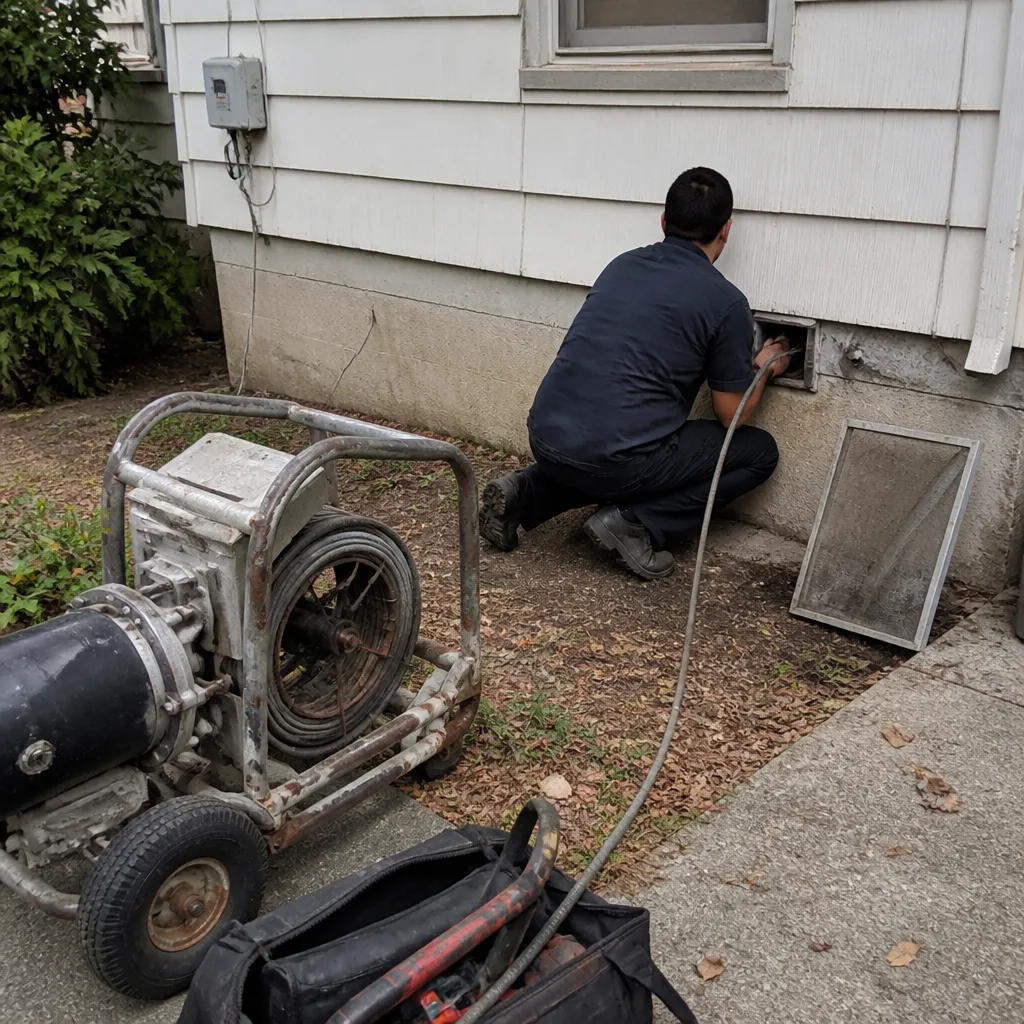 Before
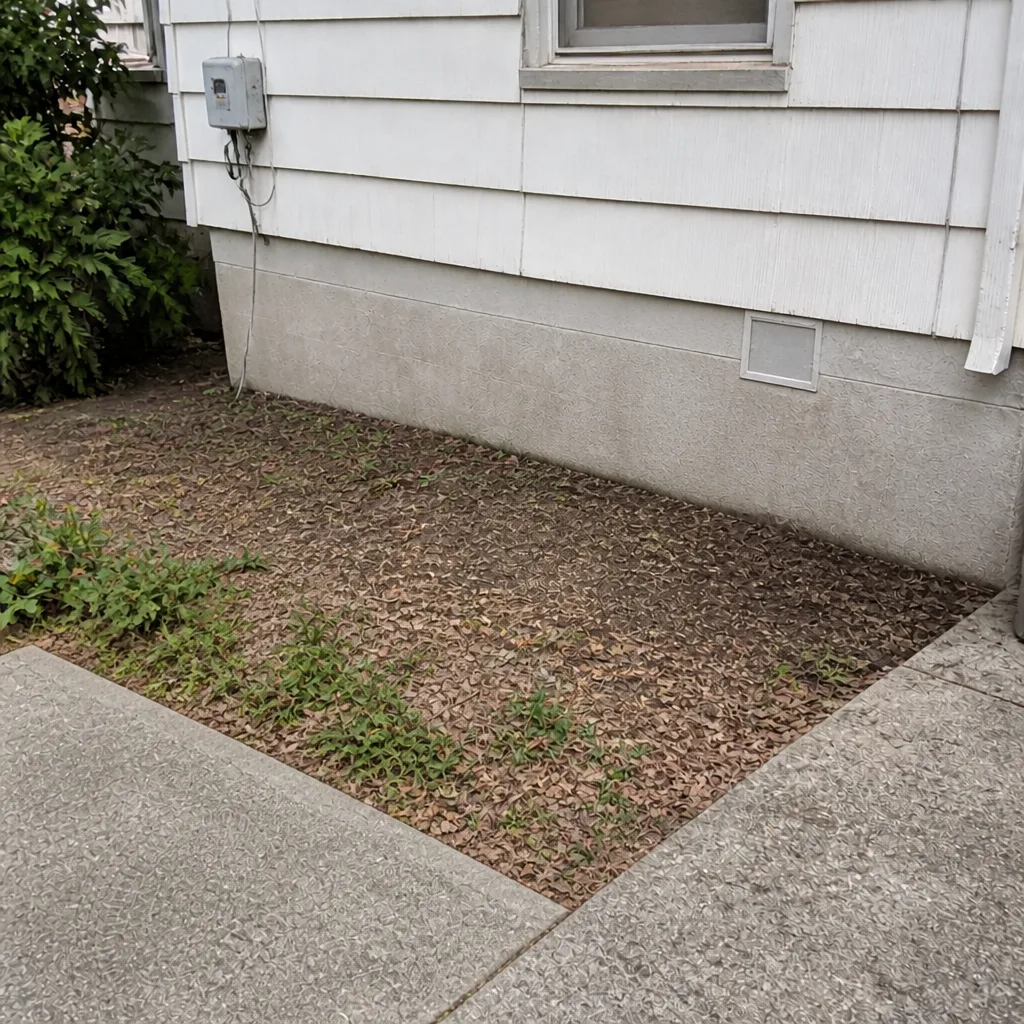 After
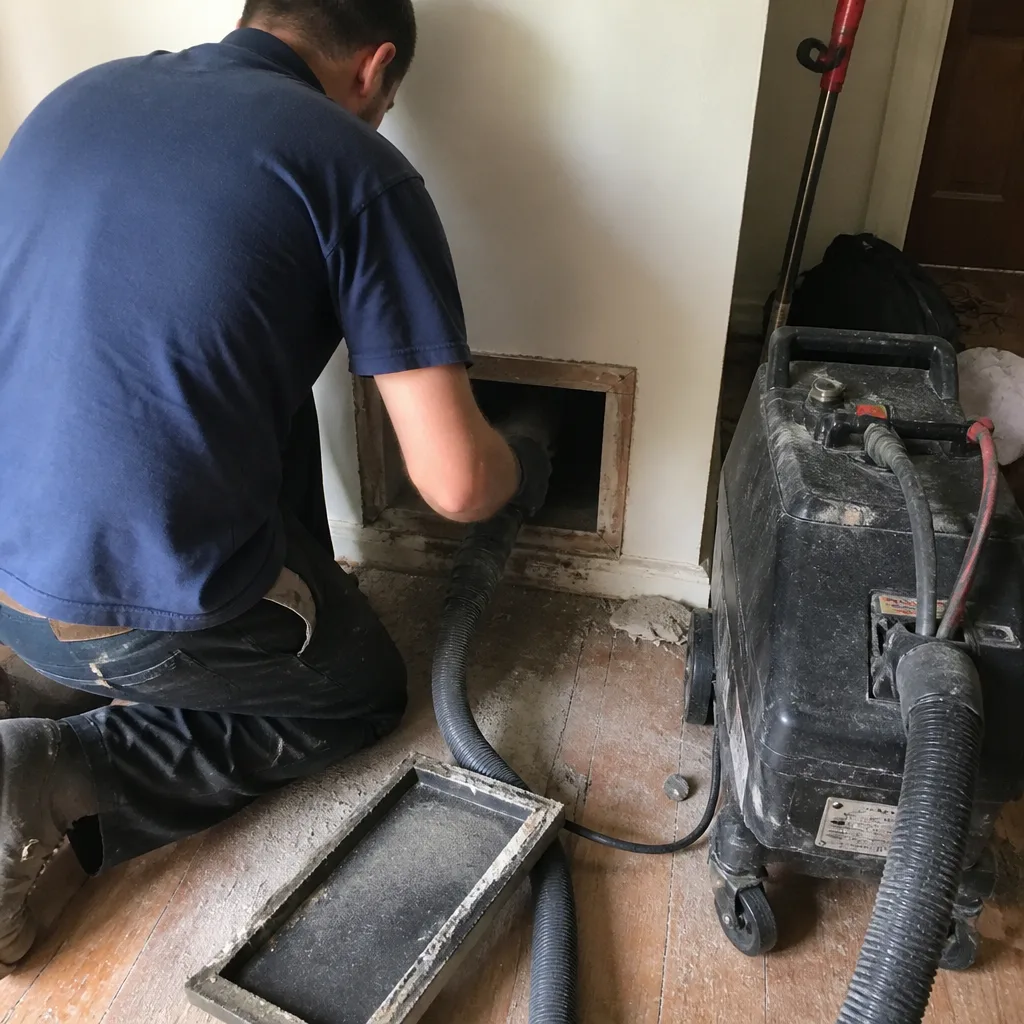 Before
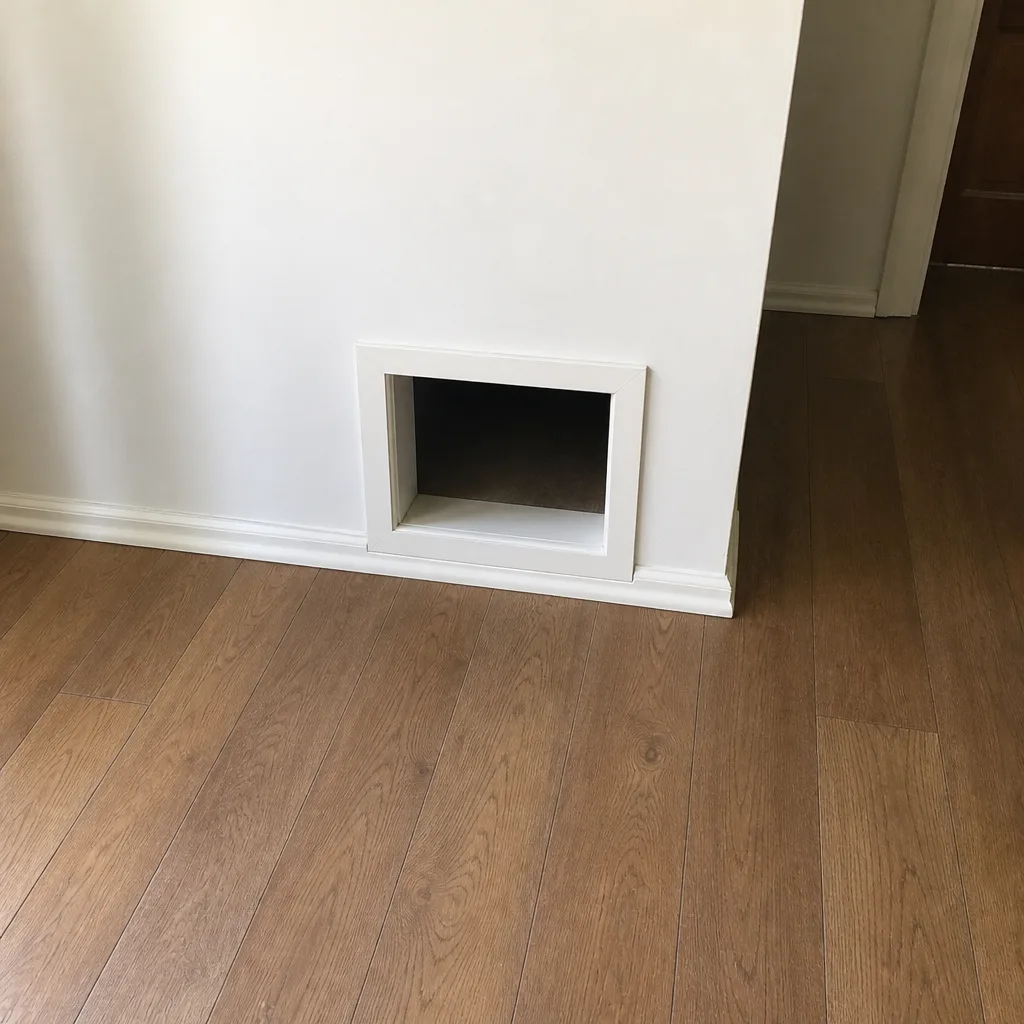 After
 Before
 After
When to Call a Professional
Some situations call for a specialist rather than a general HVAC company. If you see visible debris blowing from registers when the system starts, or if a room consistently smells musty when the air runs, the ducts themselves are likely the source. If anyone in the household has respiratory sensitivity and symptoms track with the heating and cooling season, a full inspection with camera survey is worth booking. If your dryer takes two cycles to dry a load, the vent is suspect. If your building is older and you’ve never had the system assessed, a baseline inspection is a reasonable starting point. And if a previous cleaning found damage that nobody fixed, that gap deserves attention.
Duct Cleaning Newark offers free estimates in Newark. Call (866) 485-3609. We answer 24/7. Fast dispatch from 7am to 7pm, Sunday through Friday.
Frequently Asked Questions
There’s no single number, because a complete residential system quote in Newark depends on square footage, system complexity, number of supply and return runs, and condition revealed during inspection. Be cautious of any contractor who quotes a firm price over the phone before seeing the system. The written estimate after inspection is what sets the final price, and a legitimate contractor will give you one flat price per system, agreed before work starts. Call (866) 485-3609 for an exact quote. Estimates are free.
Cheap quotes almost always reflect a different scope, usually a smaller machine with lower CFM output, no HEPA filtration, no negative pressure, and a visit that skips camera inspection. It’s not a discount, it’s a different job with the same description. The quickest way to confirm the difference is to ask for the machine’s CFM and filtration specifications before booking. Call (866) 485-3609 for an exact quote. Estimates are free.
Ask for camera inspection before and after cleaning, and ask to see the footage or photos of your own system. That’s the only reliable verification, since you can’t see inside the ducts yourself. Before-and-after photos of your own ducts should be part of the job, not a special request. A contractor who can’t provide them is asking you to take the work on faith. Call (866) 485-3609 for an exact quote. Estimates are free.
There’s no universal schedule. NADCA guidance points to conditions rather than a fixed interval: visible debris, musty odors when the system runs, recent renovation, water intrusion, or pest activity are all reasons to book an inspection regardless of when the last cleaning happened. Homes with pets, smokers, or allergy sufferers may warrant more frequent assessment. A camera inspection tells you what your system actually needs. Call (866) 485-3609 for an exact quote. Estimates are free.
Duct cleaning itself typically doesn’t require a permit, but repair work involving modifications to duct systems may fall under local code requirements. The safest approach is to ask your contractor whether the specific repair they’re proposing requires a permit, and to check with Newark’s building department if you’re unsure. A contractor who does repair work regularly will know when to flag it. Call (866) 485-3609 for an exact quote. Estimates are free.
Yes, and it’s a common job. Older buildings present different challenges, including shared chases, stacked units, and duct types that require matched brush heads rather than a single one-size tool. The key is to tell the contractor the building’s age and layout before they quote, so the assessment accounts for it. A crew that doesn’t ask about building age hasn’t thought about your situation. Call (866) 485-3609 for an exact quote. Estimates are free.
The Bottom Line
Hiring a duct cleaner in Newark comes down to verification. There’s no state license to check, so the questions do the work a license would: CFM output, HEPA filtration, negative pressure, brush head matching, camera inspection, itemized supply and return scope, and in-house repair and dryer vent capability. A contractor who answers all of those clearly is worth your time. A contractor who deflects to price is not. Get the scope in writing, get one flat price per system agreed before work starts, and ask for before-and-after photos of your own ducts at the end. That three-part standard eliminates almost every bad outcome this market can throw at you.
If you’d rather skip the process of calling around, we’re happy to walk you through the same questions. Call (866) 485-3609 for a free estimate. We answer 24/7. Fast dispatch from 7am to 7pm, Sunday through Friday. We clean, we repair, and we clear, and the written estimate sets the final price before any work begins.
Written by the team at Duct Cleaning Newark.