
Last updated November 14, 2026
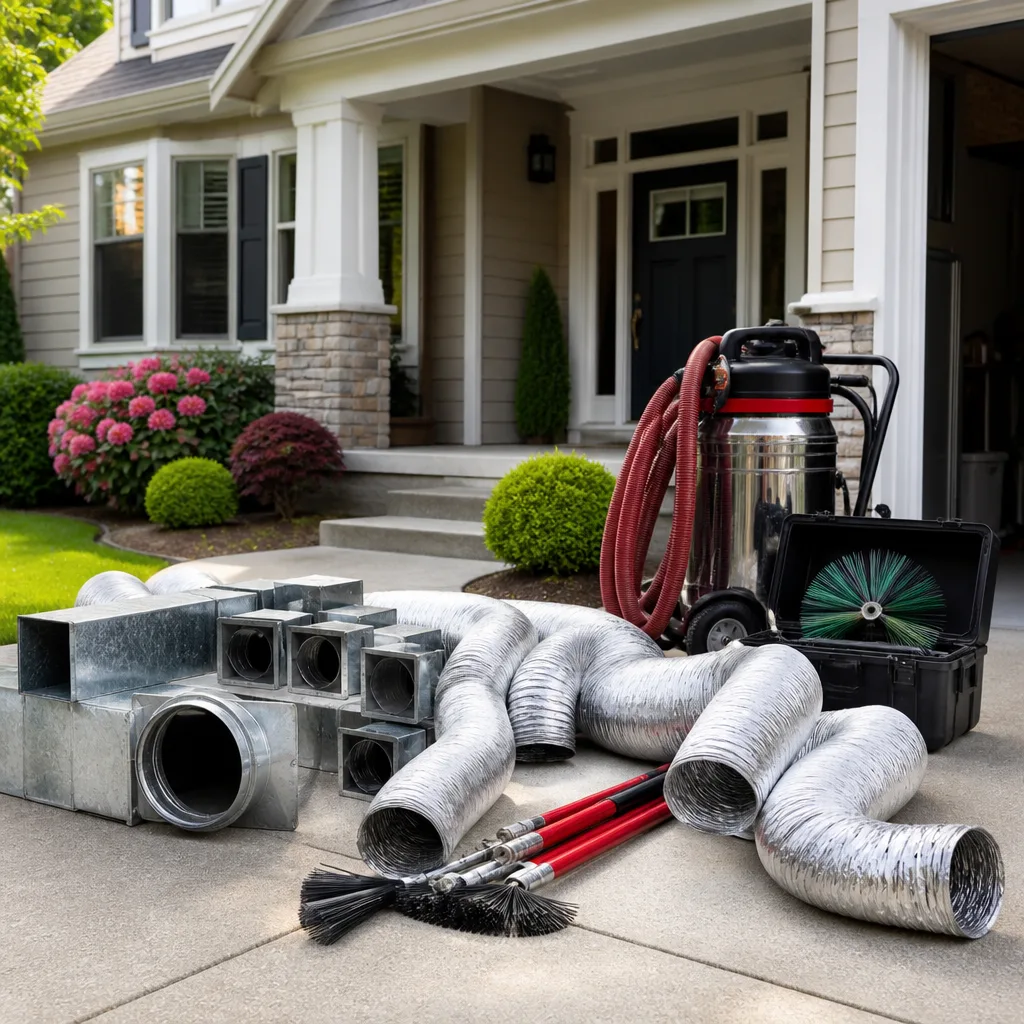 Whole-home duct cleaning
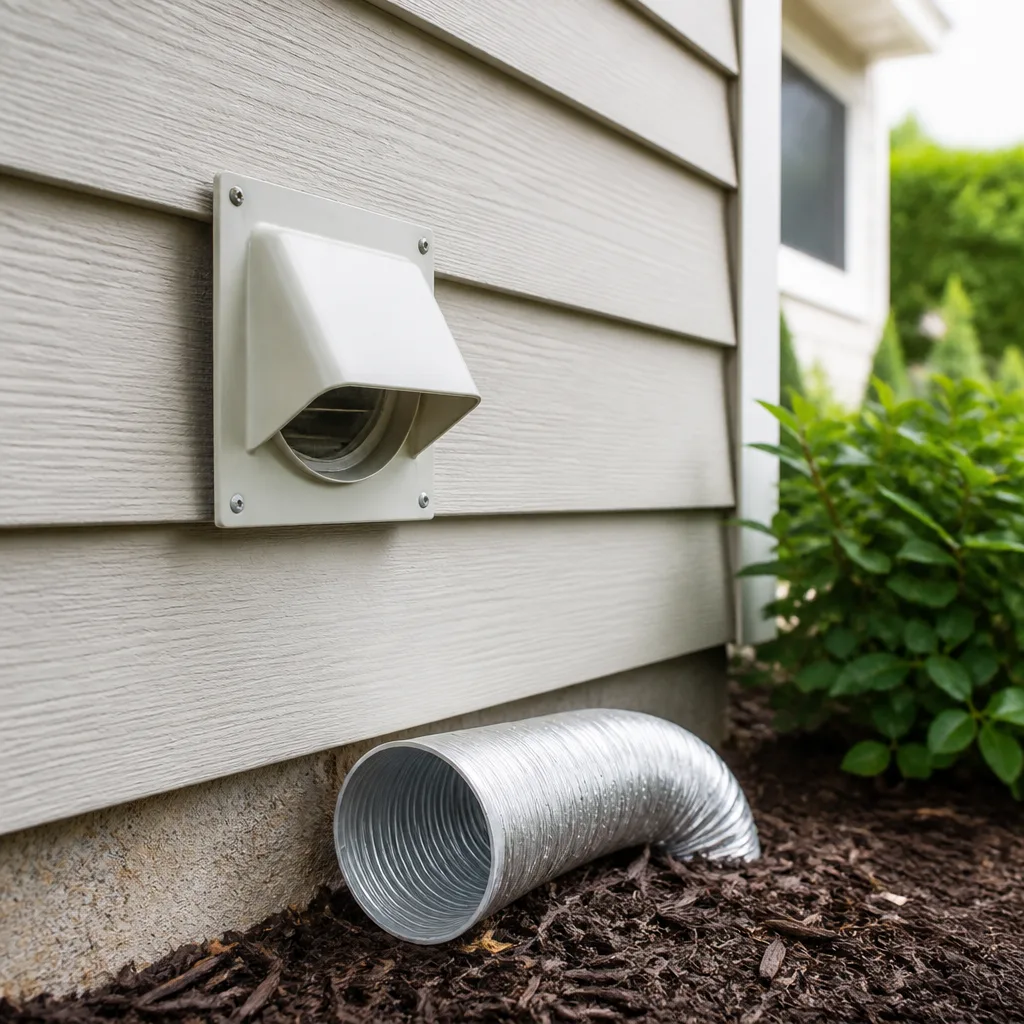 Dryer vent cleaning
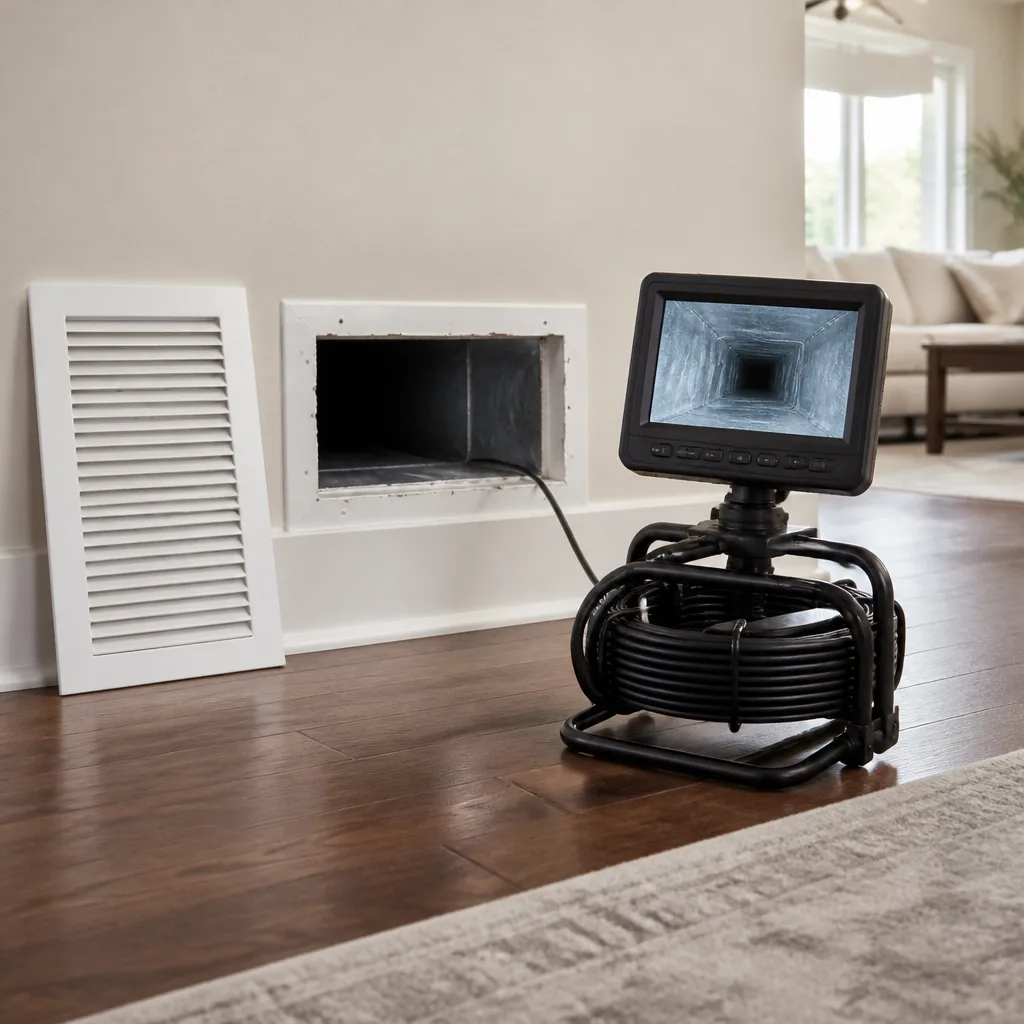 Camera inspection
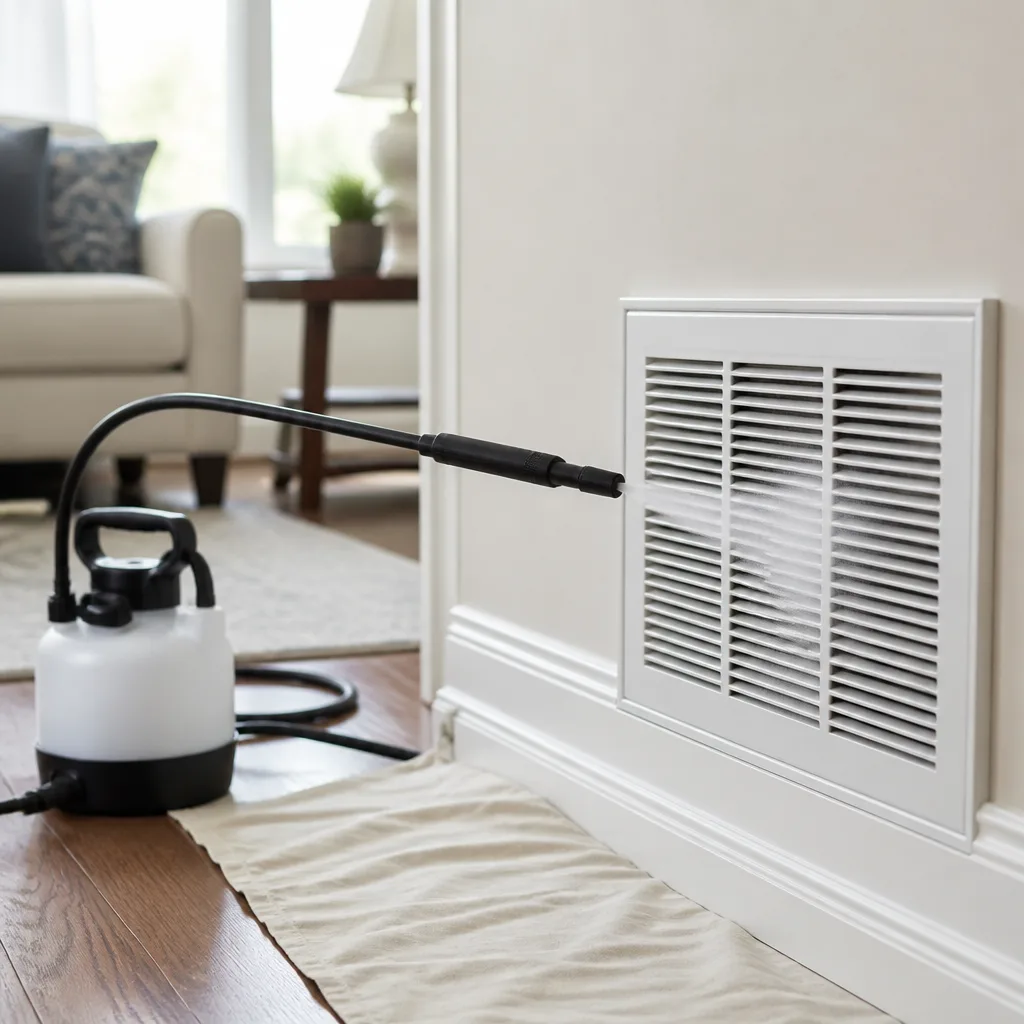 Sanitizing & deodorizing
Whole-system duct and dryer vent check with before-and-after photos - you see exactly what came out of your vents
That "$99 whole-house special" is a bait ad - the real number appears once they are in your hallway, or the "clean" is a shop-vac at the register. We photograph the inside of your ducts before and after instead.
Air Duct Cleaning Emergency Preparedness Guide for Newark Homes
After a basement flood, most Newark homeowners call a water remediation company right away. Very few think to check whether the return air intake kept pulling air through the duct system while the cleanup was underway. That one missed step has a way of showing up months later as a musty smell in a ceiling register or a visible stain around a vent. We wrote this guide because duct emergencies follow predictable patterns, and a homeowner who knows the sequence handles them far better than one who waits for the smell. You’ll learn exactly which events threaten a forced-air system in Newark, what to shut down and when, and who to call in what order.
Quick Answer
A duct emergency is any event that pushes smoke, water, pest waste, or construction debris into your forced-air system while it is running. The right first move is almost always to shut off the HVAC system and keep it off until the ductwork has been assessed and cleaned. Safe operation resumes only after the contamination source is removed and the ducts are cleaned and dried. In Newark, that sequence matters because so many homes run central air through old ductwork that predates the current owner.
Styles & brands we work with
- Whole-home duct cleaning
- Dryer vent cleaning
- Camera inspection
- Sanitizing & deodorizing
Table of Contents
- Shut Down First: The Universal First Step
- Post-Flood Protocol for Newark Basements
- Fire and Smoke Events: Why Running the System Makes It Worse
- Rodent Intrusion: Active vs. Past Infestation
- Renovation Dust and the Sealing Question
- Who to Call, and in What Order
- How to Verify the Work Was Done
- Building an Everyday Preparedness Routine
Shut Down First: The Universal First Step
Whatever the emergency, the first action is the same: turn the system off at the thermostat and, if you can reach it safely, at the breaker. A forced-air system is a giant air mover. While it runs, it keeps circulating whatever has entered the return side. Shutting it down stops the spread.
Why this matters more than most people realize: your return air intakes pull from the lowest and most accessible parts of the house, and those are exactly the areas where smoke settles, water pools, and rodents nest. Once contamination reaches the return plenum, every supply register in Newark becomes a distribution point.
What to do, in order:
- Set the thermostat to OFF. Not “fan on” (fan on keeps running without heating or cooling), and not auto.
- Turn off the air handler at the breaker if the panel is in a dry, safe location.
- Note the time and the event. Write it down. Contamination timelines help whoever assesses the system later.
- Photograph what you can see: waterlines, soot patterns around registers, droppings, visible debris.
- Do not run the system to “test” it. The next run should be after the ducts have been assessed.
We see this pattern often in Newark’s older multi-unit buildings, where the thermostat for one unit is in a hallway shared by two. Confirm which system you’re shutting down before you walk away.
Return Air Intakes: The Part People Forget
Return intakes are the low grilles near the floor, usually the largest register in a hallway. These are the entry points for contamination. If you have a basement intake and a first-floor flood, the basement intake is the priority. If your system draws return air through a central chase, that chase is the first thing to check. Our air duct cleaning technicians trace return paths as part of every assessment for exactly this reason. A supply-side-only cleaning misses the source.
Post-Flood Protocol for Newark Basements
Here’s what most people don’t know: a basement flood and a forced-air duct system interact through three separate pathways.
- Direct submersion. If the air handler or any flex duct sat in water, that section is compromised and needs replacement, not just cleaning.
- Humidity migration. Damp basement air gets pulled into the return and pushed through the supply. Even an inch of standing water is enough to create a sustained moisture source.
- Contaminant redistribution. If a remediation crew’s fans were running mid-cleanup while the HVAC cycled on (HVAC cycles on its own if the thermostat has a schedule), airborne spores entered the system.
Newark’s housing stock makes this more common than it should be. Many of the city’s older two- and three-family homes have air handlers in basements with low ceilings, and basement flooding is a known recurrence in the Ironbound and Weequahic areas after heavy rain. The result is duct systems that carry moisture loads modern construction wasn’t designed to handle.
The sequence for safe operation, in order:
- Stop the water source and remove standing water. That’s the remediation company’s job. Do not skip this stage.
- Dry the basement. Dehumidifiers and airflow, run until moisture readings are normal. Do not turn the HVAC on to “help dry out.” It will send damp air through the ducts.
- Assess the ducts. Look for water intrusion, sagging flex duct, rusted seams, and musty smell at registers. Have the air handler checked.
- Clean and dry the duct system. Cleaning must happen after the basement is dry, not before. Running a high-powered vacuum through wet ducts traps moisture.
- Replace what’s compromised. Sections that sat in water or show visible mold should be replaced, not cleaned.
- Verify before you restore operation. Turn the system on only after the ducts are visibly dry and the air handler is confirmed safe.
One detail that trips up Newark homeowners: if the flood happened while you were out of the house and the thermostat was on a schedule, the system likely ran for hours with wet air in the return. In that case, even a “small” flood warrants a full assessment. Read more on the Newark page for local context on how this plays out in different neighborhoods.
Fire and Smoke Events: Why Running the System Makes It Worse
Combustion residue is not just soot. It’s a mix of fine particles, acidic compounds, and oils that settle onto every surface air touches. In a forced-air system, that surface is the inside of every duct in the house.
Running the system after a fire, or even a small kitchen fire that got smoke into the return, accelerates the problem in three ways:
- It pulls airborne residue into the return before it settles anywhere.
- It distributes that residue to rooms that were nowhere near the fire.
- It deposits smoke oils onto duct liners and insulation, where they keep off-gassing for months.
What a post-fire duct cleaning actually involves, versus a standard cleaning:
Standard cleaning removes accumulated dust, debris, and light buildup from duct interiors and registers. Post-fire cleaning removes smoke residue, chemical residue, and any debris the fire itself pushed into the system. It typically requires chemical agents rated for residue removal, more aggressive agitation, and often replacement of any flexible duct or insulation that absorbed smoke odor and cannot be cleaned to a reasonable standard.
This is where equipment matters. Our technicians run Abatement Technologies equipment, the same standard used in professional remediation settings, for post-fire work. Residue removal isn’t a blow-and-go job, and the tools on site need to match the level of contamination found.
What to Expect During a Post-Fire Duct Cleaning
- Full visual inspection of all accessible duct runs, registers, and the air handler.
- Negative pressure setup so removed residue doesn’t go back into the house.
- Mechanical agitation of each duct run.
- Chemical treatment where residue is oil-based or chemically bonded.
- Replacement of flexible duct and insulation where cleaning won’t fix the smell.
- Verification with photos of the duct interiors before and after.
Rodent Intrusion: Active vs. Past Infestation
Rodents in ductwork are not a cosmetic issue. Fecal matter, urine, nesting material, and shed hair create sustained biological contamination in a system that blows air into every room of the house. The critical question is whether the infestation is active or past.
How to Tell Active From Past
Active infestations show fresh droppings, recent gnaw damage, live scratching, and new nesting material at intervals. Past infestations show old, dried droppings, old nesting material, and gnaw damage that isn’t progressing. A technician’s first job is to determine which. If the infestation is active, cleaning the ducts without addressing access points just creates a new clean home for the rodents. Sealing, trapping, or exclusion must come first, then duct cleaning.
The Multi-Step Remediation Sequence
- Confirm activity. A pest professional or a duct technician checks for fresh signs. Treat this step as a gate: do not clean until activity is confirmed resolved.
- Seal and exclude. Close exterior gaps, repair the duct damage rodents used to enter, and address the source.
- Remove nesting material and debris. Duct cleaning pulls out soiled material; this is a sanitation job, not a dusting.
- Sanitize the duct interior. After removal, the interior is treated with an appropriate sanitizing agent.
- Repair duct damage. This is where most duct-only companies stop. We don’t leave damaged ductwork for someone else: our technicians seal gaps and repair damaged sections in the same visit when the scope allows.
- Verify and document. Before-and-after photos of the duct interiors show what was removed and how it looks after.
Rodent intrusion is common in Newark’s older buildings, especially in attached homes, multifamily units, and properties near older commercial buildings. Timing matters, because rodents in one duct run will follow the ducts into the next unit.
Renovation Dust and the Sealing Question
A gut renovation without HVAC shutdown and duct sealing is one of the most common causes of a duct emergency in Newark, and it rarely presents as an emergency until it’s far along. Drywall dust, insulation fibers, sawdust, and demolition debris get pulled into the return, which then distributes them throughout the home.
What actually happens during a renovation without protection:
- Drywall dust, which is fine enough to coat the inside of every duct run, enters through the return.
- Fiberglass particles from insulation and ceiling work lodge into duct liners and stay there.
- Paint and solvent fumes get pulled in, leaving odor buildup.
- Sawdust becomes a fire load in the duct run, especially in older systems.
Once the renovation is done, the cleaning needed is not the same as a routine cleaning. It’s an aggressive protocol designed to remove fine particulates, fibers, and chemical residue. The right approach here includes:
- Full removal of visible debris from all accessible duct runs and registers.
- Mechanical agitation deep enough to dislodge accumulated fine dust from duct walls.
- HEPA-level vacuum capture so nothing re-enters the home.
- Register and grille cleaning to remove settled debris.
- Air handler inspection, because renovation dust collects on the coil and blower too.
- Replacement of the filter and confirmation the system runs clean.
Our technicians run both Rotobrush and Nikro duct cleaning systems, which lets them match the right approach to the actual duct type and contamination level. A gut renovation rarely needs the same method as a light periodic cleaning. For pre-renovation planning, sealing return grilles with a protective barrier before work begins is far easier than the cleaning that follows when it doesn’t happen. In Newark, this comes up often on row-house renovations that combine gutting the interior with new HVAC installation, where the return path has to be considered during the renovation, not after.
Who to Call, and in What Order
The sequence matters. Most homeowners in Newark call the wrong trade first because duct cleaning doesn’t present as an emergency the way water or fire does. Here’s the right order for each event:
After a Flood
- Water damage or remediation company first. They remove water and dry the structure.
- Then the duct specialist, once the basement is dry.
- Then the HVAC contractor, if the air handler or heating equipment was compromised.
After a Fire
- Fire department, then fire restoration company. They address structural damage, contents, and smoke on surfaces.
- Duct specialist, working with or after the restoration crew. Sometimes the restoration company coordinates this step.
- HVAC contractor for equipment checks.
After Rodent Intrusion
- Pest professional, to confirm the infestation is resolved.
- Duct specialist for cleaning, sanitizing, and repair.
After a Renovation
- Contractor completes the work.
- Final construction cleanup.
- Duct specialist for post-renovation cleaning.
- Air handler check, done after the ducts.
Duct cleaning sits in the middle of the sequence in almost every case, not the beginning. Getting that right saves you from a second cleaning later, and connects to our duct cleaning Newark service if you need a coordinating hand. Property managers should build this order into their standard response plans before an event happens.
How to Verify the Work Was Done
This is the part of the industry with the most hesitation: how do you know the work was actually done and not just billed? The answer is documentation.
- Before-and-after photos of the duct interiors, not just the registers and not just the exterior.
- A written scope describing which duct runs were cleaned, which were inspected, and which were replaced.
- Visual confirmation of the removed material. In a post-flood or post-rodent event, the truck collection shows the volume.
- Consistent cleaning standard across every system in the building, useful for landlords who document work across units.
Ask before the job starts whether the technician will provide before-and-after photos and a written scope at the end. Any answer other than “yes” should be a red flag. Our team applies Guardsman-level care standards to the surfaces and systems we work in, and documentation is part of that standard.
Building an Everyday Preparedness Routine
Most duct emergencies can be shortened, though not prevented, by a few habits:
- Know where your thermostat and air handler breakers are, and how to shut them both off.
- Check your return air intakes before every storm season. Low grilles near basements are the first place to look.
- Get a dated photo of your duct interiors on file after any cleaning. It gives you a baseline to compare against later.
- Document your system layout, including which rooms share returns, so a post-event shutdown doesn’t take two hours of head-scratching.
- If you have a Honeywell or Aprilaire system, keep the equipment manual on hand and check the filter schedule. These systems help manage long-term air quality once the emergency is resolved, but they need clean ducts beneath them to work as intended.
- Have a written response plan for floods, fires, and renovations. A landlord with three units needs to know who to call and in what order before the next event.
This is the same principle as a plumbing or electrical plan: knowing the shutoff and the sequence makes the difference between a manageable event and a multi-week restoration. For routine servicing between events, our dryer vent cleaning service is the easiest add to a yearly inspection visit, because the vent line shares the same building envelope as the HVAC system and the same risk of accumulation.
Common Mistakes to Avoid
- Running the system to test it after a flood or fire. Once contamination is in the return, every cycle spreads it. Keep the system off until the ducts are assessed.
- Calling duct cleaning first after a flood. Drying the structure comes first. Cleaning wet ducts traps moisture in the system.
- Cleaning ducts while the rodent infestation is still active. It resets the clock, not solves the problem. Confirm activity is resolved, then clean.
- Skipping the return side. Newark’s older buildings have return paths that a supply-only cleaning misses entirely. Insist on a full assessment.
- Skipping duct sealing during a renovation. Sealing return grilles before work begins costs far less than the post-renovation cleaning when it doesn’t.
- Skipping documentation. Without before-and-after photos and a written scope, you can’t verify the work was done, and landlords can’t document it to tenants.
- Assuming the smell will tell you when it’s a problem. Mold in a duct system can be present well before the odor is unmistakable. If a flood or fire happened, get the system assessed regardless.
See the difference
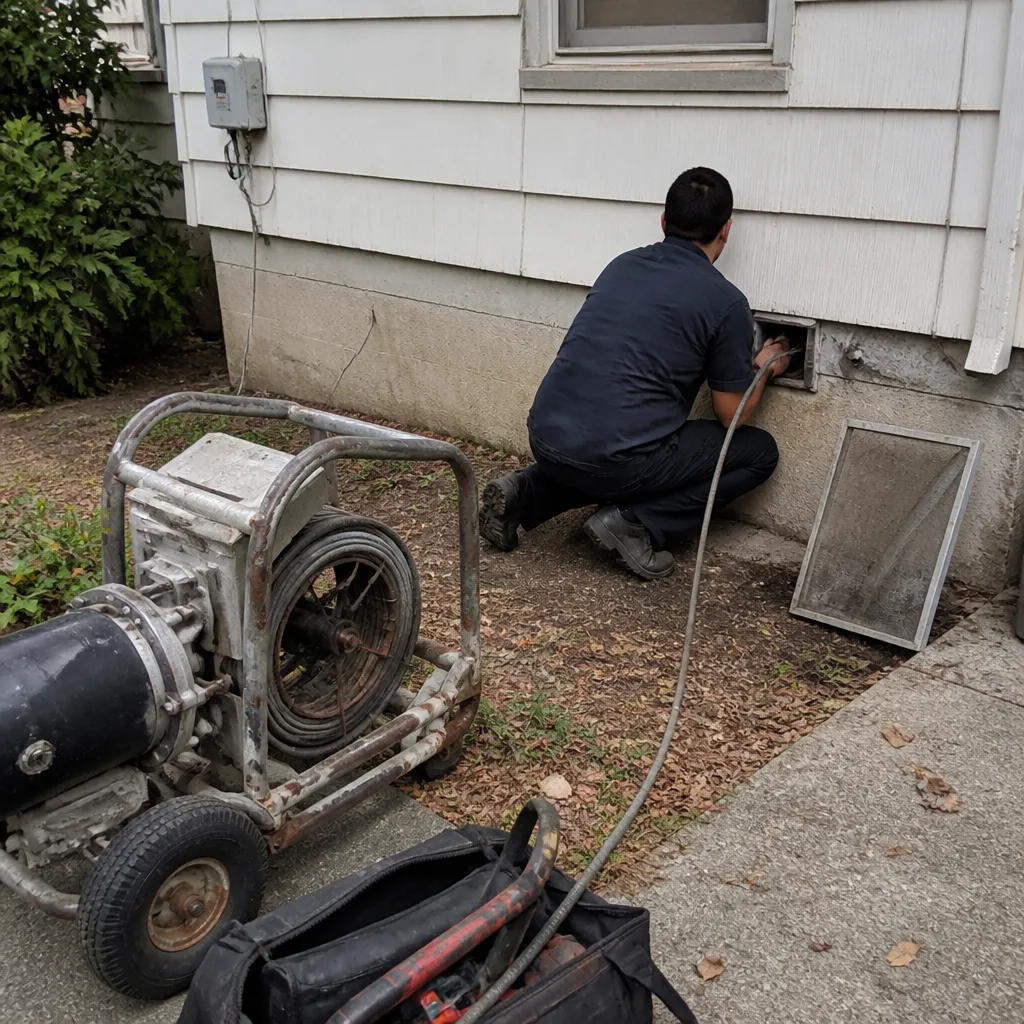 Before
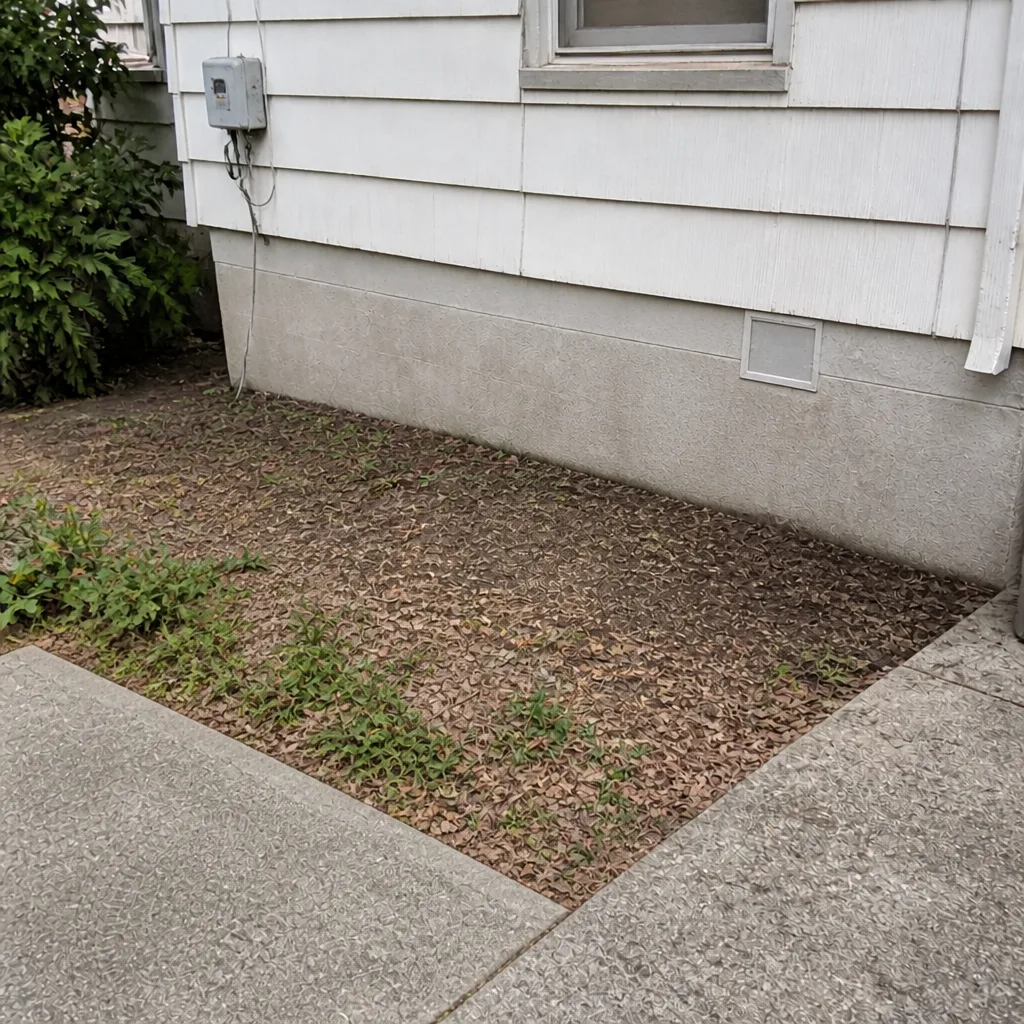 After
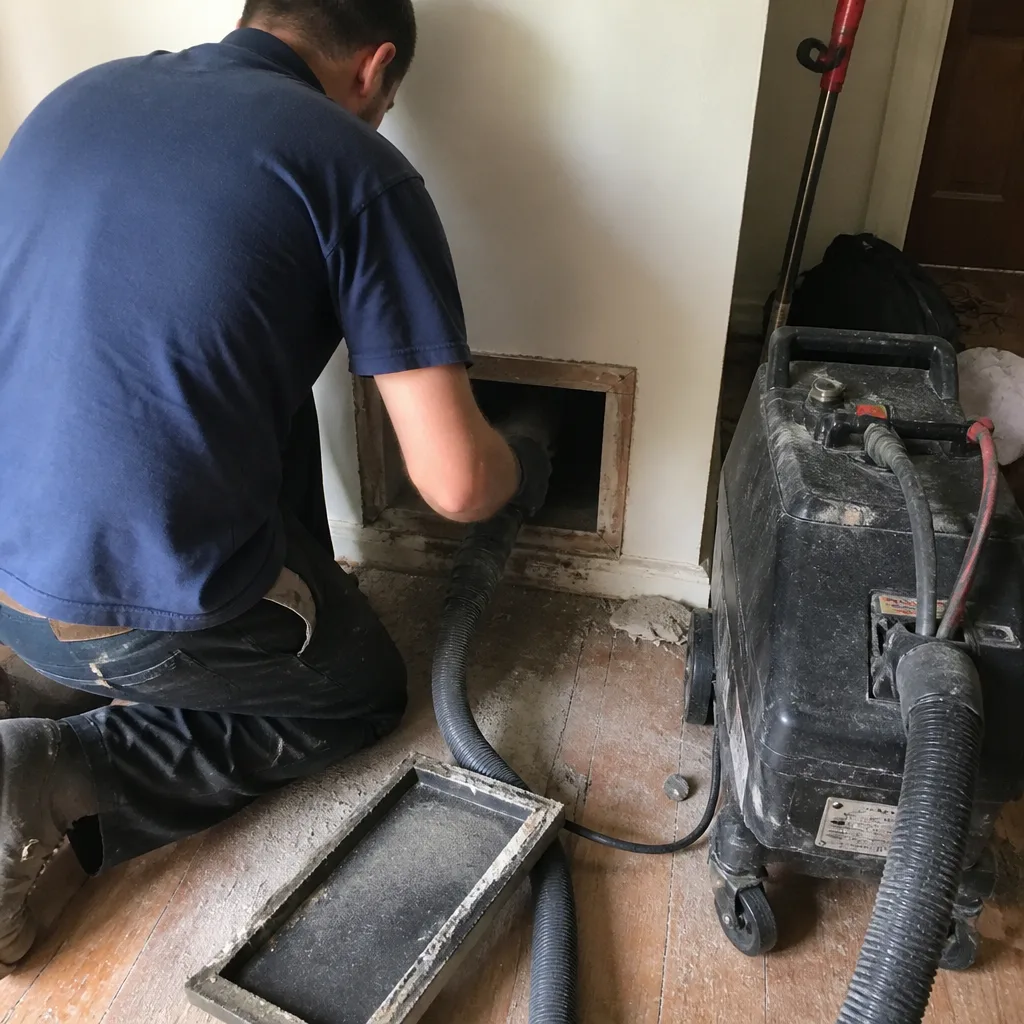 Before
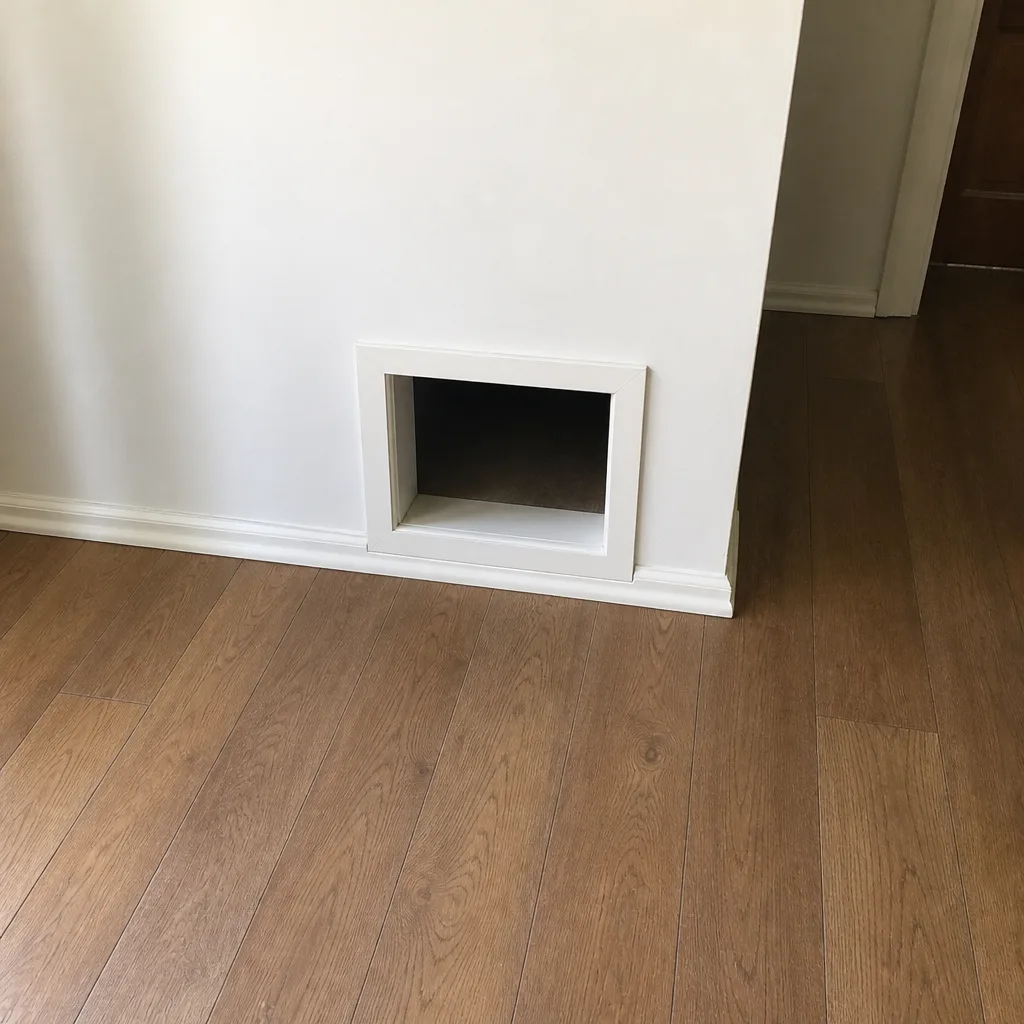 After
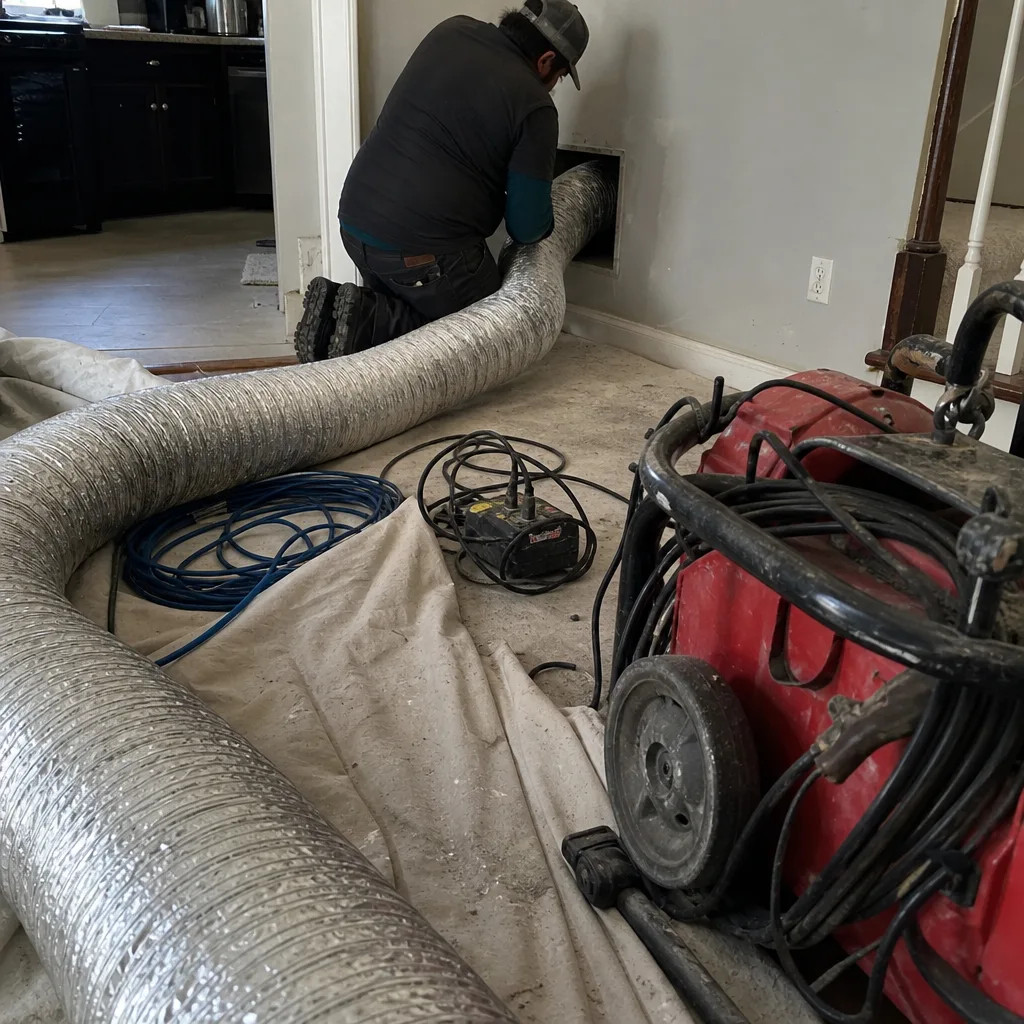 Before
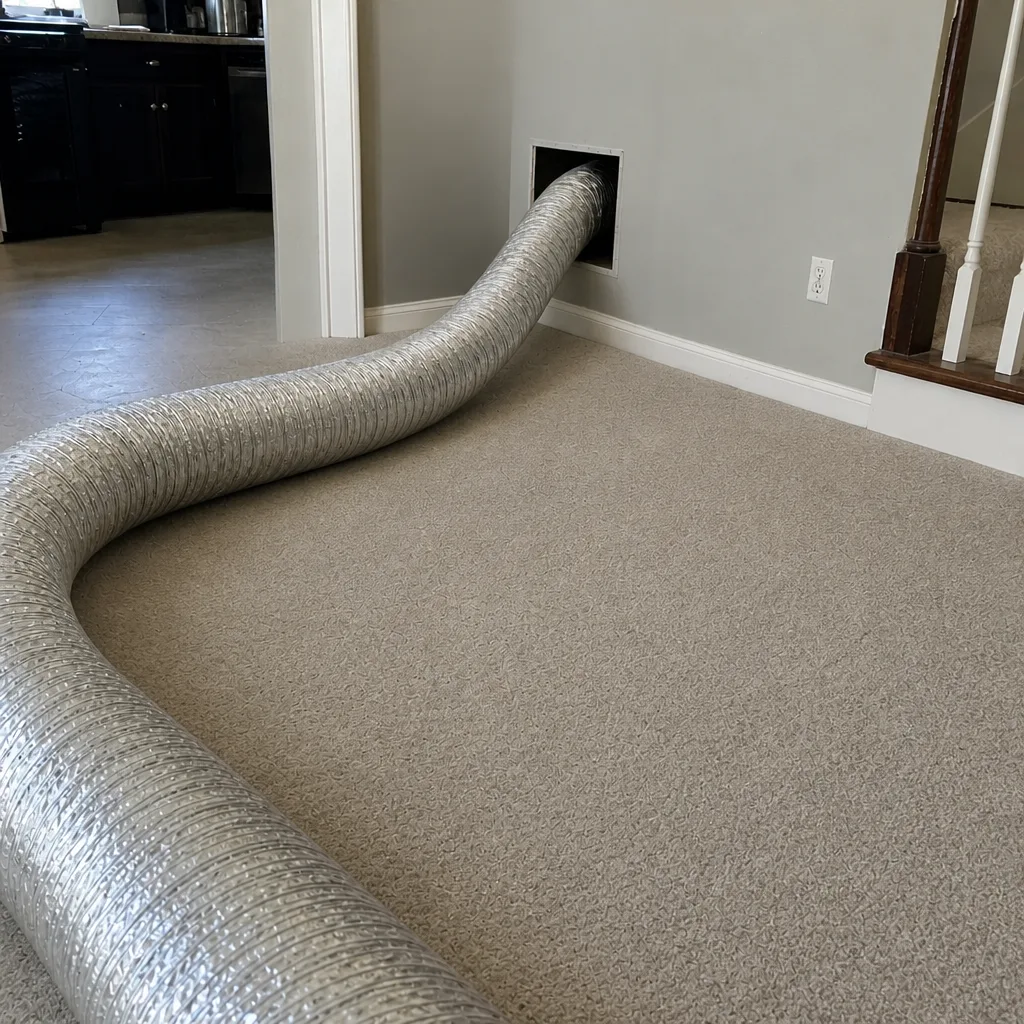 After
When to Call a Professional
Call a professional if any of the following apply: the system ran while the basement was wet, smoke from a fire or cooking event entered the return, you’ve found rodent droppings or gnaw damage, a renovation left dust or debris visible in registers, or you can smell mustiness on the first floor when the system runs. These are the situations where the wrong sequence can make things worse. Our technicians have up to 8 years of experience and work with the professional-grade equipment post-event cleaning requires. Duct Cleaning Newark offers free estimates in Newark – call (866) 485-3609. We answer 24/7. A call outside dispatch hours is booked into the next opening, Sunday through Friday, 7am to 7pm. We’re closed on Saturday, so a Saturday call is booked into Sunday. Fast dispatch from 7am to 7pm.
Frequently Asked Questions
After the basement is fully dry. The right sequence is water removal, then drying, then duct assessment and cleaning. Once the structure is dry, don’t leave the ducts unaddressed for more than a few weeks, because any residual moisture can support mold growth inside the system. Call (866) 485-3609 for an exact quote – estimates are free.
We price per job, not per vent, and the written estimate sets the final price after we’ve assessed the system. Call (866) 485-3609 for an exact quote – estimates are free. Post-event jobs (flood, fire, rodent damage) typically require more scope than routine cleaning and are priced accordingly. If a quote seems dramatically low, ask what equipment is on site and whether before-and-after photos of the duct interiors are included.
Because the job is smaller. Some quotes are based on a single machine, supply-only cleaning, and no documentation, which is not the same work as a post-event cleaning. Ask which duct runs are cleaned, whether the return side is included, and whether the technician will provide before-and-after photos of the duct interiors. Call (866) 485-3609 for an exact quote – estimates are free.
Before-and-after photos of the duct interiors, a written scope that names the runs cleaned, and visual confirmation of the removed material. Our technicians document all three; ask for them before the job starts. Call (866) 485-3609 to schedule.
Yes. Landlords and property managers are a big part of our work in Newark, especially in multifamily buildings where one system serves several units. We document the work so it can be shared with tenants or insurance. Call (866) 485-3609 for an exact quote.
No. Fan-on cycles are just as much a spread mechanism as heating or cooling. Turn the system off at the thermostat and, if you can safely reach it, at the breaker. Call (866) 485-3609 and have the system assessed before running it again.
The Bottom Line
Most duct emergencies are sequences, not single events. The flood, the fire, the rodent intrusion, and the renovation each come with a correct order of operations, and running the HVAC system at the wrong time makes the outcome lasting. Shut down first, dry second, assess third, clean and repair fourth, verify last. In Newark, where many of the city’s older buildings run central air through duct systems that predate the current owner, knowing that sequence is the difference between a manageable event and a problem that shows up in a ceiling register months later. When it comes time to act, move in the right order.
If any of the situations in this guide sound familiar, get the system assessed before you run it again. Duct Cleaning Newark provides air duct cleaning, dryer vent cleaning, and air duct repair, including post-event work. Call (866) 485-3609 for a free estimate. We answer 24/7. Fast dispatch from 7am to 7pm, Sunday through Friday.
Written by the team at Duct Cleaning Newark.