
Last updated November 14, 2026
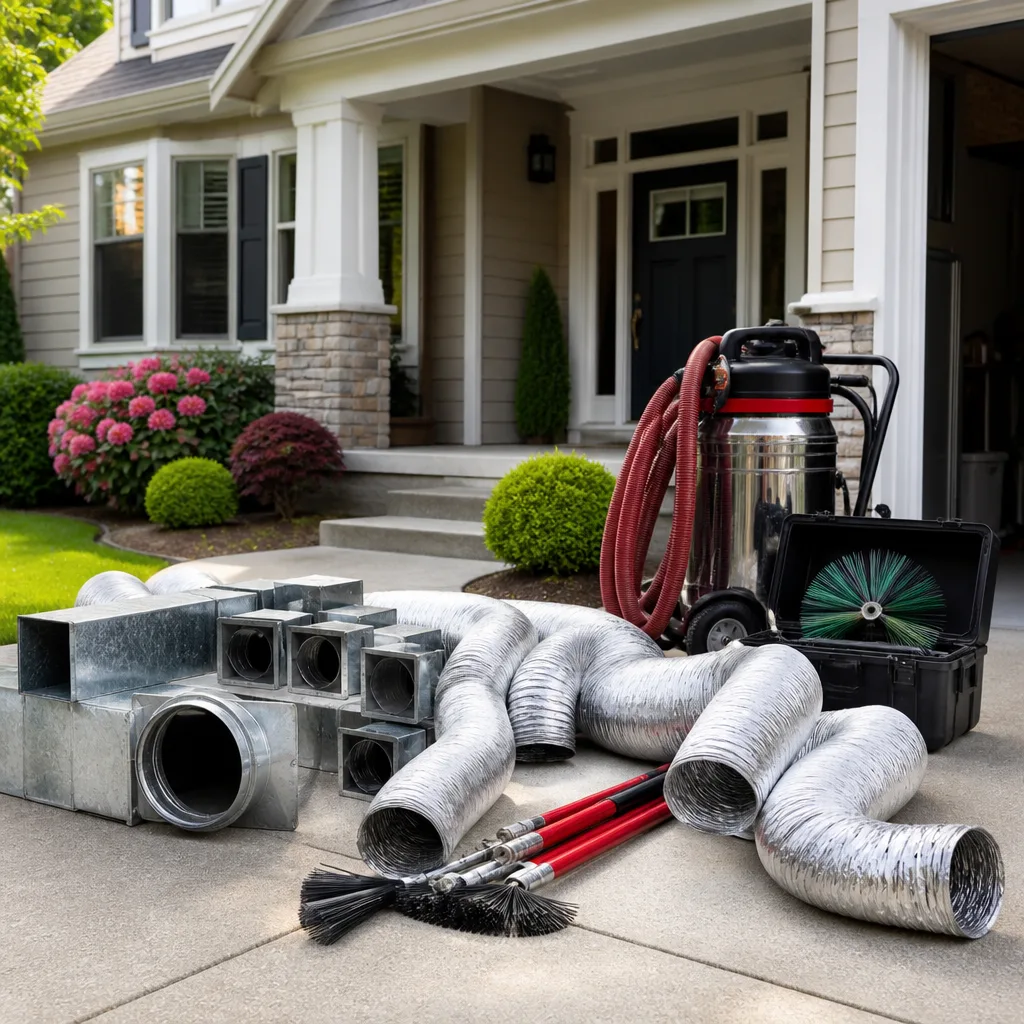 Whole-home duct cleaning
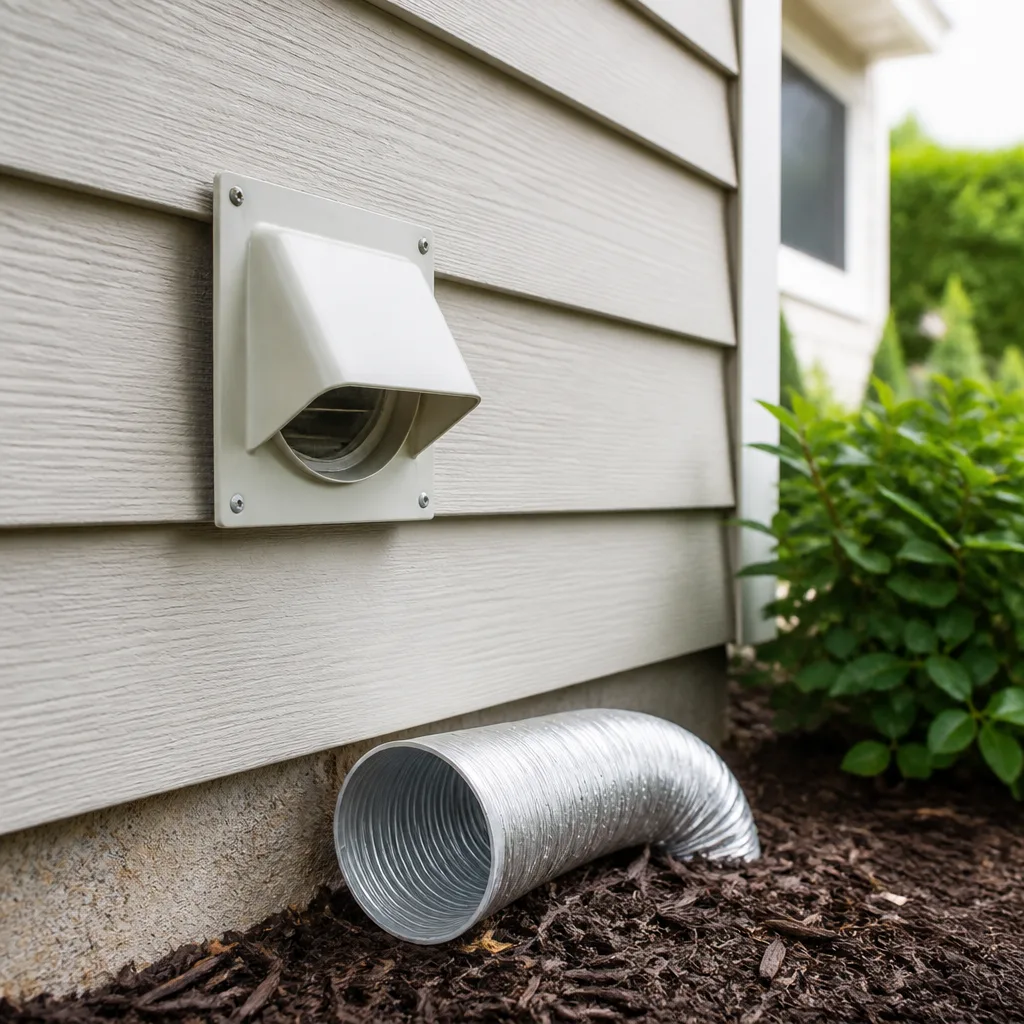 Dryer vent cleaning
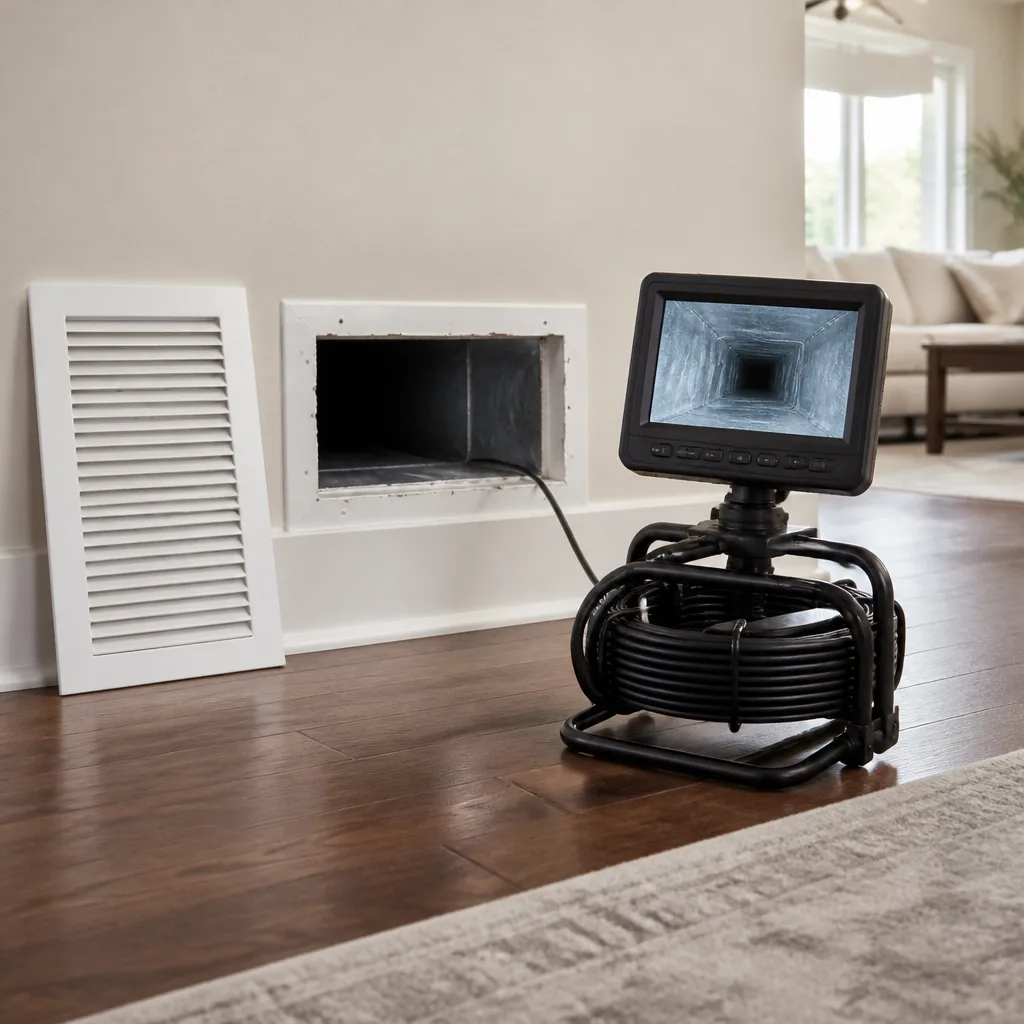 Camera inspection
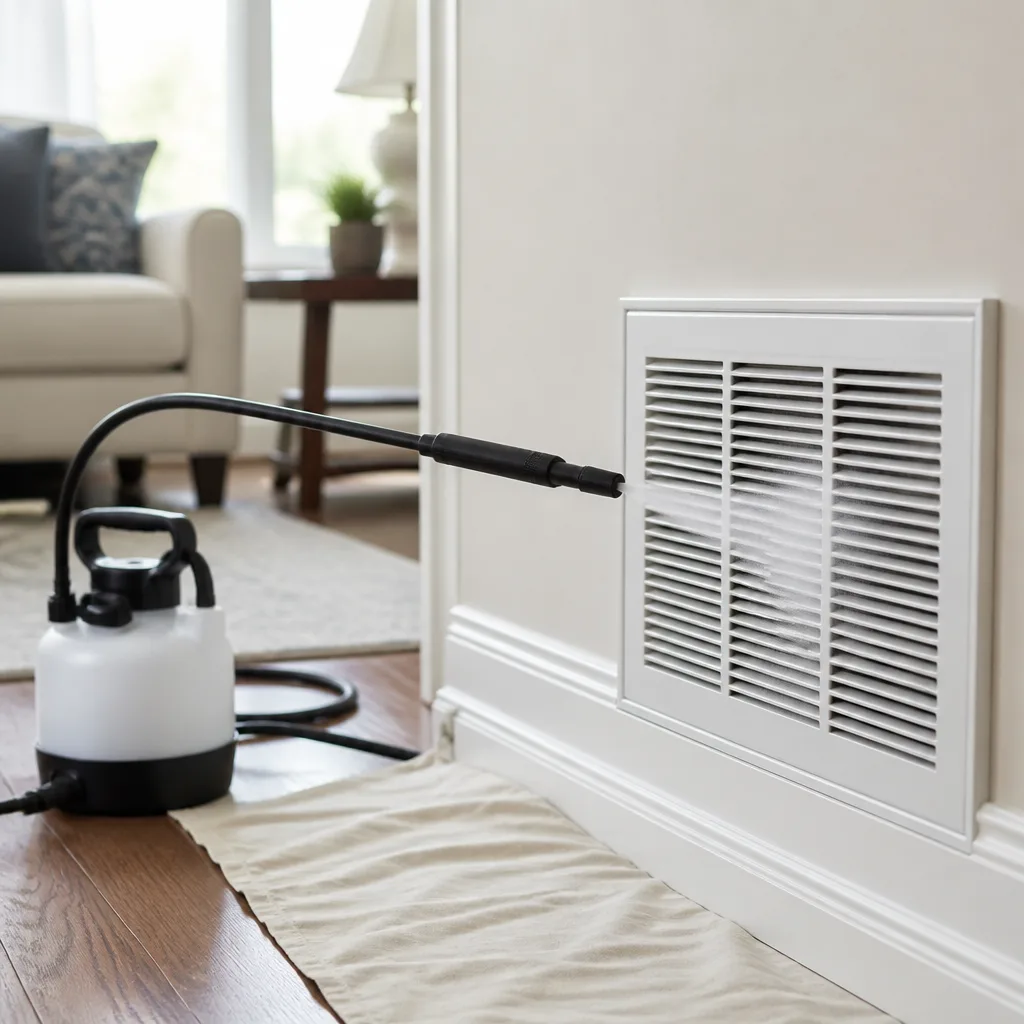 Sanitizing & deodorizing
Whole-system duct and dryer vent check with before-and-after photos - you see exactly what came out of your vents
That "$99 whole-house special" is a bait ad - the real number appears once they are in your hallway, or the "clean" is a shop-vac at the register. We photograph the inside of your ducts before and after instead.
Seasonal Air Duct Cleaning Care for Newark: Year-Round Homeowner’s Guide
Most duct cleaning advice treats the calendar as background noise. One recommendation, one interval, applied to every home in every season. That works about as well as a single wardrobe for a city that swings from humid July afternoons to dry February nights. Newark’s four seasons don’t just change the temperature outside your windows; they change what’s collecting inside your ductwork, what your system is fighting against, and which failures are most likely in a given quarter. A duct system that behaves fine from November through March can turn into a musty, cycling mess by the first hot week of June, and the evidence of why was building up the whole time the system sat mostly idle. What follows is a season-by-season guide to what’s actually happening in Newark ductwork, what to inspect and when, and how to build a cleaning cycle that tracks the local climate instead of ignoring it.
Quick Answer
Air duct cleaning in Newark works best on a seasonal rhythm, not a single yearly date. Spring is the window to clear winter’s heating residue before cooling season starts, fall is the highest-value cleaning period for homes running gas forced-air heat, and winter is when dryer vent risk peaks. Most Newark homes with a forced-air system land on a two-year cycle: a full cleaning in year one, an inspection-only visit in year two, with dryer vent cleaning handled on a shorter interval separate from the main duct work.
Styles & brands we work with
- Whole-home duct cleaning
- Dryer vent cleaning
- Camera inspection
- Sanitizing & deodorizing
Table of Contents
- Why Newark Ducts Need a Seasonal Plan, Not an Annual One
- Spring: Clearing Winter’s Residue Before Cooling Season
- Summer: Humidity, Condensation, and Catching Mold Early
- Fall: The Pre-Heating-Season Window That Matters Most
- Winter: Why Dryer Vent Cleaning Becomes a Fire Task
- Building a Two-Year Cleaning Cycle That Holds Up
- How to Tell What’s Actually in Your Ducts
- What Happens When Cleaning Turns Up Damaged Ductwork
Why Newark Ducts Need a Seasonal Plan, Not an Annual One
A duct system in Newark doesn’t experience a uniform year. It experiences a heating season, a cooling season, two long shoulder periods when the system mostly rests, and a humidity curve that peaks in the dead of summer. Each phase deposits something different in the ductwork and stresses the system differently.
During heating season, a gas forced-air system pushes warm air through ducts that have been cool and damp for months. Combustion byproducts can migrate into the return side, and if there’s a whole-home humidifier in line, mineral scale from the water supply can build on the pad and downstream surfaces. During cooling season, the evaporator coil and supply ducts run cold while Newark’s summer air runs humid, and that temperature difference is where condensation problems start. In the shoulder seasons, the system sits mostly idle and whatever collected over the previous months has time to settle, dry out, or, in the worst case, grow.
Treating all of that as one annual event means you’re either cleaning too late to prevent a problem or too early to catch what the last season left behind. Here’s the pattern we’ve seen play out in Newark homes:
- Heating season leaves: fine combustion residue, humidifier scale, and dry dust that gets baked onto surfaces near the heat exchanger.
- Cooling season leaves: condensation-related moisture in supply runs, particularly in unconditioned basements and crawl spaces, and the organic material that moisture feeds.
- Shoulder seasons leave: settled dust that compacts in low-velocity runs and along the bottom of horizontal duct sections.
Once you understand what each season deposits, the cleaning calendar starts writing itself. You’re not picking a random month; you’re matching the service to the season that created the problem.
Spring: Clearing Winter’s Residue Before Cooling Season
Spring is the most underrated cleaning window in Newark, and it’s the one most homeowners skip because the system isn’t currently causing them trouble. That’s exactly the point. Heating season has just ended, the ducts have accumulated a full winter of residue, and the cooling season hasn’t started yet. There’s a narrow window between the last furnace run and the first air-conditioning day where a cleaning actually pays off.
What heating season leaves behind is not the same as what summer leaves behind. Two things stand out:
- Combustion byproducts on the return side. A forced-air gas system moves a lot of air across a heat exchanger all winter. Any leakage or incomplete combustion at the burner can push residue into the return plenum and the return runs. It’s usually a light film rather than heavy soot, but it’s there, and it’s the kind of material you want out before that air starts getting pushed back through living space in cooling mode.
- Humidifier scale. Homes running a bypass or fan-powered humidifier all winter will typically find mineral scale on the pad and downstream surfaces. That scale doesn’t just reduce humidifier performance; it breaks loose over time and ends up in the ducts as a fine white dust that looks like construction debris and clings to everything.
The practical spring checklist for a Newark home:
- Inspect the return plenum and the first few return runs for film or visible residue before the cooling season starts.
- Check the humidifier pad and the surfaces immediately downstream of it. Scale buildup there is a sign the whole system deserves attention.
- Look at the supply registers in the rooms you use most; visible dust at the register is usually a sign the duct behind it is carrying more than the register is showing.
- Book air duct cleaning before the first sustained warm week, when the system restarts and starts moving all of that accumulated material into living space.
Spring is also when it makes sense to look at the dryer vent, which we’ll come back to in winter. If the vent run is long, has multiple elbows, or terminates on a wall with a screen or flap, spring is a good time to have it checked before a heavy-summer laundry cycle starts.
Summer: Humidity, Condensation, and Catching Mold Early
Newark summers are hot and humid, and the urban heat island effect makes the city core run several degrees warmer and stickier than the surrounding suburbs during a heat wave. That matters to ductwork for one reason: condensation. Cold supply ducts running through warm, humid spaces, especially unconditioned basements and crawl spaces, will sweat. The sweating itself is normal. What happens after is the problem.
Mold needs three things: moisture, organic material, and warmth. A Newark summer supplies all three. Any dust that collected in the ducts during spring becomes the organic material. Condensation supplies the moisture. Ambient basement and crawl space temperature supplies the warmth. The duct interior becomes a place where mold can establish itself in a matter of weeks if conditions line up.
What to watch for during summer:
- Sweating supply ducts. Visible condensation on the outside of duct runs in unconditioned space is a warning sign. So is damp insulation on the ducts.
- Musty odor when the AC starts. A faint musty smell in the first few minutes of a cooling cycle is the single most common early sign of duct-side growth. It’s also the smell homeowners most often write off as “just old house.”
- Allergy symptoms that ramp up in summer. If symptoms follow the cooling season and let up when the system is off for a stretch, the ducts are worth a look.
- Higher cooling bills than last summer. Restricted airflow from buildup or a partially collapsed flexible duct forces the system to work harder for the same result.
If you suspect growth, this is the point where the cleaning method matters. Different duct materials and different contamination levels call for different equipment. That’s why we run both Rotobrush and Nikro systems, and carry Abatement Technologies equipment, which is the standard used in professional remediation settings. If the ducts are genuinely contaminated, a light pass with a shop vac isn’t going to move it. The right response is to assess the condition, match the method to it, and, where there’s actual growth, treat the ducts and remove what’s feeding it rather than just knocking loose dust around.
Fall: The Pre-Heating-Season Window That Matters Most
For most Newark homes running gas forced-air heat, October is the highest-value cleaning window of the year. The reasoning is straightforward: heating season is when a duct system is under the most sustained use, when the air it moves is constantly being reheated, and when any residue left in the ducts gets pushed through living space for months at a time. Cleaning right before that season starts means the next four to five months run on clean ducts, and the air being circulated all winter is being circulated from a clean starting point.
Here’s the fall checklist we use:
- Inspect before the first furnace run. A dust or soot film inside the return plenum after a summer of cooling is not unusual. If it’s clearly heavier near the furnace, that’s worth noting before the heating season starts.
- Check the heat exchanger area for residue. Any visible soot or unusual staining around the heat exchanger should prompt a call to a qualified HVAC technician for a combustion safety check, which is separate from duct cleaning and should be handled by someone licensed for it.
- Look at the filter and the filter housing. A filter that’s loading up faster than it should is a sign the system is pulling more debris into the return side than it should. That’s an indication the return side has built up material and needs attention.
- Schedule the fall cleaning before the first cold snap. Newark’s first sustained heating week varies from year to year, but the system reliably starts running hard sometime in October or early November. Getting the cleaning done before that run starts is the point.
- Ask about indoor air quality equipment while the system is open. If you’ve been thinking about better filtration, a fresh-air intake, or an Aprilaire or Honeywell solution, it makes sense to assess that while the system is being inspected rather than scheduling a second visit.
Fall is also a natural time to review the last cleaning date. If it’s been close to two years and the ducts were cleaned the autumn before last, the current season is almost certainly the right window to schedule the next full cleaning.
Winter: Why Dryer Vent Cleaning Becomes a Fire Task
Dryer vent risk goes up in winter, and it goes up for reasons homeowners rarely connect to vent maintenance. Everyone in the house is doing more laundry because of heavier clothing and extra bedding. The air itself is denser and colder, which makes exhaust flow slower through the vent run. Lint that’s stuck to the vent wall has a harder time clearing the run when airflow is restricted, and it accumulates faster.
The other side of it is that dryer vent fires are a real household hazard, and the underlying cause is almost always accumulated lint plus a restricted run. A dryer that’s working harder to push air out of the house is a dryer that’s running hotter than it should. If the vent is partially blocked and the run is long, the heat builds up in the wrong place. That’s the fire risk, and it’s why dryer vent cleaning in Newark is a winter task as much as a summer one.
Warning signs to watch for in cold months:
- Clothes taking a full cycle to dry, or needing a second run to finish.
- The dryer itself feeling unusually hot to the touch on the top or sides.
- The laundry room getting more humid than it should during a cycle.
- Lint visible around the outside vent termination when the dryer is running.
- Any burning or scorched smell at any point during a cycle.
If you’re seeing any of these, schedule dryer vent cleaning rather than running the dryer harder. A fire safety check on the vent is not an optional maintenance item; it’s the part of the system most likely to fail in a way that matters. We offer dryer vent cleaning alongside duct work specifically because most duct-only companies don’t cover it, and it’s the part of the system that most needs a seasonal eye.
Building a Two-Year Cleaning Cycle That Holds Up
A full cleaning every single year is often more than a typical Newark home actually needs. Skipping cleaning entirely for years at a time isn’t right either. The middle path that holds up in practice is a two-year cycle that alternates between a full cleaning and an inspection-only visit, with dryer vent work running on its own shorter interval.
Here’s how the cycle works in practice:
- Year one: full air duct cleaning, ideally in fall for gas forced-air homes or spring for homes where heating season residue is the bigger concern. Include a source assessment (where is the material coming from?), a full cleaning of the supply, return, and trunk runs, and a clear before-and-after set of photos.
- Year one, same visit if indicated: dryer vent cleaning if it hasn’t been done within the last twelve months, or if any of the winter warning signs above apply.
- Year two: inspection-only visit. The point is to look for what’s changed since the last cleaning: new dust film, signs of moisture in supply runs, a filter loading unusually fast, or a visible change at the registers. If the inspection turns up something, you address it then rather than waiting for the cycle to come back around.
- Year two, as needed: another dryer vent cleaning, because the vent accumulates lint every single year regardless of the duct cycle.
- Year three onward: return to the year-one cleaning, ideally in the same seasonal window so you’re cleaning at the same point in the climate cycle each time.
A few things can pull a home off the standard two-year cycle and onto a tighter one: pets with heavy shedding, recent renovation that exposed ductwork to construction dust, a home with a humidifier running all winter, or a previous inspection that found early signs of moisture in supply runs. In our experience, Newark homes with any of those factors usually do better on an annual cleaning through at least the first few cycles before stepping back to the two-year rhythm.
Call (866) 485-3609 to talk through which cycle fits your home. We answer 24/7. Fast dispatch from 7am to 7pm, Sunday through Friday. Estimates are free, and we’ll tell you honestly whether your ducts look like a year-one or a wait-a-year kind of situation.
How to Tell What’s Actually in Your Ducts
You can learn a lot about a duct system without opening it up. A few checks, done at the right time of year, tell you whether a cleaning is overdue or whether the system is fine for now.
- Register check. Remove a supply register in a room you use often and look at the inside of the boot and the duct liner. A light dust film is normal. Thick, clinging dust, visible debris, or any black or greenish staining is not.
- Return grill check. The return grill is typically the first place material accumulates because it’s pulling in unfiltered room air. If the return grill is noticeably darker than the supply registers, that’s a sign the return side is loading up.
- Filter loading rate. If your filter is loading up faster than it used to, the return side is pulling more material than it should. That’s an early sign the ducts need attention.
- Smell test. A musty or noticeably stale odor when the system starts up after a stretch of not running is a strong indicator, especially in late spring and early summer.
- Airflow test. Hold a tissue or your hand near a supply register with the system running. Weak airflow at one or two registers while others are strong can point to a damaged or obstructed duct run.
- Visible dust near the return. Dust settling on surfaces near the return grill within a day or two of cleaning is a sign debris is being pushed back out of the system.
When we come out to assess a system, we don’t guess at what’s inside. We look at the return and supply sides separately, check for moisture, and photograph before and after. Our technicians have up to 8 years of experience, and the equipment list matters: Rotobrush and Nikro for the cleaning itself, Abatement Technologies where contamination is heavy enough to need remediation-grade equipment, and Guardsman-level care standards to protect surfaces and the home during service. If you want to see what a proper assessment looks like, that’s what we’re here for; see Duct Cleaning Newark for the scope of what we cover.
What Happens When Cleaning Turns Up Damaged Ductwork
Cleaning is sometimes the point where a hidden problem shows up. Once the ducts are open and the equipment is in, it’s common to find a loose joint, a sagging flexible run, a torn duct liner, or a section of ductwork that’s been disconnected from the register boot and left to blow into the wall cavity. A duct-only company finds these and walks away. That’s the part of the job that most often gets left for someone else.
We offer air duct repair as its own service for exactly this reason. When cleaning turns up damaged ductwork, the job isn’t finished until the gaps are closed and the system can actually hold air where it’s supposed to. Common repairs include resealing joints that have pulled apart, reconnecting runs to register boots, replacing damaged flexible duct sections, and closing gaps that let unfiltered air into the return side. Sealing those gaps alone can change how a system performs, because a return that’s pulling air from a crawl space or a garage is doing more than pulling in dust; it’s pulling in whatever’s in the space around it.
Newark housing stock varies widely, and duct systems vary with it. Older homes sometimes have sheet metal trunks with flexible branch runs that have been patched and re-patched over the years. Newer construction often has longer flexible runs with more elbows, which can sag and trap material. Both types can be repaired, but what needs repairing is different, and the cleaning method should match the material. Having both Rotobrush and Nikro on hand is less about preference and more about having the right tool for the duct type and contamination level in front of us.
If a cleaning turns up a problem, we don’t leave it. That’s the whole point of the repair service. For more on how we approach cleaing in the city, see Newark.
Common Mistakes to Avoid
- Cleaning in the wrong season. Cleaning in July when the ducts were loaded up during winter heating season clears the wrong material at the wrong time. Fall or spring, depending on the system, is when the cleaning actually pays off.
- Waiting until there’s a smell. By the time a musty odor is noticeable, growth has usually been establishing for weeks. In a Newark summer, that can be enough time for a small problem to spread through the supply side.
- Skipping the dryer vent while the ducts get cleaned. These are connected systems served by a shared source of household air, and the dryer vent is the fire risk piece. Cleaning one and leaving the other is only solving half the problem.
- Assuming a cheap quote is a good deal. What a low quote typically means is that a single machine is going to be run through the whole system regardless of duct type or contamination level. The right machine for your duct system isn’t the cheapest one to run; it’s the one that matches what’s actually in the ducts.
- Not asking for photos before and after. Any service that doesn’t show you what it removed is asking you to take it on faith. Photos of the actual ducts in your actual home are the only way to know the work was done and the scope was honored.
- Assuming cleaning is the whole fix. If the ducts have damage, cleaning them without repairing the damage leaves the system pulling unfiltered air from the wrong places. Cleaning and repair belong together.
- Cleaning on the calendar instead of the climate. An annual reminder on your phone doesn’t know what season your ducts have had. The two-year cycle that alternates cleaning and inspection tracks what the ducts actually need.
See the difference
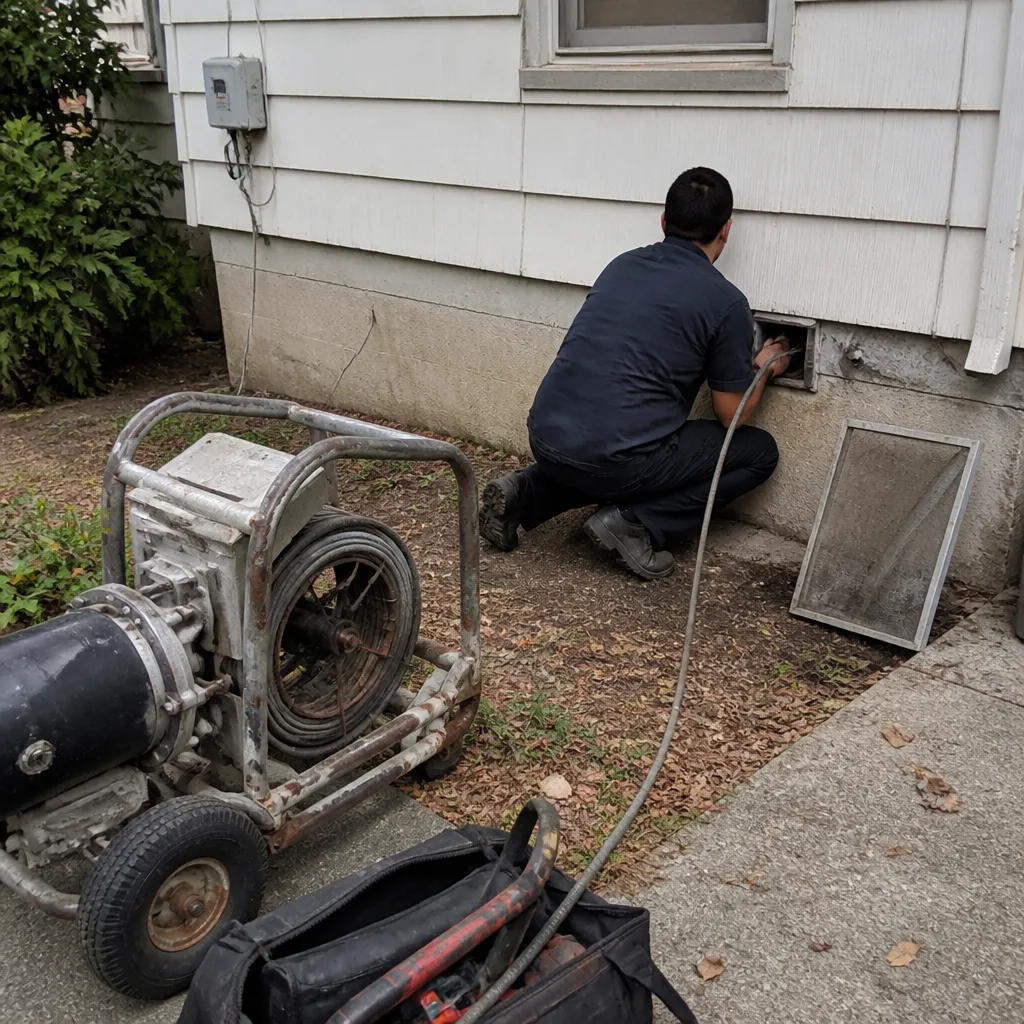 Before
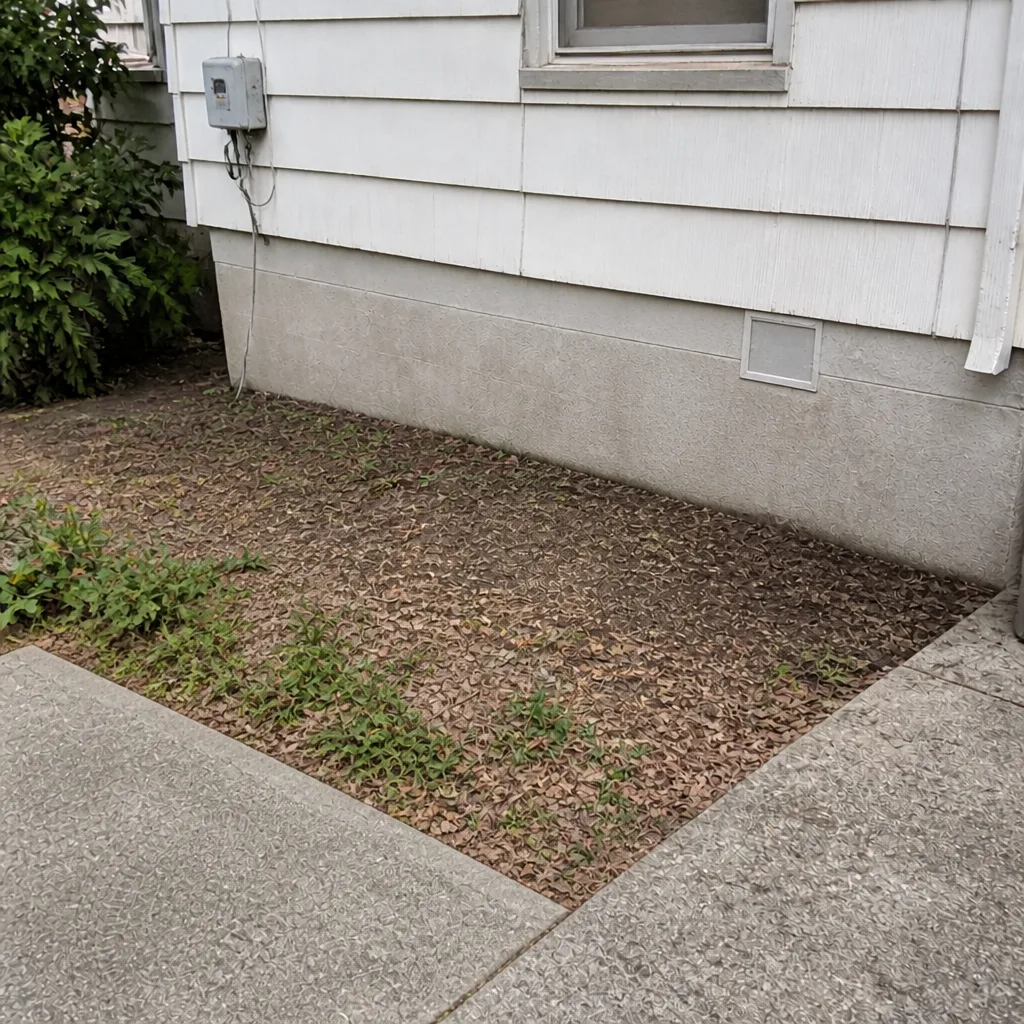 After
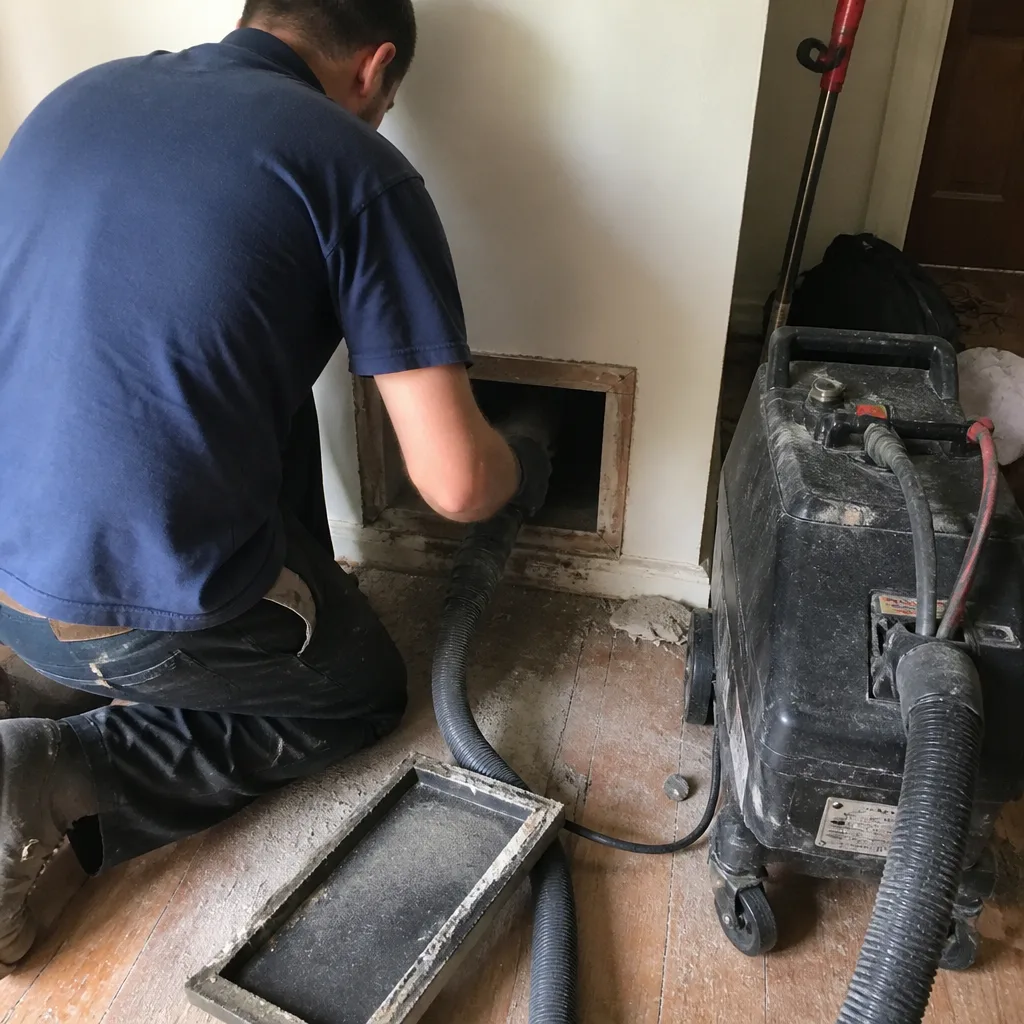 Before
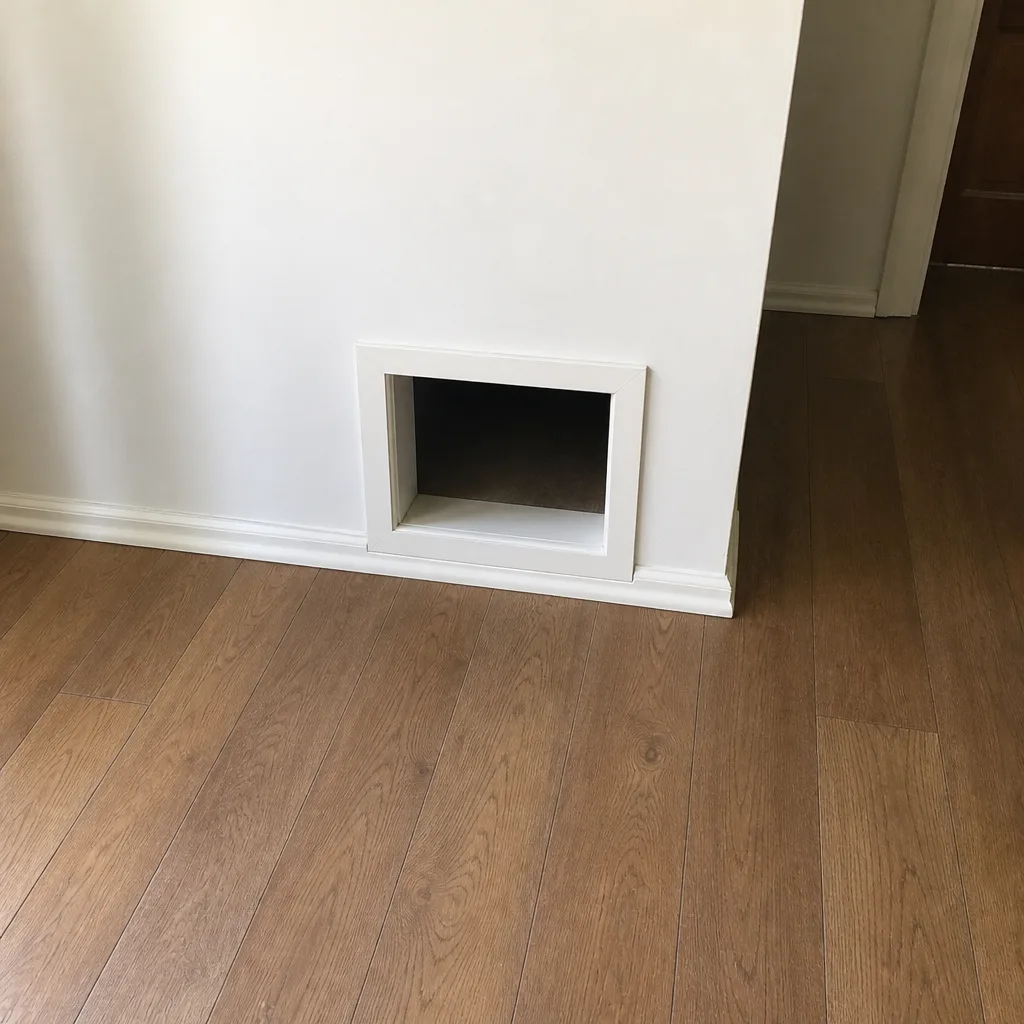 After
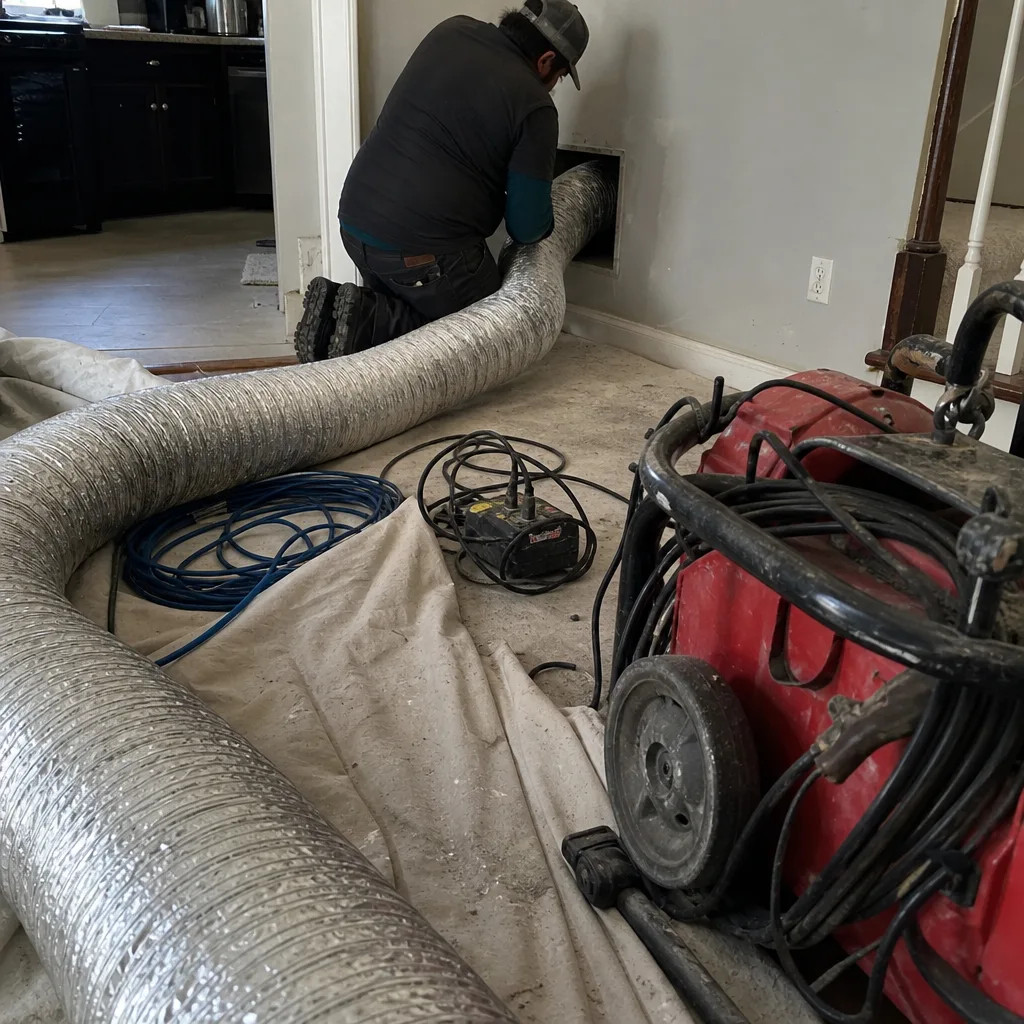 Before
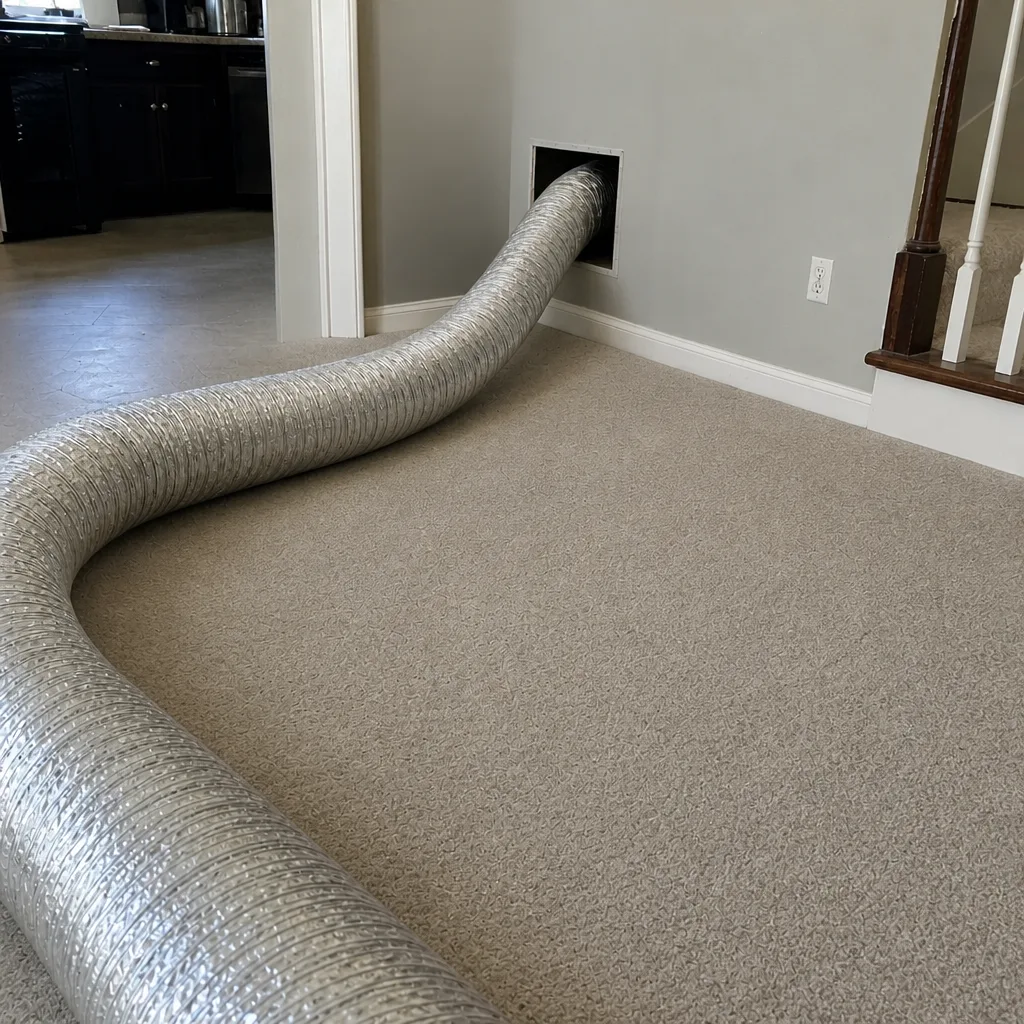 After
When to Call a Professional
Some duct conditions are worth a phone call rather than a homeowner inspection. Visible condensation on supply ducts in a basement or crawl space, musty odor that follows the cooling cycle, weak airflow at two or more registers while others are strong, or a filter loading up faster than it used to are all reasons to have the system assessed by someone with the equipment to see inside. The same is true for dryer vents: a dryer that takes two cycles to dry, runs hot to the touch, or shows lint around the outside termination is a safety call, not a maintenance call.
We keep the price for the whole system set per job by the written estimate before any work starts, so you know what you’re agreeing to and what the scope is. Duct Cleaning Newark offers free estimates in Newark. Call (866) 485-3609 to schedule one. We answer 24/7. Fast dispatch from 7am to 7pm, Sunday through Friday.
Frequently Asked Questions
Most Newark homes with forced-air systems land on a two-year cycle: a full cleaning in year one and an inspection-only visit in year two. Homes with heavy shedding pets, recent renovation, a whole-home humidifier, or early moisture signs in the supply runs often do better on an annual cleaning until the system stabilizes. Call (866) 485-3609 to talk through which cycle fits your home; estimates are free.
Fall is the highest-value window for homes running gas forced-air heat, because it puts clean ducts in place before the months of heaviest system use. Spring is the better window for homes where winter residue and humidifier scale are the bigger concern, and it clears the ducts before the cooling season starts pushing material into living space all summer. Call (866) 485-3609 for an estimate and we’ll tell you honestly whether your system reads as a fall job or a spring job.
Weak airflow at two or more registers while others are strong, or visible dust buildup near the return, points toward cleaning. A run that’s separated from its register boot, sagging flex duct, or a visible hole in the ductwork points toward repair. In practice, the two often go together, which is why we offer both. Call (866) 485-3609 for an assessment; estimates are free.
Yes. Cold supply ducts running through warm, humid summer air, particularly in unconditioned basements and crawl spaces, will sweat, and that condensation combined with settled dust is what lets mold establish itself in the duct interior. If you’re smelling mustiness at the start of a cooling cycle, that’s the most reliable early sign. Call (866) 485-3609 to schedule an inspection; estimates are free.
Dryer vent risk rises in winter because households run more laundry, the colder, denser air makes exhaust flow slower through the vent run, and lint accumulates faster in a restricted run. A dryer running hotter than it should with lint stuck in the vent is the underlying condition behind dryer vent fires. Call (866) 485-3609 if your dryer is taking two cycles or running hot to the touch; estimates are free.
You should see the actual ducts in your home, not stock images, before any work starts and after the cleaning is finished, covering both the return and supply sides. The photos should make it obvious what was removed and where it was coming from. If a company can’t or won’t show you that, that’s a reason to keep looking. Call (866) 485-3609 for a free estimate with photos as part of the process.
The Bottom Line
Newark ductwork doesn’t behave the same way all year, and a single annual cleaning date doesn’t match what the climate actually does to a home. The seasonal shape of the problem is clear: winter deposits heating residue and humidifier scale that need clearing in spring, summer’s humidity creates the conditions for condensation and growth in supply runs, fall is the highest-value cleaning window for gas forced-air homes before the heaviest use of the year, and winter is when dryer vent risk peaks. Build a two-year cycle that alternates full cleaning and inspection, keep dryer vent cleaning on its own shorter interval, and address damage when the ducts are open. Call (866) 485-3609 for a free estimate.
Written by the team at Duct Cleaning Newark.