
Last updated November 14, 2026
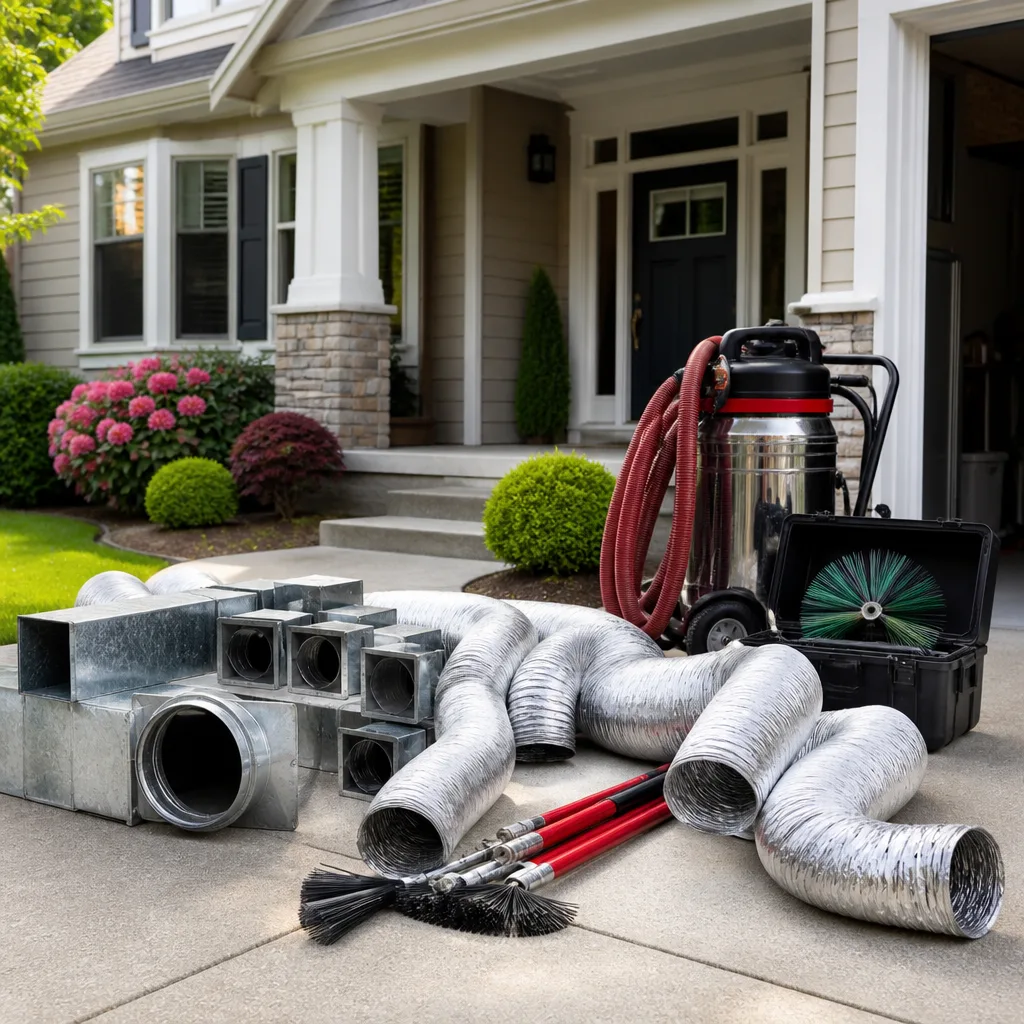 Whole-home duct cleaning
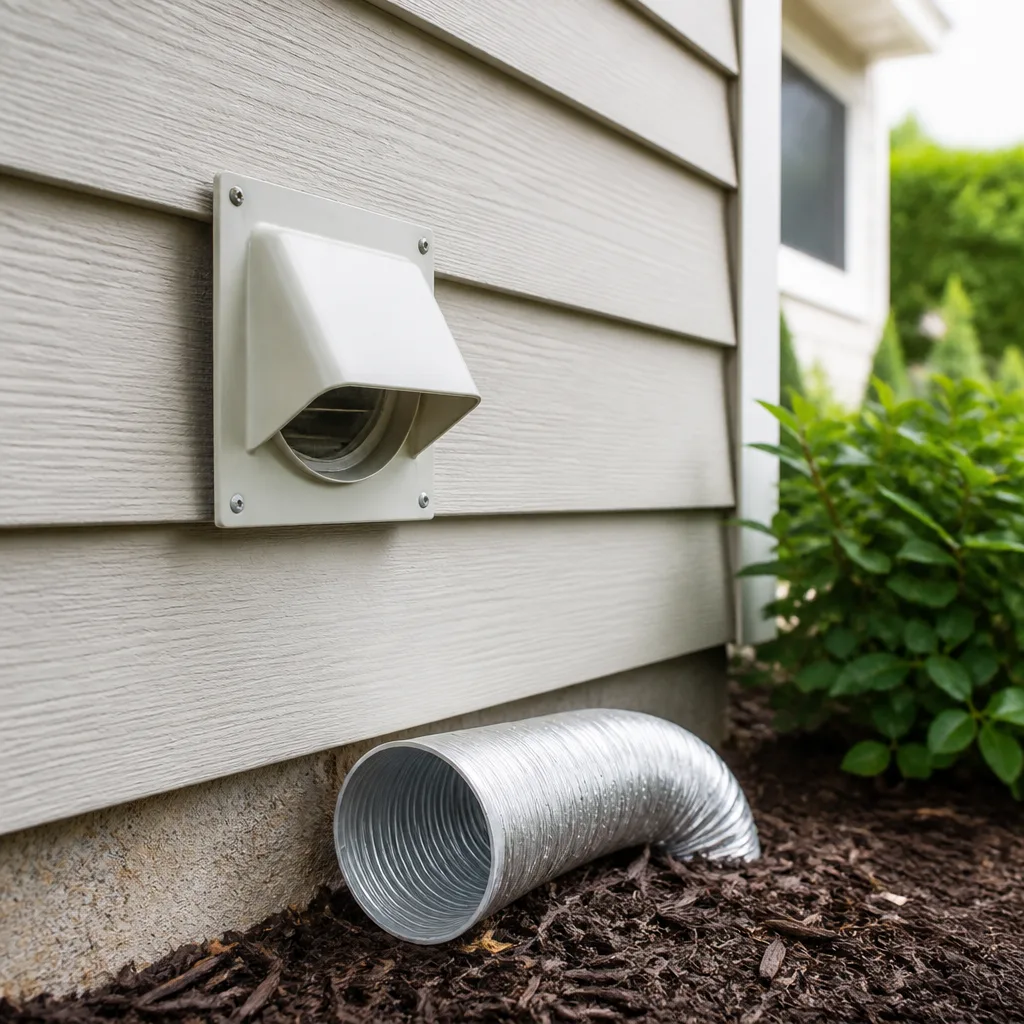 Dryer vent cleaning
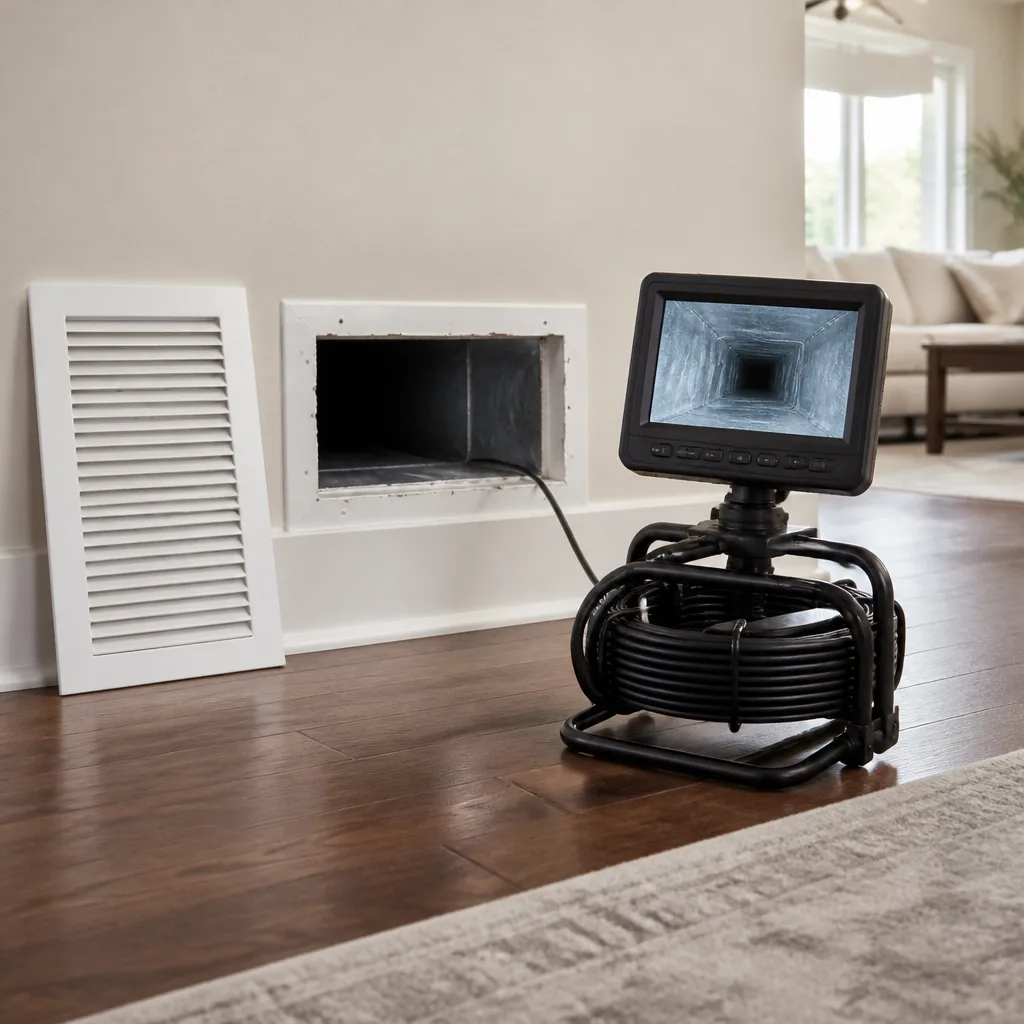 Camera inspection
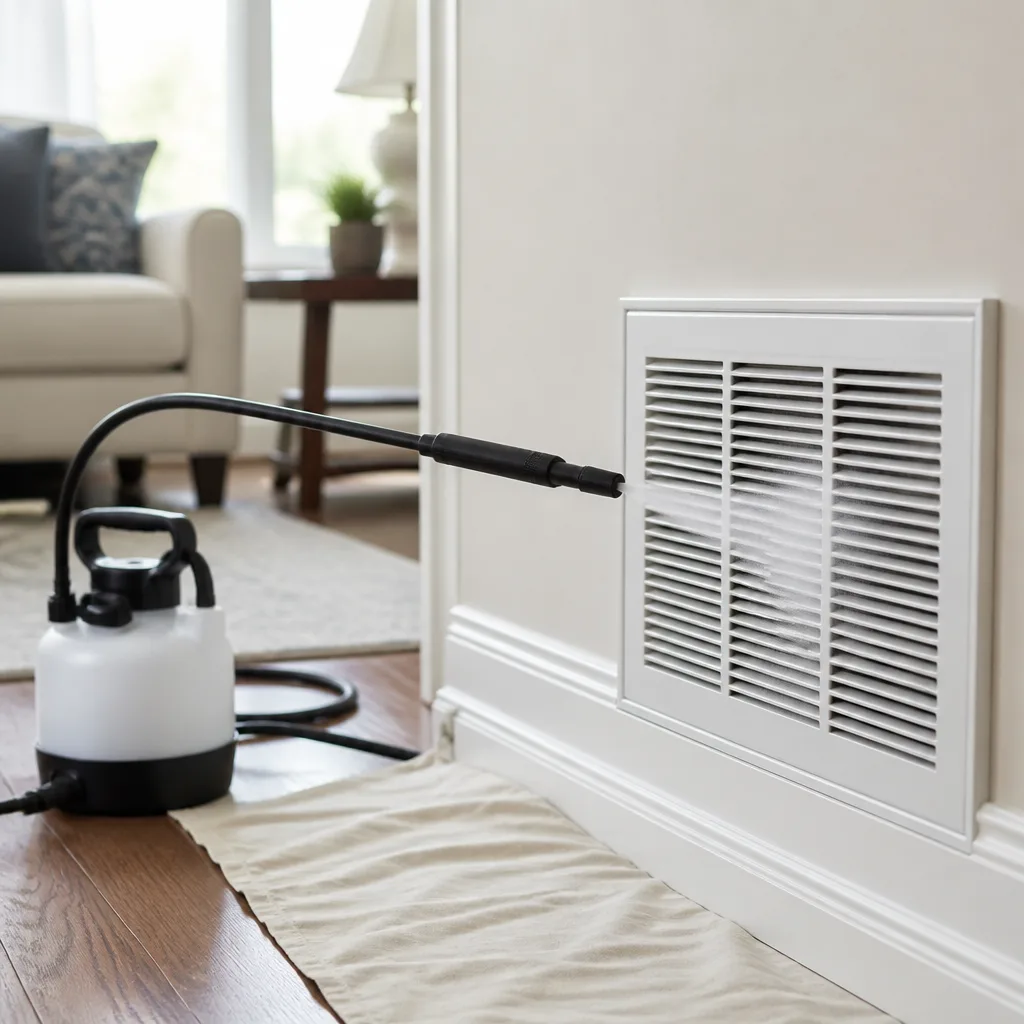 Sanitizing & deodorizing
Whole-system duct and dryer vent check with before-and-after photos - you see exactly what came out of your vents
That "$99 whole-house special" is a bait ad - the real number appears once they are in your hallway, or the "clean" is a shop-vac at the register. We photograph the inside of your ducts before and after instead.
Air Duct Cleaning Maintenance Checklist for Newark Homeowners
A filter swap every 90 days sounds reasonable until you live two blocks from Route 1-9 or next to an active construction site. In those conditions, a 30-day inspection interval isn’t overcaution. It’s the difference between a cleaning and a remediation. Newark’s air carries a specific load: diesel particulate from the port corridor, construction dust that ramps up with every new development breaking ground, spring pollen sweeping up the Passaic River valley, and the fine grit that settles into rowhouse ductwork through decades of freeze-thaw cycles. A national checklist written for a suburban split-level doesn’t account for any of it. This guide gives you a maintenance cadence built around how Newark homes actually breathe, month by month, so you can spot trouble before it becomes a project.
Quick Answer
Newark homeowners should inspect their duct system visually every 30 to 90 days depending on proximity to construction and major roadways, schedule a professional air duct cleaning every 3 to 5 years for a typical rowhouse, and clean the dryer vent annually. Real escalation triggers include visible dust plumes from registers, uneven airflow between rooms, and musty odor that appears within 15 minutes of the system starting. Document what you see each month so a technician can compare against a baseline rather than starting from zero.
Styles & brands we work with
- Whole-home duct cleaning
- Dryer vent cleaning
- Camera inspection
- Sanitizing & deodorizing
Table of Contents
- Why Newark Duct Maintenance Isn’t a Generic Checklist
- The Monthly Walk-Through: 10 Minutes, No Tools
- Seasonal Calendar: What Each Newark Season Does to Your Ducts
- Dryer Vent Cadence for Newark’s Multifamily Stock
- How to Document Duct Condition Over Time
- When to Escalate From Checklist to Professional Call
- How Often to Schedule Professional Cleaning in Newark
- Common Mistakes to Avoid
- Frequently Asked Questions
Why Newark Duct Maintenance Isn’t a Generic Checklist
Newark sits in a bowl of environmental stressors that most duct cleaning guides ignore entirely. The city’s housing stock is dominated by rowhouses and multifamily buildings, many of them over a century old, with duct systems that were retrofitted rather than designed. Uninsulated basement duct runs are common in the older neighborhoods of the Ironbound, Weequahic, and Clinton Hill. When winter arrives, the temperature differential between a basement duct and the surrounding air creates condensation, and condensation on galvanized steel over years means rust, debris adhesion, and a surface that holds dust the way a sponge holds water.
Then there’s the airborne load. Newark’s position along the Route 1-9 corridor, the port industrial zone, and the dense construction calendar means particulate levels fluctuate with the season and with whatever project is active nearby. A homeowner in the North Ward two blocks from a demolition site faces a different filter and inspection interval than someone in Forest Hill with a mature tree canopy and lighter traffic. Treating those two homes the same is how generic checklists fail.
Our technicians have up to 8 years of experience working in this exact environment, and the pattern is consistent: Newark homes don’t fail on a national schedule. They fail on a Newark schedule. That’s what this checklist is built around. If you want the full scope of what air duct cleaning actually involves, we’ve laid it out separately. This page is about the maintenance rhythm between professional cleanings.
The wider context matters too: ductwork is one component of how a Newark home handles air, and it interacts with the HVAC system, the building envelope, and the habits of everyone living inside. A maintenance checklist isn’t a substitute for professional work. It’s a diagnostic tool that tells you when to call.
The Monthly Walk-Through: 10 Minutes, No Tools
This is the foundation of the entire checklist. Once a month, walk through your home and check these seven items. You need no tools, no ladder, and no technical background. Write down what you observe in a notebook or on your phone. The point isn’t to fix anything. It’s to build a record.
- Register color check. Look at every supply register in the house. Is the grille surface lighter or darker than the surrounding wall or floor? Dark streaking around the edges of a register means air is escaping around the frame rather than through it, carrying dust that deposits on the nearby surface. A uniform dark film across the whole grille face means dust is coming through the register itself.
- Airflow asymmetry test. Hold your hand a few inches from each register for five seconds. Does the airflow feel identical in the living room and the back bedroom? A register pushing noticeably weaker air than others on the same system is a signal. It could be a partially closed damper, a crushed flex duct, or a disconnected joint.
- Musty odor timing. Note when you first smell a musty or stale odor after the system kicks on. Odor within 5 minutes of startup points to contamination in the supply trunk or the air handler itself. Odor after 20 minutes points to something more diffuse. Either way, the timing is diagnostic information.
- Return grille inspection. Return grilles collect far more debris than supply registers because they pull air in. Look for lint buildup, pet hair matting, or visible dust accumulation on the grille face. A return that’s visibly clogged is choking the entire system.
- Filter condition. Pull the filter and hold it up to light. If you can’t see light through it, it’s overdue regardless of what the calendar says. In Newark’s construction-adjacent neighborhoods, filters can load in 30 days that would last 90 days elsewhere.
- Dryer vent exterior check. If your dryer vent terminates on an exterior wall or roof, look at it from outside. A flap that doesn’t open fully when the dryer runs, or lint visible at the termination, means the run is restricting airflow.
- Basement duct moisture. If you have exposed ductwork in the basement, run your hand along the bottom of a horizontal run. Dampness, condensation beads, or rust streaks at the joints are early warning signs, especially in the colder months.
Ten minutes. Seven items. Once a month. That’s the whole ritual. Everything else in this guide builds on the record you create here.
Seasonal Calendar: What Each Newark Season Does to Your Ducts
Newark’s seasons hit ductwork differently than a climate with milder swings. Here’s the month-by-month cadence we recommend, tied to the actual environmental triggers in the city.
Spring (March through May): Construction Dust Season
Construction season ramps up in Newark as the ground thaws and projects move from planning to active site work. Demolition, excavation, and concrete work all generate fine silica dust that travels. If you’re within several blocks of an active site, drop your filter inspection interval to every 30 days for the season. Check registers weekly for new dust film. This is also peak pollen season, with tree pollen peaking in April and grass pollen following in May. Pollen that enters the return side of the system and settles on the evaporator coil creates a sticky substrate that catches dust.
Summer (June through August): Cooling Load and Humidity
The cooling system runs hardest in summer, and in Newark’s humid summers the evaporator coil stays wet for much of the day. A coil that stays damp and collects dust becomes a biological surface. Watch for musty odor during the summer months specifically, and note whether it appears more strongly after the system has been running for hours. This is the season to be diligent about the return grille because the system is moving maximum air volume through it.
Fall (September and October): The Heating Switchover
October is the critical month on the Newark duct calendar. When the heating season starts, the system runs in a mode it hasn’t used in six months. Dust that settled on duct surfaces over the summer, pollen that accumulated, and any debris that entered through gaps gets disturbed and pushed into living spaces. That first-run dust plume is a common complaint in poorly insulated rowhouses. Before you switch the system over, do a full walk-through: check every register, replace the filter, and clean any accessible return grilles. If you noticed anything questionable during summer, address it before the heating season rather than after.
Winter (November through February): Condensation Risk
Cold outdoor air plus uninsulated basement ductwork equals condensation. The condensate itself isn’t the problem; the problem is what it does to dust that’s already settled. Moisture binds dust to duct surfaces, and moisture plus organic dust creates the conditions for biological growth. This is also when gaps in duct systems at basement level become more consequential, because a heated duct leaking into a cold basement loses efficiency and creates a temperature gradient that accelerates condensation. Check the basement runs monthly through winter.
Dryer Vent Cadence for Newark’s Multifamily Stock
Dryer vent cleaning is a fire-safety service, and Newark’s multifamily building stock makes it more urgent than a single-family checklist would suggest. Many of the city’s two- and three-family buildings and converted rowhouses were built with dryer vent runs that travel a long horizontal distance to reach an exterior wall. A run that’s 15 or 20 feet long with two elbows accumulates lint far faster than a direct vertical vent, and it’s harder to inspect because you can’t see the full length.
Here’s the cadence we recommend:
- Every load: Empty the lint trap. Non-negotiable, no exceptions.
- Monthly: Check the flexible transition duct behind the dryer, if accessible, for kinks or crush points. A kinked transition duct is a fire risk and a dryer-efficiency killer.
- Every 3 months: Check the exterior vent termination from outside. Confirm the flap opens smoothly and no lint is visible at the opening.
- Annually: Professional dryer vent cleaning. For long horizontal runs in multifamily buildings, annual is the floor, not the ceiling. A landlord managing a three-family building where multiple tenants share a dryer should treat the vent as part of a documented maintenance schedule.
- Any time: Dryer takes longer than one cycle to dry clothes, the exterior flap doesn’t open during a load, or the dryer housing feels unusually hot. Those are immediate-call signals, not wait-and-see signals.
Long horizontal runs also collect lint in the low spots where the duct sags. Newark’s older buildings often have vent runs with minimal support, and sag accumulates over time. That’s one of the reasons we recommend professional inspection rather than relying on a homeowner’s visual check of the visible sections only. The dangerous lint is in the section you can’t see.
How to Document Duct Condition Over Time
Documentation is what separates a checklist that produces useful information from one that just creates busywork. When a technician arrives at a home with a documented history, they’re comparing against a real baseline. When they arrive at a home with no history, they’re starting from zero and guessing at what’s changed.
Here’s what to record each month. It takes two minutes if you’ve done the walk-through.
- Date of inspection. Obvious, but the interval matters more than the individual data points.
- Filter condition rating. Use a simple scale: clean, light film, medium film, heavily loaded. Write one word.
- Register observations. Note any register that looks different from the last check. “Back bedroom register showing dark streaks” is a perfectly adequate note.
- Airflow notes. Did any room feel weaker than last month? Note which one.
- Odor notes. If you smell something, note it and note whether it appeared at startup or later.
- Photos. Once a quarter, take a photo of your main return grille and your basement duct runs if accessible. Photos don’t lie, and they make change obvious.
Keep the record in one place. A notes app on your phone works. A clipboard in the utility closet works. What doesn’t work is scattered reminders and vague recollections. If you ever sell the home, the record is also a useful document for the next owner, and it demonstrates that the system was maintained rather than ignored.
For property managers handling multiple Newark units, the same discipline scales. A one-page template per address with these fields creates a maintenance log that’s genuinely useful and defensible. That matters in a rental context where a landlord may need to show that maintenance was performed.
When to Escalate From Checklist to Professional Call
This is where most checklists go vague. “Call a professional if you notice a problem” tells you nothing. Here are specific thresholds. If you hit any one of these, book a professional inspection rather than waiting for the next scheduled cleaning.
- Visible dust plume. If you can see dust blowing out of a register when the system starts, the contamination has reached a level that visual inspection can no longer track. That’s a cleaning, not a filter change.
- Airflow asymmetry of roughly 30 percent or more. If one room’s airflow feels noticeably and consistently weaker than the rest of the house, and the pattern persists across months, a duct section is likely crushed, disconnected, or blocked.
- Musty odor within 15 minutes of startup. This usually points to the air handler, the supply trunk immediately downstream of it, or a wet evaporator coil. None of those are homeowner-addressable.
- Discolored or damp insulation around duct joints. Moisture in the insulation jacket means the duct is no longer sealed, and whatever the insulation has absorbed needs professional assessment.
- Filter loading within 30 days. If a filter reaches heavy loading in four weeks in a home that isn’t construction-adjacent, something is entering the system unexpectedly. That’s worth investigating.
- Any smell of burning or hot plastic from a register. This is not a checklist item. Turn the system off and call. Burning odor near ductwork or a register can indicate an overheating component or an electrical issue, and it’s a stop-everything signal.
- Dryer taking multiple cycles. Covered above, but worth repeating as an escalation threshold because the fire risk is real.
One more: if your documented record shows a steady trend over several months, worsening register condition, weakening airflow in the same room, or increasingly strong odor, that trend itself is the escalation trigger. A single bad inspection could be noise. Three consecutive months of the same note is a pattern.
On the safety side, we’ll be direct about what not to do. Do not open duct sections, remove register boots, or access the air handler to “take a look inside” unless you’re trained. Sheet metal edges are sharp, systems can be energized, and reinstalling a section incorrectly creates a leak worse than the one you were inspecting. Visual checks from the room side and the exterior side of the house are the homeowner’s safe domain. Everything past that is professional work.
How Often to Schedule Professional Cleaning in Newark
For a typical Newark rowhouse or multifamily unit with no unusual conditions, a professional cleaning every 3 to 5 years is a reasonable baseline. That’s an honest range, not a sales pitch. Some homes need it more often. Some need it less. The variables that push you toward the shorter end:
- Proximity to active construction or major industrial corridors
- Older ductwork with uninsulated basement runs
- Pets in the home
- Recent renovation work in the building
- A documented history of moisture or condensation in the duct system
- Long or complex duct runs with multiple transitions
When we do a cleaning, we’re running two distinct professional platforms: Rotobrush and Nikro. That’s not a marketing flourish. The two machines work differently, and the right choice depends on the duct type, the material one is up against, and the contamination level. A Rotobrush system handles flexible ductwork differently than it handles rigid steel, and a Nikro platform handles heavy contamination differently than light maintenance cleaning. Matching the machine to the condition is the difference between a cleaning that reaches the surfaces and one that disturbs the top layer and calls it done.
We also run Abatement Technologies equipment, the same brand used in professional mold and contaminant remediation. That matters here because a Newark rowhouse with a moisture history isn’t a maintenance cleaning. It’s closer to a remediation scenario, and the equipment needs to be matched to that reality.
If we find damaged ductwork during a cleaning, we handle it as part of the same job. Most duct cleaners walk away from damaged sections. We don’t. The Duct Cleaning Newark approach is to close gaps, seal leaks, and repair damaged sections so that the system we just cleaned stays clean. That’s why air duct repair is a named service rather than an upsell. And for homeowners thinking about air quality systems, our technicians work with Honeywell and Aprilaire equipment, so cleaning and long-term indoor air quality improvement can be addressed in the same conversation rather than pieced together across contractors.
Pricing for a cleaning in Newark depends on system size, duct condition, and access. It’s set per job by a written estimate before work begins, and the estimate is free. When you get quotes, ask what equipment will be used and whether repair capability is included. Those two questions separate a real quote from a teaser number that grows once the technician is on site.
Common Mistakes to Avoid
- Applying a national filter-change interval to a Newark home. The 90-day rule doesn’t hold two blocks from the port or an active demolition site. Inspect monthly during construction season and let the filter’s actual condition drive replacement, not the calendar.
- Ignoring the dryer vent because the dryer still works. A restricted vent doesn’t stop the dryer; it just makes it slower. The fire risk builds long before the dryer fails, and in Newark’s multifamily buildings with long horizontal vent runs, the buildup happens faster than in a suburban single-family home.
- Skipping the fall switchover check. October’s first heating run pushes six months of settled dust into the living space. A pre-season walk-through and filter change costs nothing and prevents the worst of it. Waiting until November means you deal with the dust plume instead of preventing it.
- Treating a musty smell as normal. A slight odor after startup isn’t “how old houses smell.” It’s a signal, and the timing of when it appears tells you where the problem is. Ignoring it for a year turns a cleaning into a bigger job.
- Cleaning the visible grilles and calling it done. Wiping a register cover changes nothing about what’s inside the duct. The dust on the grille face is what came through; the dust behind it is still there.
- Choosing a quote on price alone without asking about equipment. A very low quote usually means one machine and a fast pass. Ask what cleaning platform the company uses and whether they can handle damaged ductwork in the same visit. If the answer is no, you’ll be hiring a second contractor.
- Not documenting anything. No record means every professional visit starts from scratch, and you can’t prove a trend or a baseline. Two minutes a month builds a history that makes every future visit more useful.
See the difference
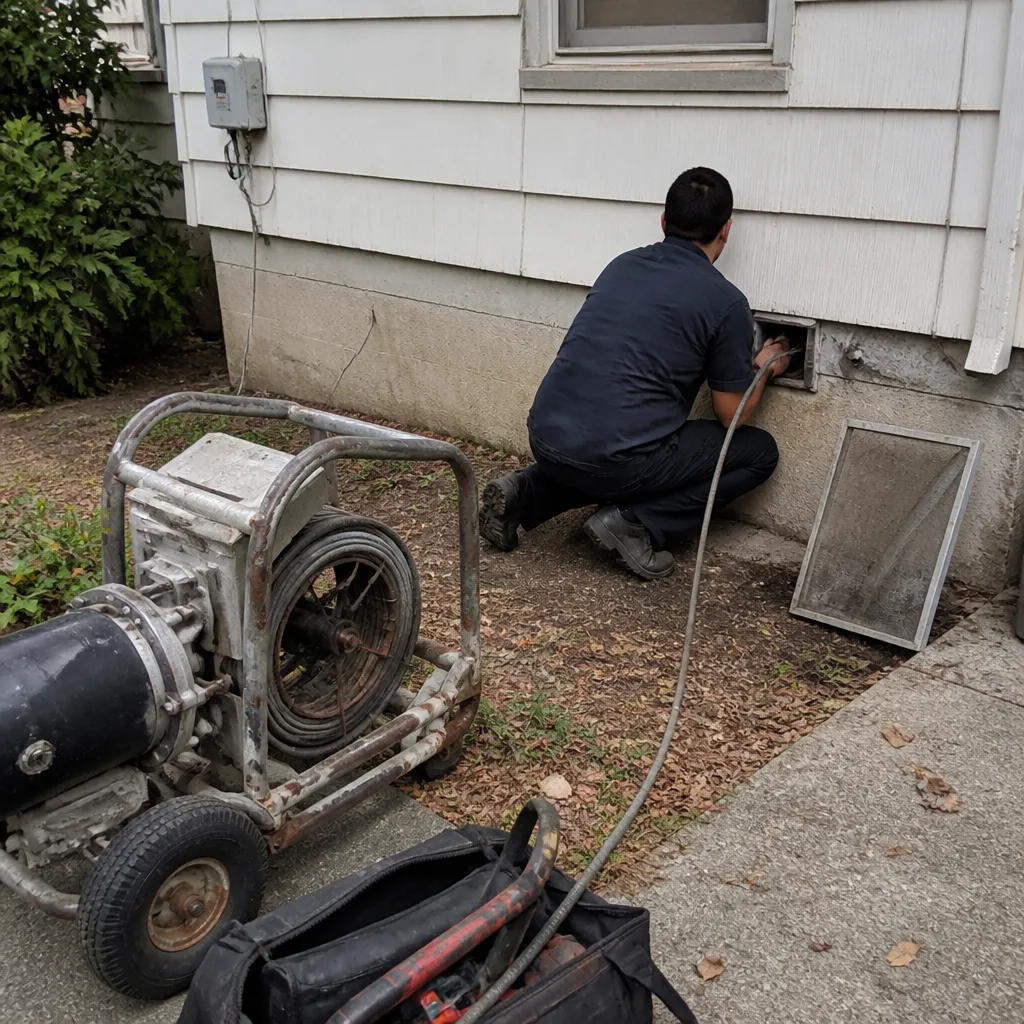 Before
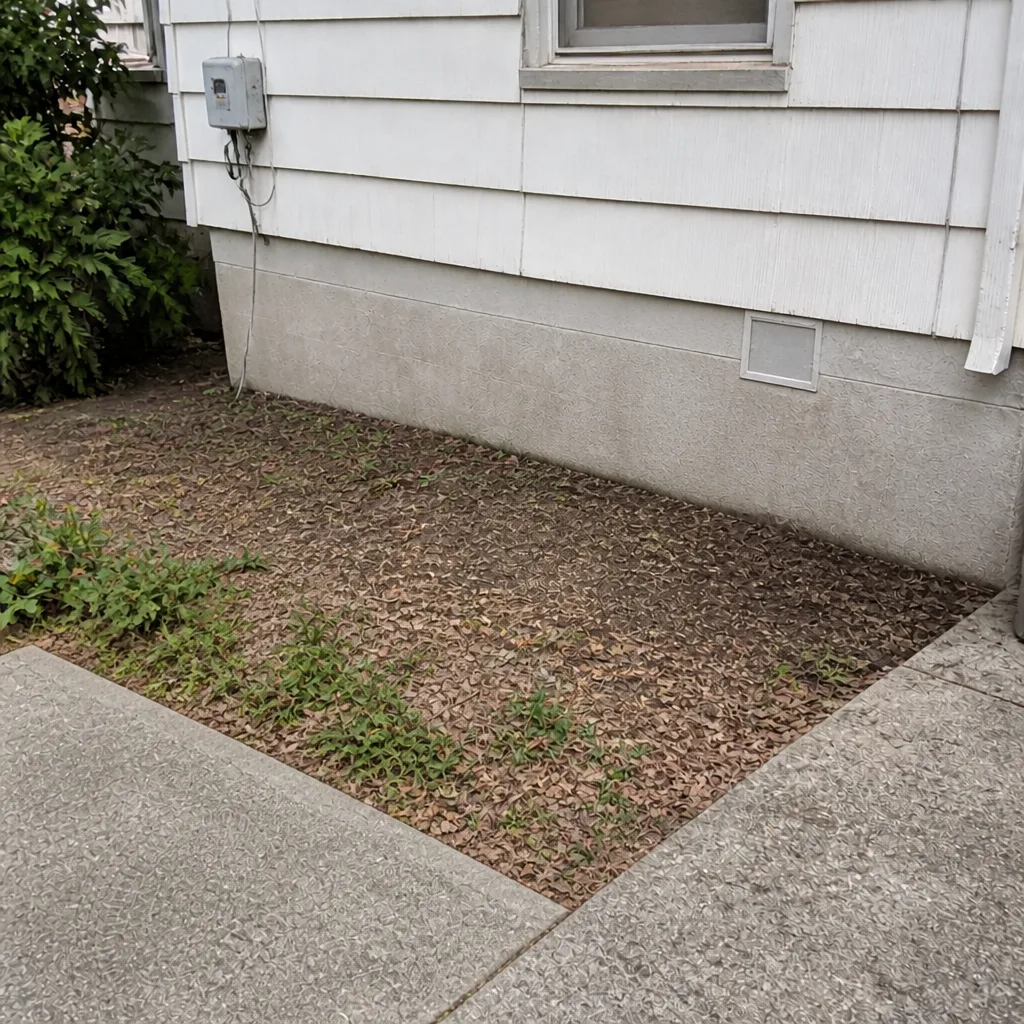 After
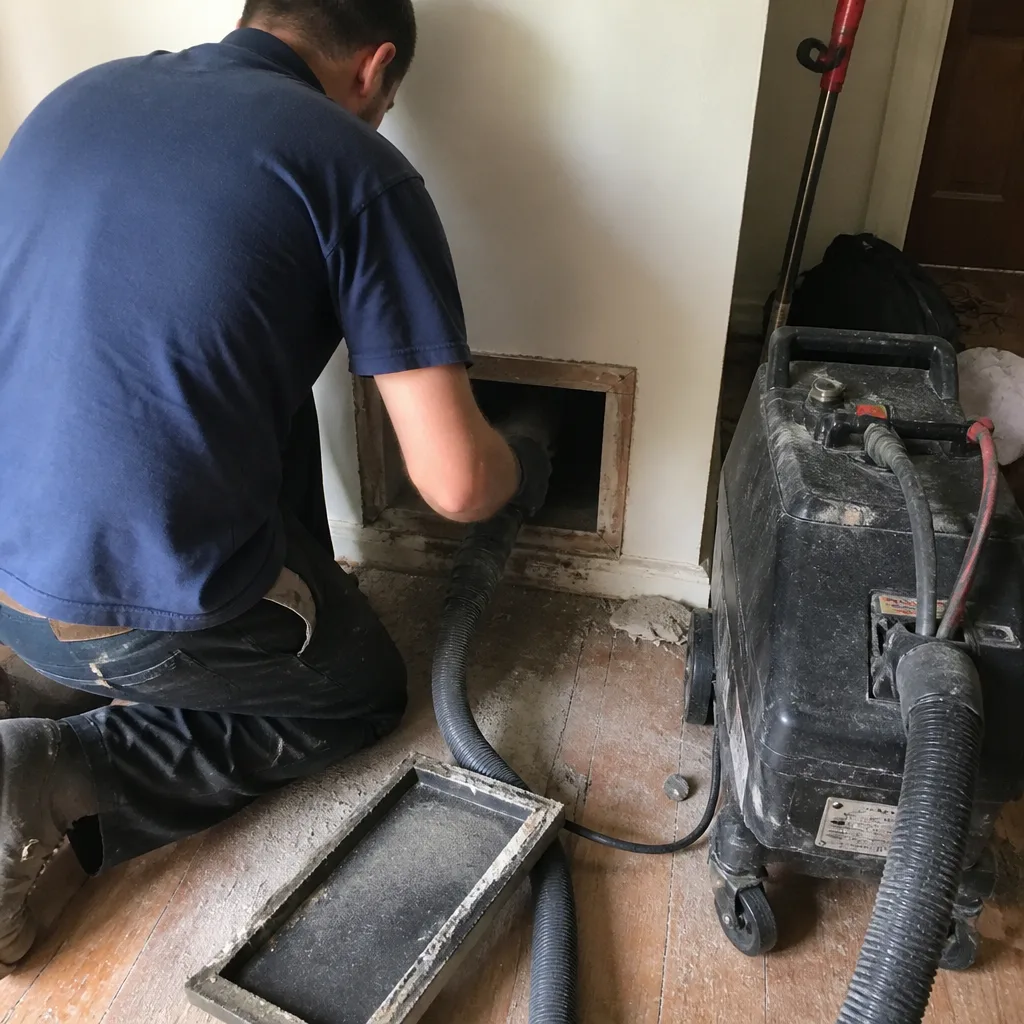 Before
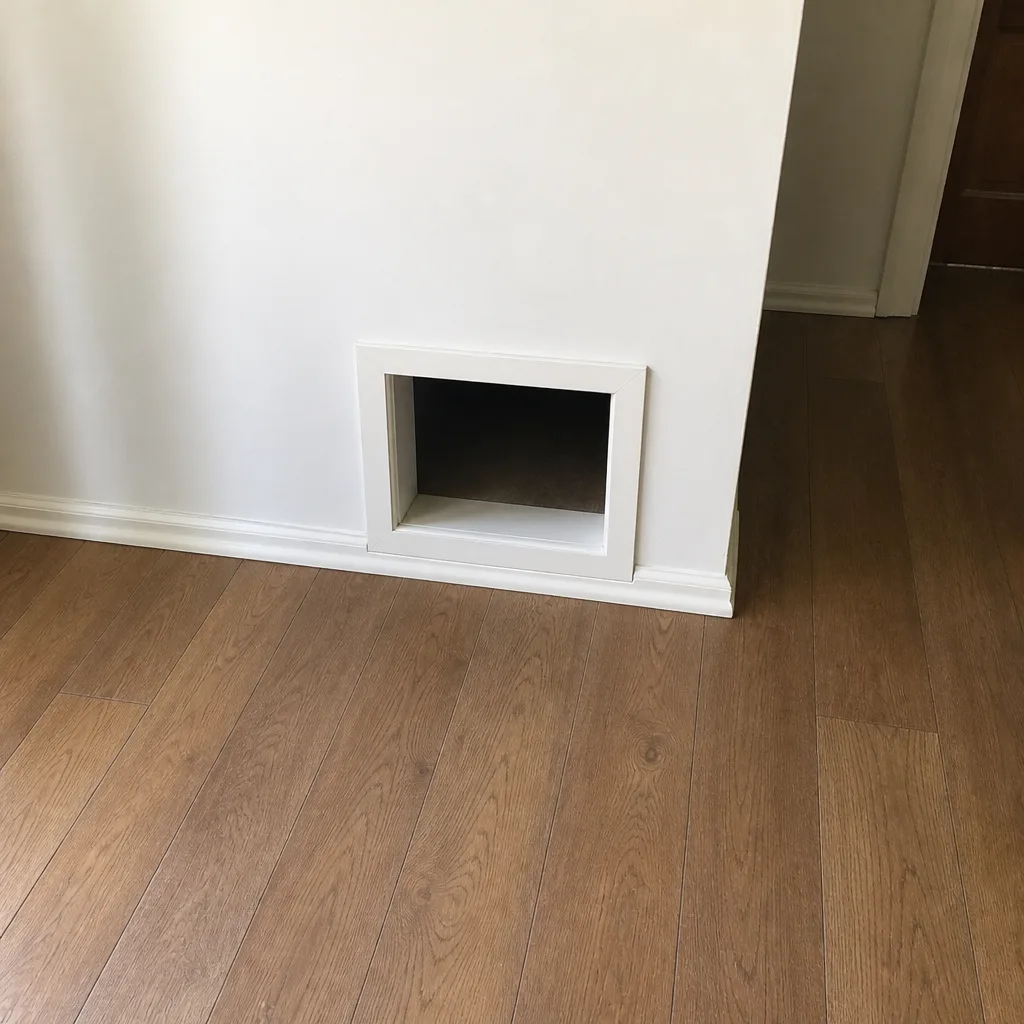 After
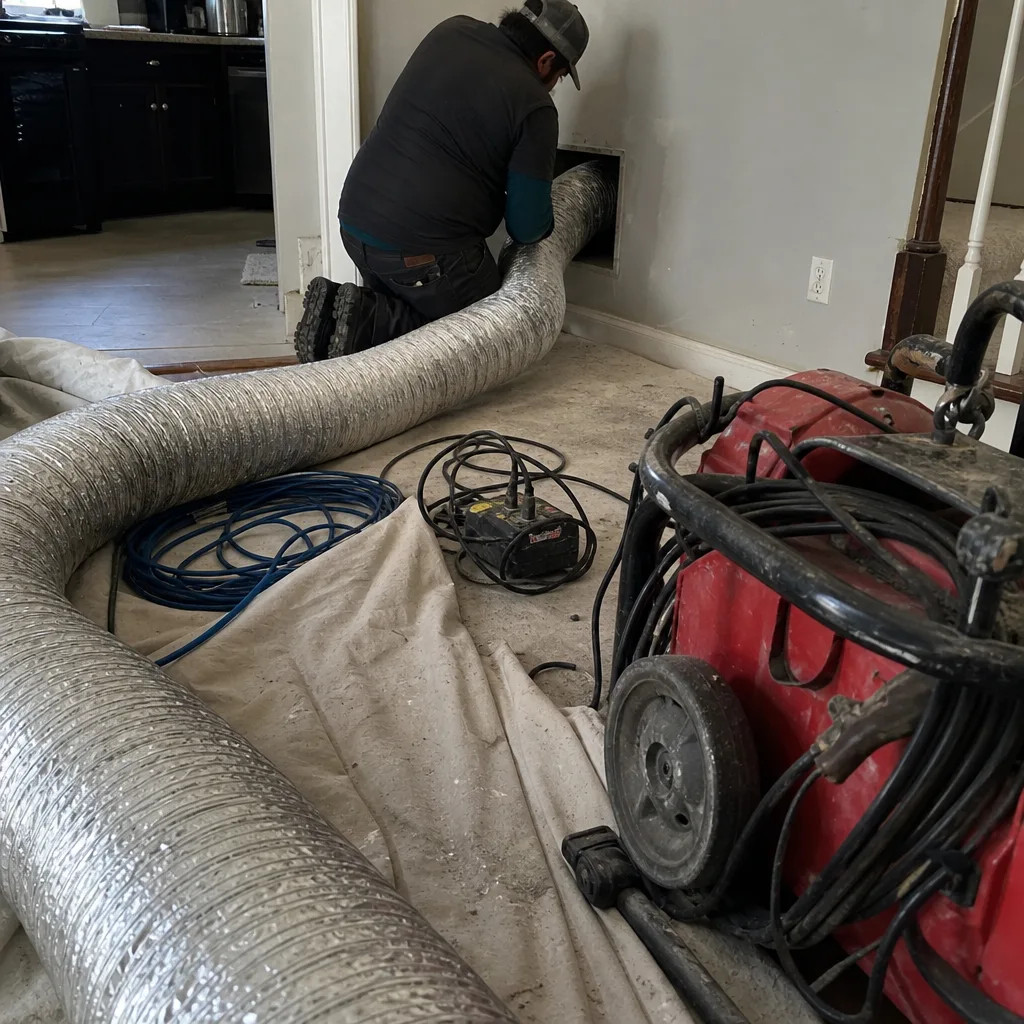 Before
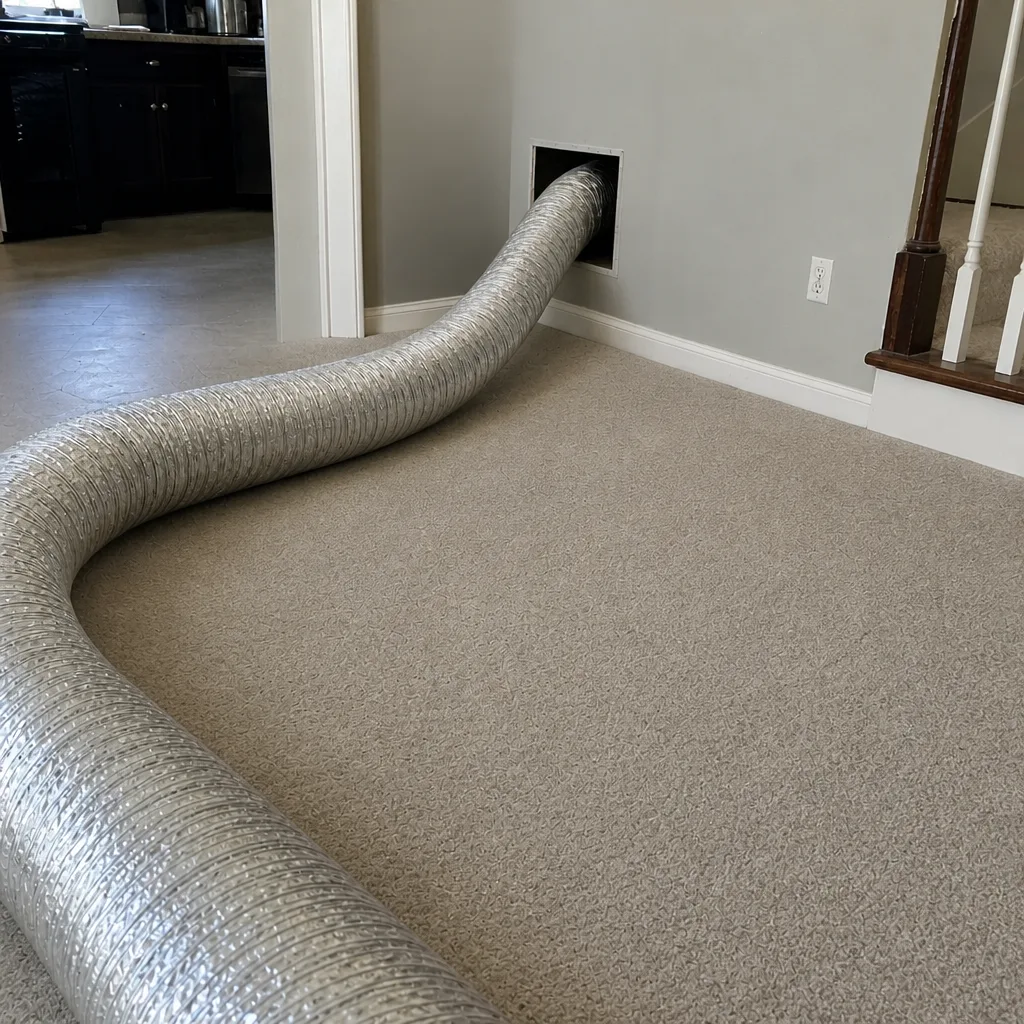 After
When to Call a Professional
Call a professional if you’ve hit any escalation threshold on this checklist, if your home hasn’t had a documented cleaning in 5 or more years, if a dryer vent run is longer than a direct short path to the exterior, or if you’re moving into a Newark property with an unknown maintenance history. Also call if you’ve found damaged ductwork, disconnected joints, or moisture in the system, because those are repair jobs rather than cleanings, and they need to be handled by someone with the equipment and the accountability to close them. We answer 24/7. Fast dispatch from 7am to 7pm, Sunday through Friday. Duct Cleaning Newark offers free estimates in Newark: call (866) 485-3609. If you’re comparing areas, our Newark service overview lays out what a typical visit involves.
Frequently Asked Questions
Every 3 to 5 years for a typical Newark home with no unusual conditions. Homes near active construction, older rowhouses with uninsulated basement ductwork, and households with pets should lean toward the shorter end. Monthly visual inspections between professional cleanings are what tell you whether your home needs the shorter interval or the longer one.
Cleaning addresses contamination; repair addresses physical problems. If you see dust plumes, smell mustiness at startup, or notice a heavy filter load, that’s cleaning territory. If one room’s airflow is consistently weak, if you see disconnected or crushed duct sections, or if insulation around a joint is damp, that’s repair territory. Call (866) 485-3609 for an exact quote. Estimates are free.
Usually because they’re per-vent teaser pricing that expands once the technician arrives, or because the company runs a single machine regardless of what the ductwork actually needs. A real quote names the equipment and covers a whole system, not a per-vent count. Ask about equipment and repair capability before you compare numbers. Call (866) 485-3609 for a written estimate with a flat price per system.
Ask for before-and-after photos of your own ducts, not stock images. A company that does thorough work can show you what they found and what they left behind. If you’ve kept the documentation record described in this guide, you’ll also be able to compare the register condition before and after yourself.
No. The dryer vent should be cleaned annually, and more often if the dryer takes multiple cycles to dry a load or the vent run is long and horizontal. Duct cleaning is a 3-to-5-year cadence. Dryer vent cleaning is a fire-safety service that operates on a faster clock. Call (866) 485-3609 for an exact quote. Estimates are free.
Late September or early October, before the heating switchover. Scheduling before the season change means six months of settled summer dust and pollen gets removed before the first heating run pushes it into your living space. Spring is the second-best window, ahead of construction season dust.
The Bottom Line
A duct maintenance checklist for a Newark home has to match Newark’s actual stressors: construction dust, port-corridor particulate, rowhouse condensation, long multifamily dryer vent runs. Run the seven-item monthly walk-through, follow the seasonal calendar, clean the dryer vent annually, and clean ducts every 3 to 5 years unless your documented record tells you otherwise. Keep a record so a technician can compare against a baseline. When you hit an escalation threshold, don’t wait for the next scheduled cleaning. We answer 24/7. Fast dispatch from 7am to 7pm, Sunday through Friday. Call (866) 485-3609 for a free estimate, and we’ll match the right equipment to what your system actually needs.
Written by the team at Duct Cleaning Newark.