
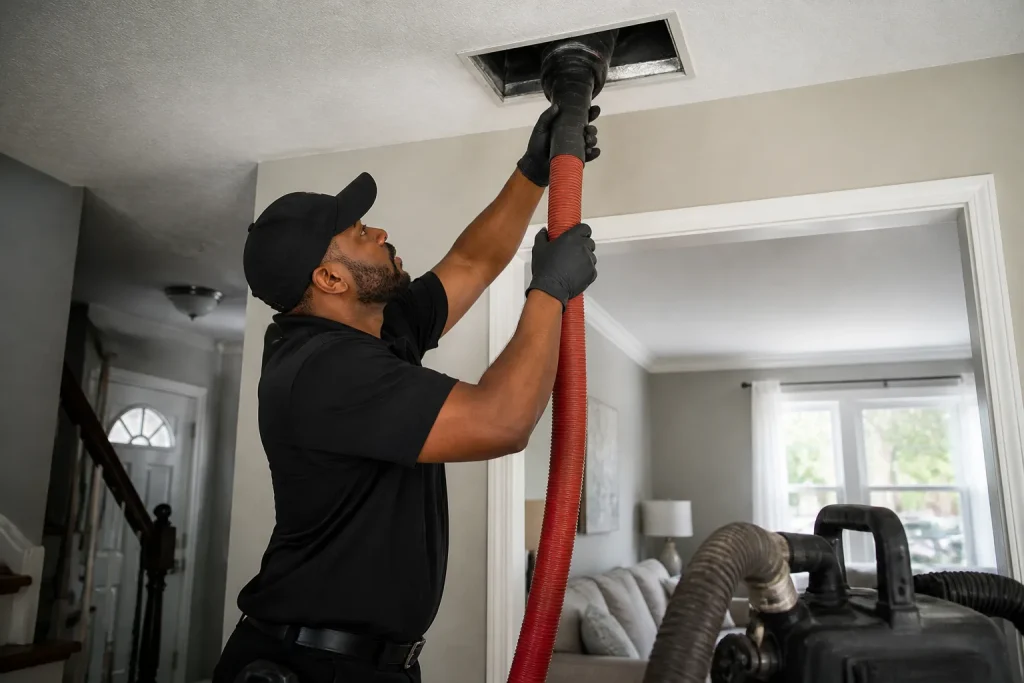
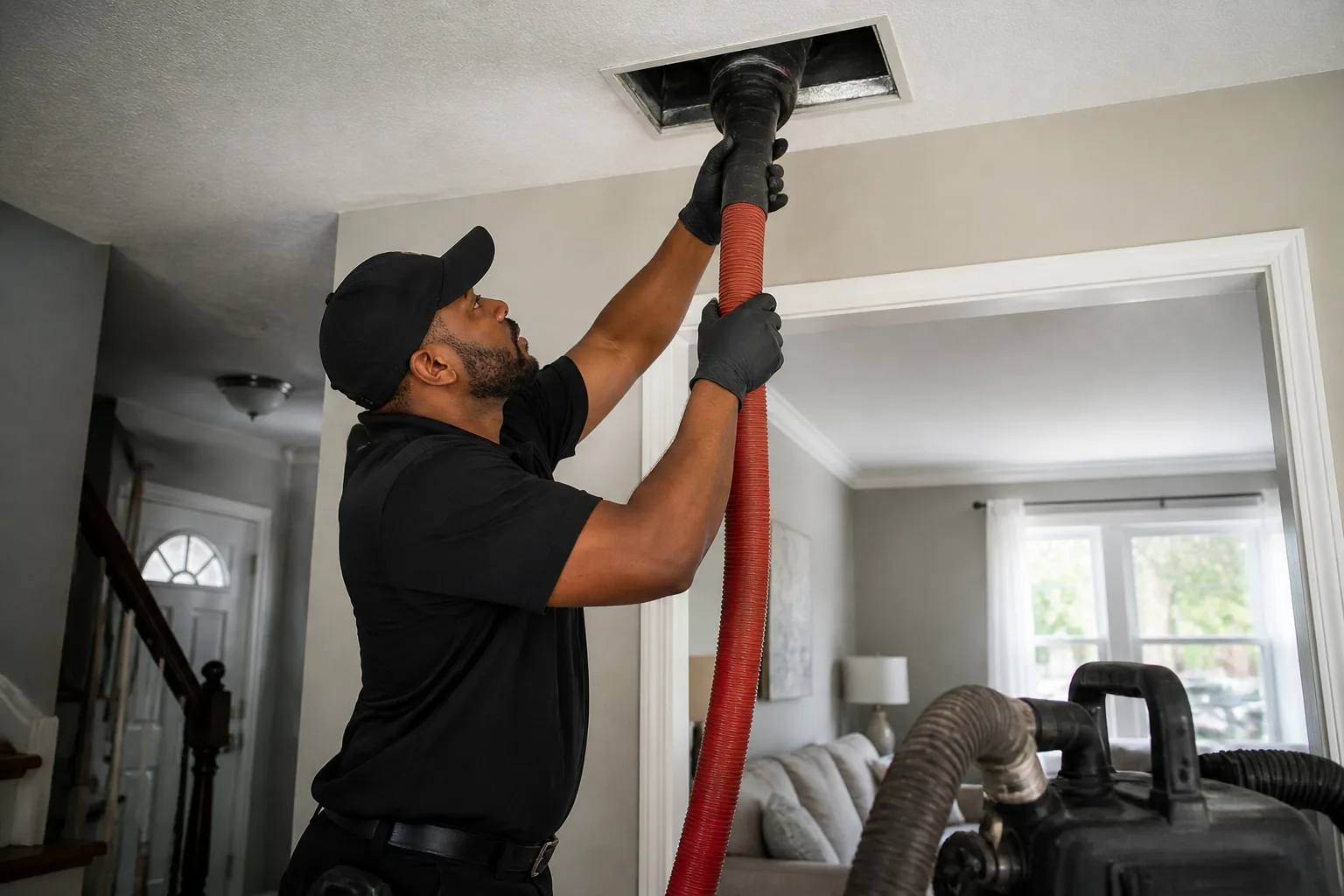
Emergency Air Duct Cleaning Near Me: What Newark Homeowners Should Do First
If water, smoke, or rodents have gotten into your ductwork, don’t run the HVAC to “air things out” and don’t tape over every vent in the house. In Newark, the first 30 minutes of response matter more than how fast a truck reaches your door, because the wrong first move can push contamination into rooms that were fine before you touched the thermostat. Here’s the triage approach we’d want a neighbor to follow.
Most of what gets called an emergency is genuinely time-sensitive but not split-second urgent. Getting the first steps right buys you the time to choose a contractor properly instead of grabbing whoever answers first. If you’d rather not work through a checklist while your basement smells like a wet dog, call (866) 485-3609 and we’ll walk you through it.
Which duct problems are true emergencies?
Three situations actually qualify: contamination after flooding, smoke and soot infiltration from a fire, and confirmed rodent intrusion inside the ductwork. Everything else, including heavy dust, musty odors, and poor airflow, is a scheduling problem, not an emergency. The triage matters because each of those three demands a different first action, and doing the wrong one makes the cleanup harder and more expensive.
- Post-flood contamination. If water reached the return plenum or soaked duct insulation, the system should stay off until it’s assessed. Wet fibrous lining is where mold establishes itself, and every minute the fan runs, spores travel. Turning the system off is your single most important move.
- Fire and smoke infiltration. Soot particles are fine enough to ride the airstream into every room. Keep the system off, keep windows cracked for ventilation if the outdoor air is cleaner, and don’t run any fans that share the same return path.
- Confirmed rodent intrusion. Droppings, nesting material, and the smell that comes with them mean the system should be off too. The bigger issue is the breach they used to get in, which is why repair matters as much as cleaning. Newark’s older housing stock, especially the tightly packed blocks of the Ironbound and the aging multifamily buildings around Downtown, gives rodents plenty of routes through shared walls and utility chases.
Notice the pattern: in all three, the correct immediate move is to stop the system from spreading the problem.
Should you turn the HVAC off or leave it running?
Turn it off for flood, fire, and rodent situations. Leave it running for ordinary dust, musty smells, and airflow complaints, where shutting down gains you nothing. For the three real emergencies, the rule is simple: set the thermostat to “off,” not “fan on,” and leave it there until someone who knows what they’re looking at has assessed the system.
What to do with the thermostat
- Switch the mode to “off,” not “heat,” “cool,” or “fan.” A surprising number of people switch to “fan on” thinking it will dry things out. It does the opposite, circulating air from wet components through the whole house.
- Don’t cycle the system on “just to check” whether the smell is gone. Every test run pushes more contamination through the supply runs.
- If the flooding reached the furnace or air handler itself, treat that as an electrical safety issue and keep the circuit off until a qualified technician inspects it. Water and energized equipment don’t mix.
For a Newark row house with a basement mechanical room, that last point matters. Floodwater in a below-grade utility space can reach wiring and controls, and that’s a job for someone trained to handle it, not a weekend project. We flag it because we’ve seen homeowners restart a system that should have stayed dark.
What should you document before anyone touches the system?
Photograph everything before any cleanup begins. Timestamped photos of water lines, visible soot, droppings, and damaged duct sections, plus notes on where the odor is strongest, give a technician a head start and give your insurer something to work with. Documentation costs nothing in the moment and is nearly impossible to reconstruct later.
- Water line marks. Take a photo of how high the water reached on the ductwork and the equipment, with something for scale.
- Odor notes. Write down which rooms smell strongest and whether the smell is musty, smoky, or animal-like. Each points toward a different cause.
- Moisture readings. If you have a moisture meter, record readings at the return plenum and any visibly wet insulation. If you don’t, a technician will take them on arrival.
- Damage close-ups. Photograph any disconnected joints, crushed flex runs, or gaps you can see. These often become both scope items and repair items.
That documentation also affects how the remediation scope gets written, so it’s worth the ten minutes. If you’re unsure what to capture, a quick call to (866) 485-3609 can help you build a short list before you start snapping photos.
How do you tell which Newark contractors are equipped for contamination-level cleaning?
Ask two questions on the phone: what equipment they run, and whether they can repair damaged ductwork they find. A contractor who can only name one machine, or who says they don’t handle repairs, isn’t set up for contamination-level work. Real remediation needs the right tool for the job, not a single blower applied to everything.
In our experience, the equipment tells you a lot. Some teams run Rotobrush or Nikro systems, and some use Abatement Technologies gear, which is the same standard used in professional remediation settings. If a company can name its equipment and explain why it’s the right match for your duct type and contamination level, that’s a good sign. If the answer is vague, keep asking questions.
We run both Rotobrush and Nikro, two independently recognized commercial cleaning platforms, specifically so the method can be matched to the duct type and to the severity of what we find. Abatement Technologies equipment comes along on contamination work. When the ducts are clean, many systems also benefit from Honeywell or Aprilaire air quality systems installed as a longer-term step, and we can service those too.
Repairs are the other tell. Damaged, disconnected, or crushed ductwork is common after water and rodent problems, and plenty of cleaners walk away from it. We don’t leave damaged ductwork for someone else: air duct cleaning is paired with air duct repair under the same call, so the system comes out of the job sealed and intact rather than half-done.
What actually helps while you wait for a technician?
Set up a portable HEPA air purifier in the room where the contamination started, seal off return vents only in rooms you’ve already closed off, and stay out of the affected spaces as much as possible. What doesn’t help: opening windows in a fire situation if outside air is smoky, spraying air freshener over an odor, or taping over every vent in the house and calling it containment.
- HEPA purifiers help. A portable HEPA unit in the affected room traps fine particles rather than pushing them around. Place it near the smell source, not in a remote bedroom.
- Targeted isolation helps. If you can close off the affected room and its return without starving the rest of the system, do it. Whole-house taping does not help.
- Masking odors does not help. Air fresheners and candles make the odor harder to trace for the technician and don’t touch the contamination.
- Running any fan that shares the return does not help. Ceiling fans and bathroom exhausts can pull air from an affected space and spread it.
Newark summers run hot and humid, which means a damp, sealed-up house is a good incubator for whatever’s already in the ducts. That’s a reason to get the air quality steps right, not a reason to run the AC.
When to call a pro
Call once contamination is confirmed in the ducts themselves, meaning water in the insulation, soot in the runs, or droppings inside the system. Cleaning that out properly takes more than a shop vac and a willingness to crawl around. For dryer vent cleaning, a clogged or crushed vent is its own safety issue and worth a call on its own.
A note for landlords and property managers
If you manage rentals in Newark, the documentation from section three does double duty: it satisfies tenants, it supports insurance claims, and it gives you a paper trail that holds up better than “we had it cleaned” when questions come later. Before booking, get the scope in writing and confirm whether repair is included, because a clean duct connected to a damaged run is still a problem.
The Bottom Line
For flood, fire, and rodent emergencies, the first move is turning the system off, and the second is documenting what you see. Then choose a contractor by the equipment they run and whether they’ll repair what they find, not by how fast they can promise to arrive. Most other duct complaints are time-sensitive but not emergencies, and treating them that way gets you a better job at a better price.
If you’re in Newark and need help, Duct Cleaning Newark offers free estimates. We clean, repair, and clear, using Rotobrush, Nikro, and Abatement Technologies equipment and applying Guardsman standards of care to protect your home during service. We answer 24/7. Fast dispatch from 7am to 7pm, Sunday through Friday. Call (866) 485-3609. For the basics on our approach across Newark, start at Newark.
Frequently Asked Questions
It’s a real emergency if water reached the return plenum or duct insulation, if there was a fire and smoke entered the ducts, or if you’ve confirmed rodents inside the system. Heavy dust, musty smells, and poor airflow are dirty-system problems, not emergencies. Either way, the fix starts with a proper assessment, so it’s worth a call.
No. Running the system after a flood pulls moisture and spores from wet components into every room. Turn the thermostat to “off,” not “fan,” and leave it there until the system has been assessed. If floodwater reached the equipment itself, treat it as an electrical safety issue too.
Take timestamped photos of water lines, visible soot or droppings, and any damaged ductwork, plus notes on which rooms smell strongest and how. If you have a moisture meter, record readings at the return and any wet insulation. That documentation helps a technician scope the job and helps with insurance claims. Call (866) 485-3609 if you want help making the list.
Ask what equipment they run and whether they repair damaged ductwork. A team that can name its machinery and explain the method, and that handles repair as well as cleaning, is set up for this work; one that can’t, likely isn’t. Free estimates make it easy to ask these questions up front.
Written by the team at Duct Cleaning Newark.
Need Air Duct Cleaning Help?
Call Duct Cleaning Newark - licensed & insured, with free written estimates in Newark.
(866) 485-3609